



 0752-2228195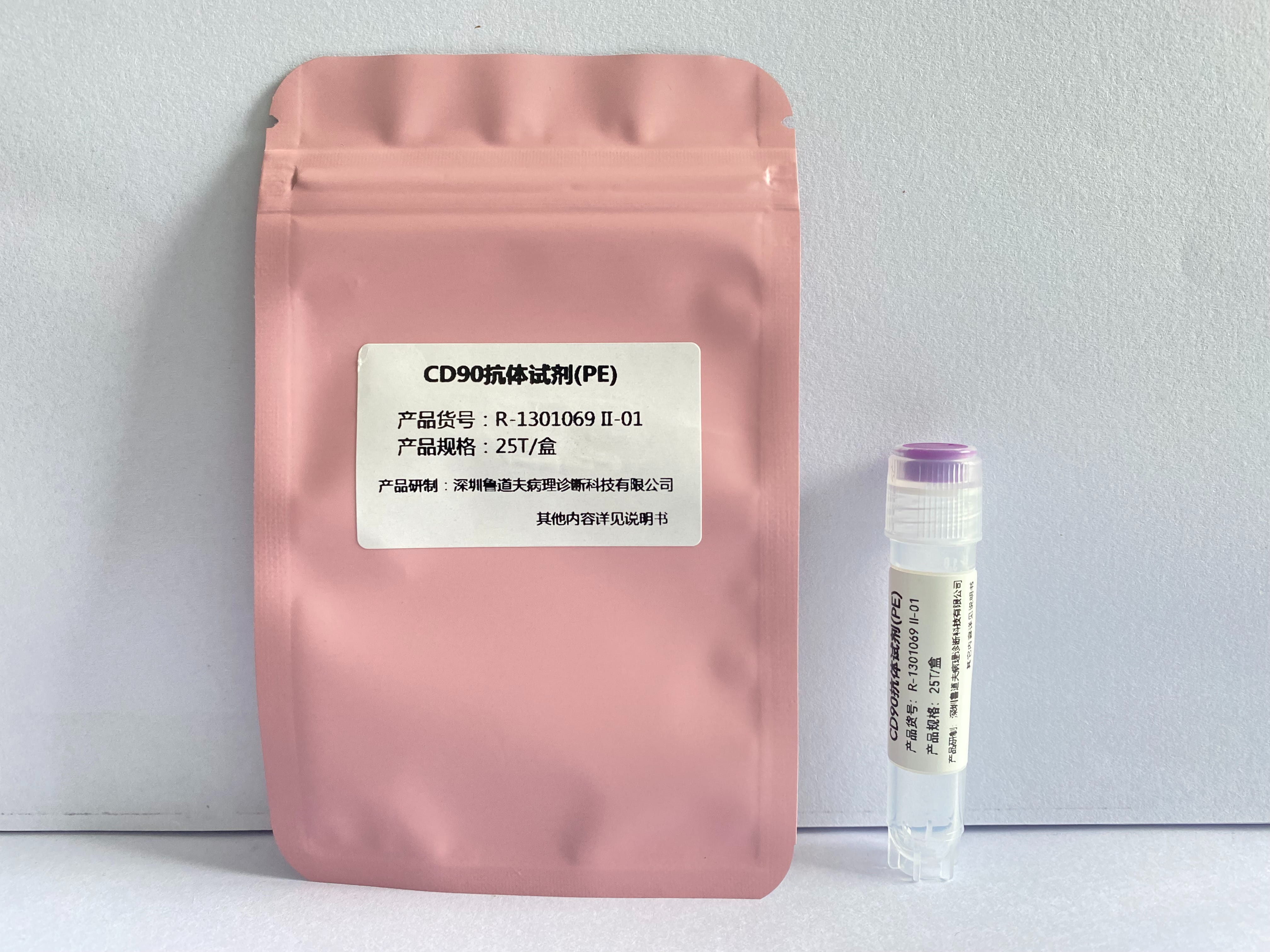
CD90 antibody reagent (PE)
Product Code:R-1301069Ⅱ-01/R-1301069Ⅱ-02
Applicable Scenarios:For scientific use only.

| Product Name | Anti-Human CD90, PE Detection Kit |
|---|---|
| Target | CD90, THY1 |
| Label | PE |
| Instrument | Suitable for flow cytometers with 488nm, 532nm, 561nm lasers |
| Subtype | Mouse IgG1 |
| Clone Number | 10 |
| Recommended Application | Flow Cytometry |
| Dosage | 5 μL /Test |
| Purification | Affinity Chromatography |
| Stock Solution | Phosphate buffer solution (pH7.2) containing 0.2% BSA and 0.2% proclin 950 |
| Storage Conditions | Store at 2 - 8℃, protect from light, do not freeze |
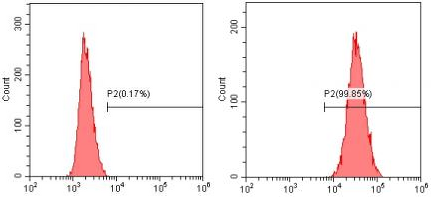
Figure-human mesenchymal stem cells (MSC) staining, the left picture shows the staining results of mouse IgG 1, isotype control and PE, and the right picture shows the staining results of Anti-Human CD90, PE (Clone: 10).
Overview of CD90/THY1 molecular target information
Molecular name: THY1, Thy-1 cell surface antigen
Gene family: ig-like cell adhesion molecule family; CD molecules; Immunoglobulin like domain containing
Alias: CD90
Former name: CD90
Review of CD90 molecular targets
CD90(Thy 1) antigen is a GPI-linked glycoprotein member of immunoglobulin superfamily. CD90 is expressed in mouse T cells, thymocytes, nerve cells, Kupffer cells and fibroblasts. CD90 may play a role in cell-to-cell or cell-to-ligand interactions during synapsis in the brain. CD90 can be used as a marker of axonal process of many stem cells and mature neurons. The structural study of CD90 led to the establishment of immunoglobulin superfamily, which is the smallest member, and led to the first biochemical description and characterization of vertebrate GPI anchor.




Copyright: Shenzhen Rudolf Pathological Diagnosis Technology Co., Ltd