



 0752-2228195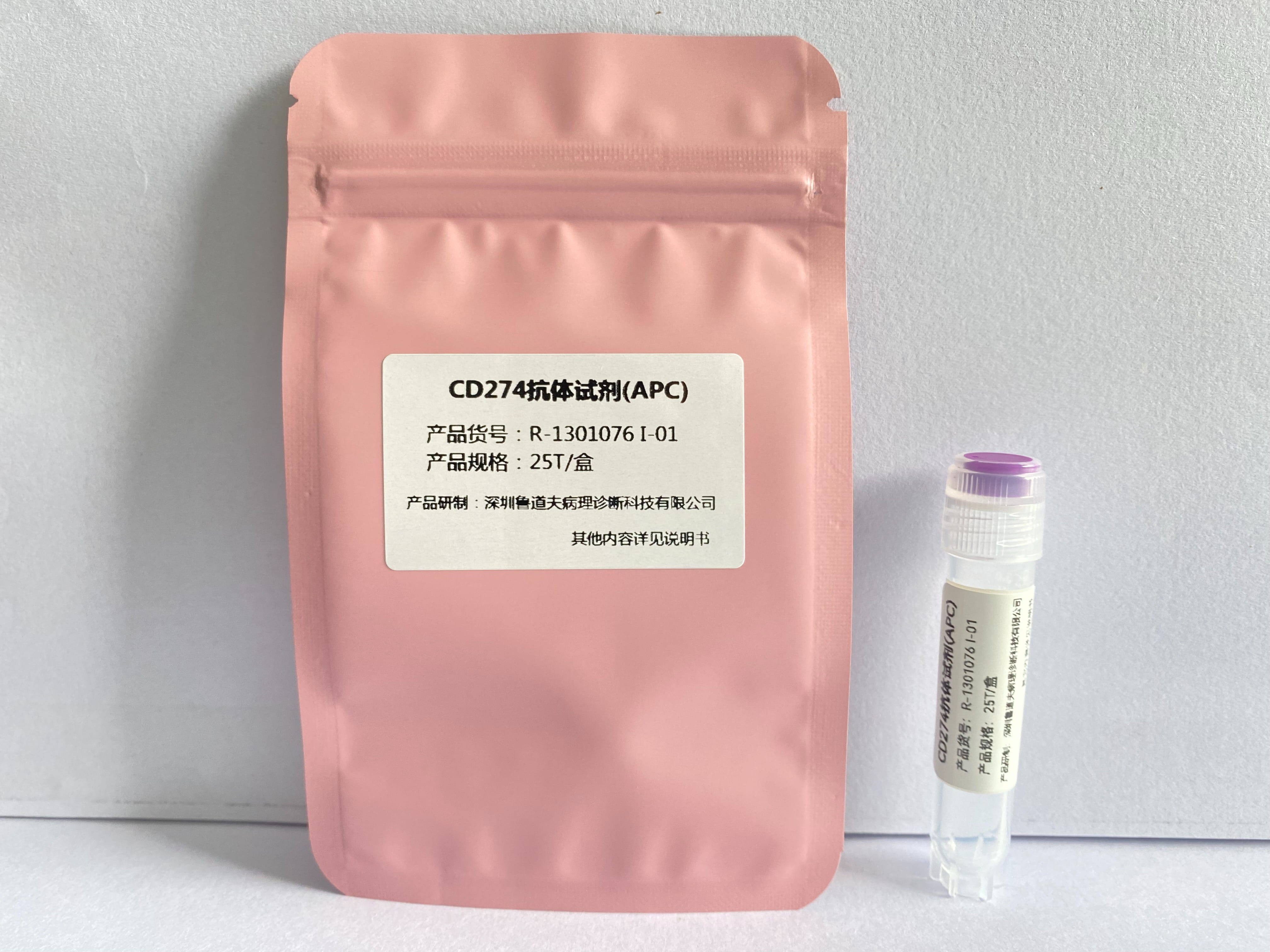
CD274 antibody reagent (APC)
Wholesale Price(RMB):
11322492
Product Code:R-1301076Ⅰ-01/R-1301076Ⅰ-02
Applicable Scenarios:For scientific use only.

11322492
| Product Name | Anti-Human CD274 ,APC Flow Cytometry Antibody |
|---|---|
| Target | CD274, PDL1, PD-L1, B7H1, B7-H1 |
| Label | APC |
| Instrument | Flow cytometer compatible with 633nm laser |
| Subtype | Mouse IgG2b, κ |
| Clone Number | 29E.2A3 |
| Recommended Application | Flow cytometry |
| Dosage | 5 μL /Test |
| Purification | Affinity chromatography |
| Stock Solution | Phosphate buffer solution containing 0.2% BSA and 0.2% proclin 950 (pH7.2) |
| Storage Conditions | Store at 2 - 8℃, protect from light, do not freeze |

Fig.-After 3 days of PHA stimulation, Anti-Human CD4, FITC and Mouse IgG2b Isotype Control, APC (right) and Anti-Human CD4, FITC and anti-human CD274, APC (clone: 29e.2a3) (left) were stained.
Overview of CD274 molecular target information
Molecular name: CD274, CD274 molecule
Gene family: CD molecules; Receptor ligands; V-set domain containing; C2-set domain containing; B7 family
Alias: B7-H; B7H1; PD-L1; PDL1; B7-H1
Former name: PDCD1LG1
Full name: B7 homolog 1; programmed cell death 1 ligand 1; CD274 antigen
Review of CD274 molecular targets
Programmed death ligand 1(PD-L1), also known as differentiation cluster 274(CD274) or B7 homologue 1(B7-H1), is a type I transmembrane protein with a molecular weight of 40kDa encoded by CD274 gene. PD-L1 may play an important role in the immune system suppression of pregnancy, tissue transplantation, autoimmune diseases and other diseases such as hepatitis. Usually, the immune system reacts to foreign antigens, which accumulate in lymph nodes or spleen and trigger the proliferation of antigen-specific CD8+ T cells. The combination of PD-1 receptor /PD-L1 or B7.1 receptor /PD-L1 transmits inhibitory signals, thus inhibiting the proliferation of CD8+ T cells. On the contrary, it has been reported that PD-L1 can co-stimulate dormant T cells. PD-L1 may inhibit the sustained response of T cells by inducing apoptosis and blocking the cell cycle process.




Copyright: Shenzhen Rudolf Pathological Diagnosis Technology Co., Ltd