



 0752-2228195
CD300E antibody reagent (PE)
Wholesale Price(RMB):
12692812
Product Code:R-1301078Ⅱ-01/R-1301078Ⅱ-02
Applicable Scenarios:For scientific use only.

12692812
| Product Name | Anti-Human CD300E, PE Detection Reagent |
|---|---|
| Target | CD300E |
| Marker | PE |
| Instrument | Compatible with flow cytometers using 488nm, 532nm, 561nm lasers |
| Subtype | Mouse IgG1 |
| Clone Number | UP-H2 |
| Recommended Application | Flow Cytometry |
| Dosage | 5 μL /Test |
| Purification | Affinity Chromatography |
| Stock Solution | Phosphate buffer solution (pH7.2) containing 0.2% BSA and 0.2% proclin 950 |
| Storage Conditions | Store at 2 - 8℃, protect from light, do not freeze |
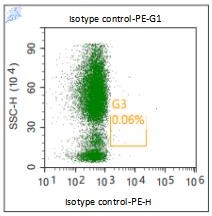
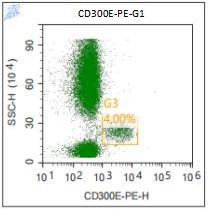
Figure-Human peripheral blood staining The left picture shows Mouse IgG1 Isotype control,PE, and the right picture shows the result of anti-human CD 300e, PE (clone: up-H2). Lymphocytes, granulocytes and monocytes were gated for analysis.
Overview of molecular target information of CD300E
Molecular names: CD300E, CD300e molecule
Alias: IREM2; CLM2
Used name: CD300LE
Full name: CD300 antigen like family member E; CD300e antigen
Review of molecular targets of CD300E
CD300e is a member of cell surface protein glycoprotein family expressed on myeloid cells. CD300e interacts with TYRO protein tyrosine kinase binding protein and is considered as an activation receptor. CD300e is expressed in mature myeloid dendritic cells and monocytes, and down-regulated in immature dendritic cells. In addition, CD300e interacts with DAP-12, which mediates the activation signal. It is reported that the allogeneic reaction of naive T cells is enhanced by activating CD300e.




Copyright: Shenzhen Rudolf Pathological Diagnosis Technology Co., Ltd