



 0752-2228195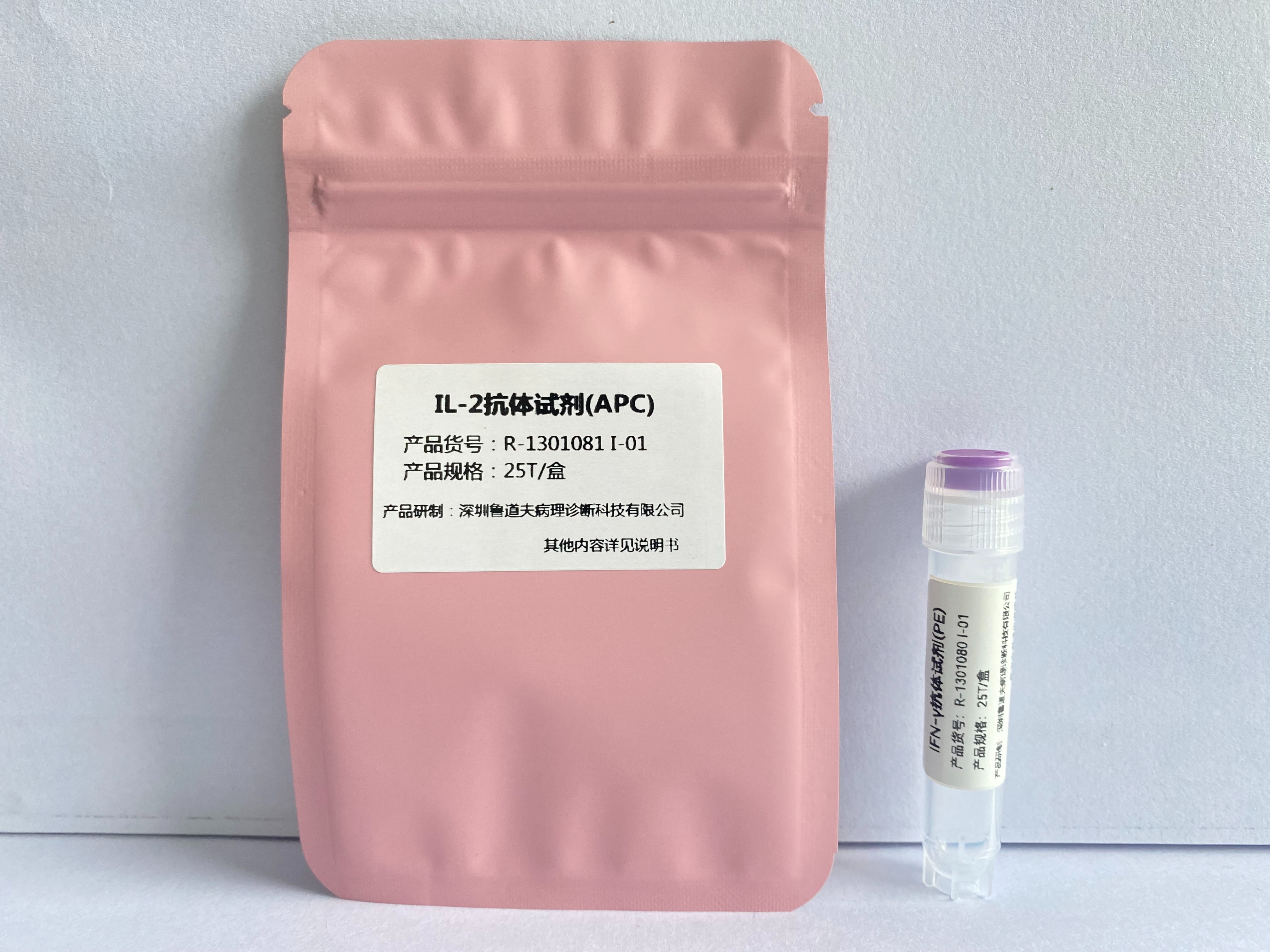
IL-2 antibody reagent (APC)
Wholesale Price(RMB) :
10262004
Product Code:R-1301081Ⅰ-01/R-1301081Ⅰ-02
Applicable Scenarios:For scientific use only.

10262004
| Product Name | Anti-Human IL-2, APC Detection Kit |
|---|---|
| Target | IL2, IL-2 |
| Label | APC |
| Instrument | Flow cytometer compatible with 633nm laser |
| Subtype | Rat IgG2a, κ |
| Clone Number | MQ1-17H12 |
| Recommended Application | Flow cytometry |
| Dosage | 5 μL /Test |
| Purification | Affinity chromatography |
| Stock Solution | Phosphate buffer solution containing 0.2% BSA and 0.2% proclin 950 (pH7.2) |
| Storage Conditions | Store at 2 - 8℃, protect from light, do not freeze |
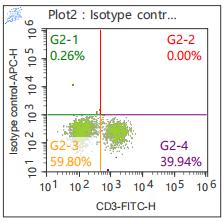
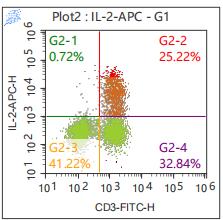
Figure-Normal peripheral blood samples were pretreated with cell stimulating blockers, fixed membrane breakers and stained. On the left, Rat IgG2a, κ Isotype control, APC, anti-human CD3 and FITC were co-dyed, while on the right, anti-human IL-2, APC (clone: MQ1-17H12), anti-human CD3 and FITC were co-dyed. Lymphocyte gating was used for analysis.
Overview of IL-2 molecular target information
Molecular name: IL2, interleukin 2
Gene family: Interleukins
Alias: IL-2; TCGF
Full name: T cell growth factor
Overview of molecular targets of IL-2
Interleukin-2(IL-2) is a 15kDa glycoprotein, which is encoded by a single gene located in the Q26–28 region of chromosome 4 in humans. It is a kind of signal molecule in the immune system, which regulates the activity of white blood cells (white blood cells, usually lymphocytes) with immune function. IL-2 is the body's natural response to microbial infection, which distinguishes foreign antigens from autoantigens. IL-2 functions by interacting with IL-2 receptor, which consists of three chains, namely, α chain (CD25), β chain (CD122) and γ chain (CD132). Monitoring the content of IL-2 in serum provides a more detailed perspective for many pathological conditions, including cancer, infectious diseases, transplant rejection, multiple sclerosis, rheumatoid arthritis, systemic lupus erythematosus and type I diabetes.



Copyright: Shenzhen Rudolf Pathological Diagnosis Technology Co., Ltd