



 0752-2228195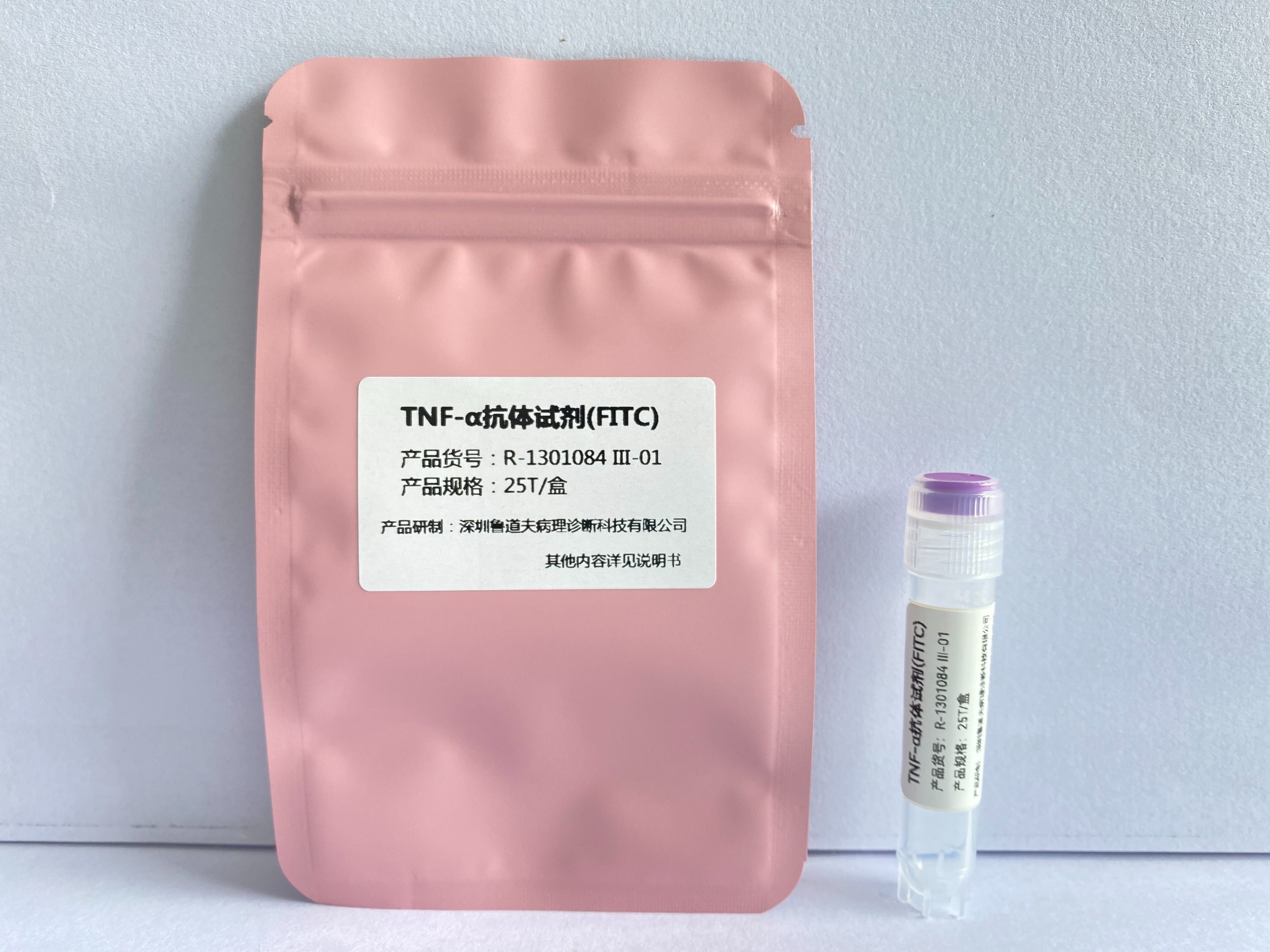
TNF-α antibody reagent (FITC)
Wholesale Price(RMB):
11752546
Product Code:R-1301084Ⅲ-01/R-1301084Ⅲ-02
Applicable Scenarios:For scientific use only.

11752546
| Product Name | Anti-Human TNF-α, FITC Assay Kit |
|---|---|
| Target | TNF, TNFA, TNFSF2 |
| Label | FITC |
| Instrument | Flow cytometer compatible with 488nm laser |
| Subtype | Mouse IgG1, κ |
| Clone Number | MAb11 |
| Recommended Application | Flow cytometry |
| Dosage | 5 μL /Test |
| Purification | Affinity chromatography |
| Stock Solution | Phosphate buffer solution (pH7.2) containing 0.2% BSA and 0.2% proclin 950 |
| Storage Conditions | Store at 2 - 8℃, protect from light, do not freeze |
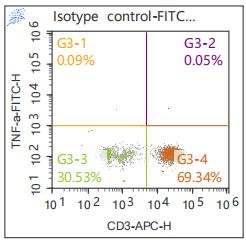
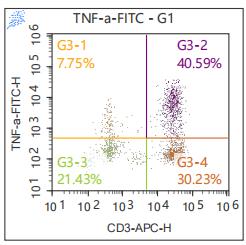
Fig.-Normal peripheral blood samples were pretreated with cell stimulating blockers, fixed membrane breakers and stained. The left picture shows the results of co-staining of Mouse IgG1, κ Isotype control, FITC and anti-human CD3 and APC, and the right picture shows the results of co-staining of anti-human TNF-α, FITC (clone: MAB11) and anti-human CD3 and APC. Lymphocyte gating was used for analysis.
Overview of TNF molecular target information
Molecular name: TNF, tumor necrosis factor
Gene family: Tumor necrosis factor superfamily
Alias: TNFSF2; DIF; TNF-alpha
Former name: TNFA
Full name: TNF superfamily, member 2; tumor necrosis factor (TNF superfamily, member 2)
Review of TNF molecular targets
TNF-α is a 17 kDa cytokine produced by monocytes, macrophages, neutrophils, NK cells and CD4+T cells. It has many regulatory functions in immune response and can also be used as a potential pyrogen. After TNF-α responds to stimuli (infectious factors or tissue damage), it activates neutrophils, changes the characteristics of vascular endothelial cells, regulates the metabolic activity of other tissues, and demonstrates tumor killing activity by inducing local coagulation. TNF-α plays an important role in the pathogenesis of inflammation in joint tissues and other tissues.




Copyright: Shenzhen Rudolf Pathological Diagnosis Technology Co., Ltd