



 0752-2228195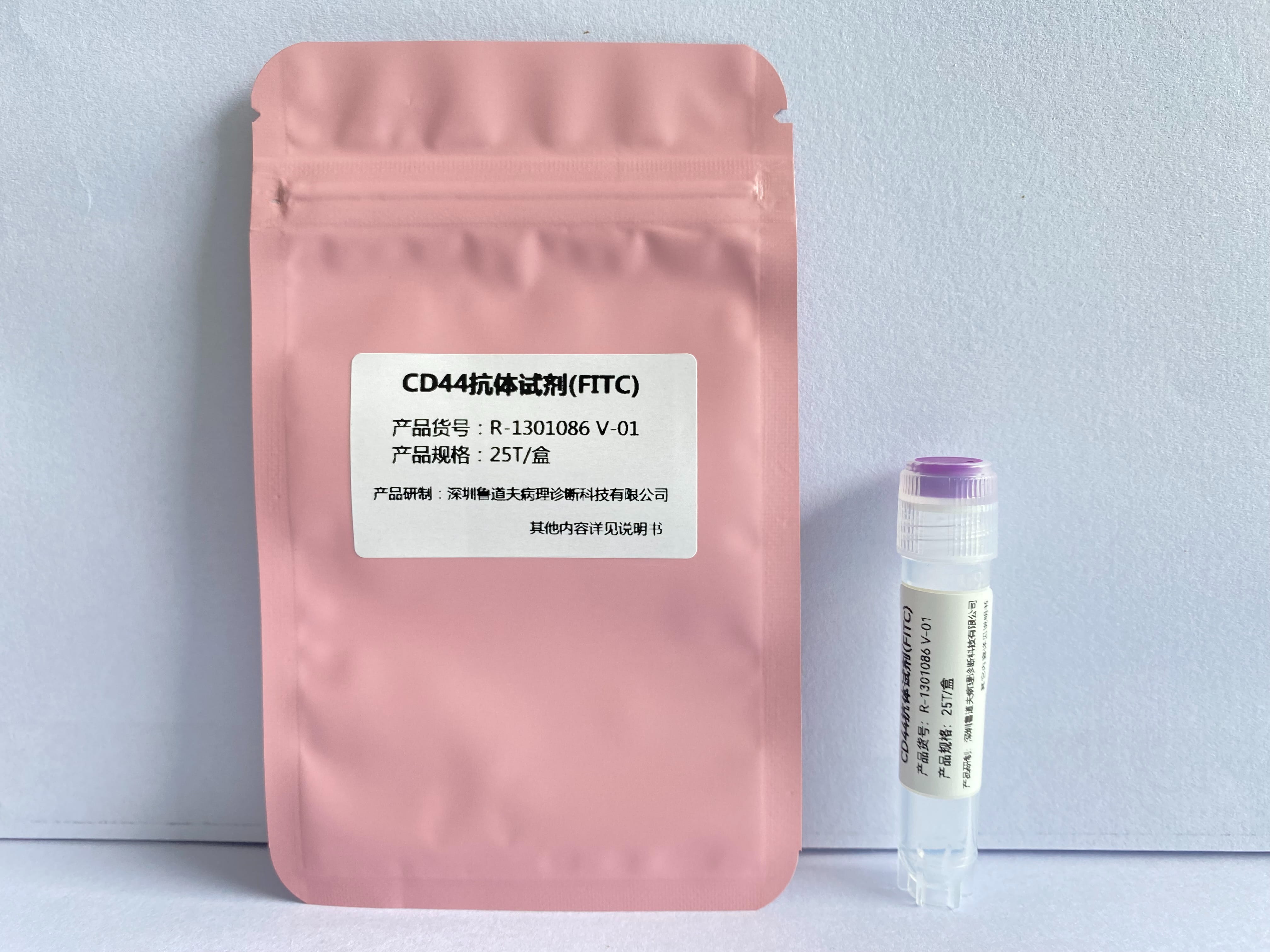
CD44 antibody reagent (FITC)
Wholesale Price(RMB) :
418919
Product Code:R-1301086Ⅴ-01/R-1301086Ⅴ-02
Applicable Scenarios:For scientific use only.

418919
| Product Name | Anti-Human/Mouse CD44, FITC Flow Cytometry Antibody |
|---|---|
| Target | CD44, MIC4, CSPG8 |
| Marker | FITC |
| Instrument | Flow cytometer compatible with 488nm laser |
| Subtype | Rat IgG2b, κ |
| Clone Number | IM7 |
| Recommended Application | Flow cytometry |
| Dosage | 5 μL /Test |
| Purification | Affinity chromatography |
| Stock Solution | Phosphate buffer solution (pH7.2) containing 0.2% BSA and 0.2% proclin 950 |
| Storage Conditions | Store at 2 - 8℃, protect from light, do not freeze |
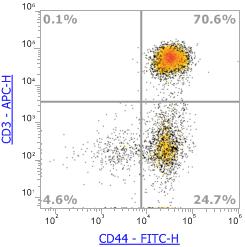
Fig.-results of anti-human/mouse CD44, FITC (clone: im7) and Anti-Human CD3, APC staining in human peripheral blood. The lymphocyte in FSC/SSC was gated for analysis.
Overview of CD44 molecular target information
Molecular name: CD44, CD44 molecule (Indian blood group)
Gene family: Blood group antigens; CD molecules; Proteoglycans
Alias: IN; MC56; Pgp1; CD44R; HCELL; CSPG8
Former name: MIC4; MDU2; MDU3
Full name: Hematopoietic cell e-and l-selectinligand; chondroitin sulfate proteoglycan 8; CD44 antigen (homing function and Indian blood group system)
Review of CD44 molecular targets
CD44 is a glycoprotein on the cell surface, which is involved in cell-cell interaction, cell adhesion and cell migration. CD44 is normally expressed in all blood cells (except platelets) and non-hematopoietic tissues, but not in normal liver cells, but in bile duct epithelium. CD44 is abnormally expressed in multiple myeloma cells, most lymphomas, chronic lymphocytic leukemia and neoplastic mast cells. CD44 mainly participates in the activation of lymphocytes, the combination of matrix molecules such as hyaluronic acid and laminin in extracellular matrix, and mediates the combination of lymphocytes with high columnar endothelial cells in venules behind capillaries, so that lymphocytes can cross the vascular wall and return to lymphoid tissue.




Copyright: Shenzhen Rudolf Pathological Diagnosis Technology Co., Ltd