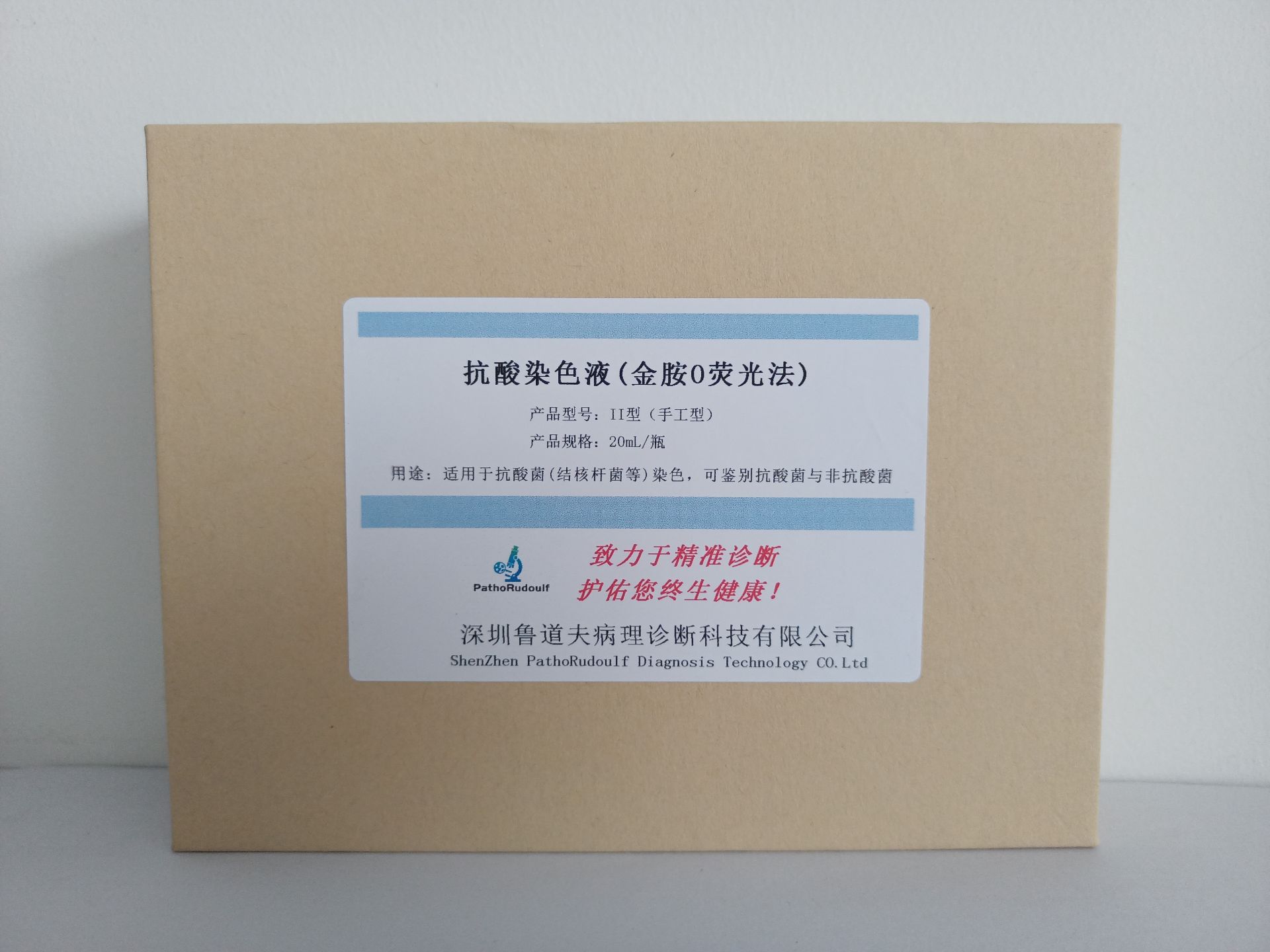

741313083374
4×50mL/bottle(Ⅰ-01)4×100mL/bottle(Ⅰ-02)4×250mL/bottle(Ⅰ-03)4×20mL/bottle(Ⅱ-01)4×50mL/bottle(Ⅱ-02)

741313083374
4×50mL/bottle(Ⅰ-01)4×100mL/bottle(Ⅰ-02)4×250mL/bottle(Ⅰ-03)4×20mL/bottle(Ⅱ-01)4×50mL/bottle(Ⅱ-02)
The cell wall of Mycobacterium contains a large number of lipids surrounded by peptidoglycan, so Mycobacterium is generally not easy to color, the traditional staining method should be heated and prolonged staining time to promote its coloring. Once the mycolic acid in Mycobacterium combines with the dye, it is difficult to be decolorized by the acidic decolorizing solution, so it is called antacid staining.
Antacid staining solution (Auramine O fluorescence method) belongs to the fluorescent staining solution, no heating is required, and it is relatively safer than the antacid heat staining solution. The staining principle is that after Auramine O staining as well as re-staining at room temperature, and after checking it with fluorescence microscope containing UV source, the antacid bacillus shows bright yellow color, and the other bacteria and substances in the background show dark yellow color, and this method can be used to check it with low magnification microscope, so that the antacid can be found out faster. This method can be used at low magnification, thus enabling more rapid identification of acid-resistant bacteria.