Protozoa are unicellular eukaryotic animals, tiny in size and capable of independently accomplishing all physiological functions of life activities. Widely distributed in nature, a wide variety of species, so far has been found about 65,000 species, most of the camp autotrophic or putrefactive life, distributed in the sea, soil, water or decay, about nearly 10,000 species of parasitic protozoa, living in the animal body or the body surface, in addition there are medical protozoa.
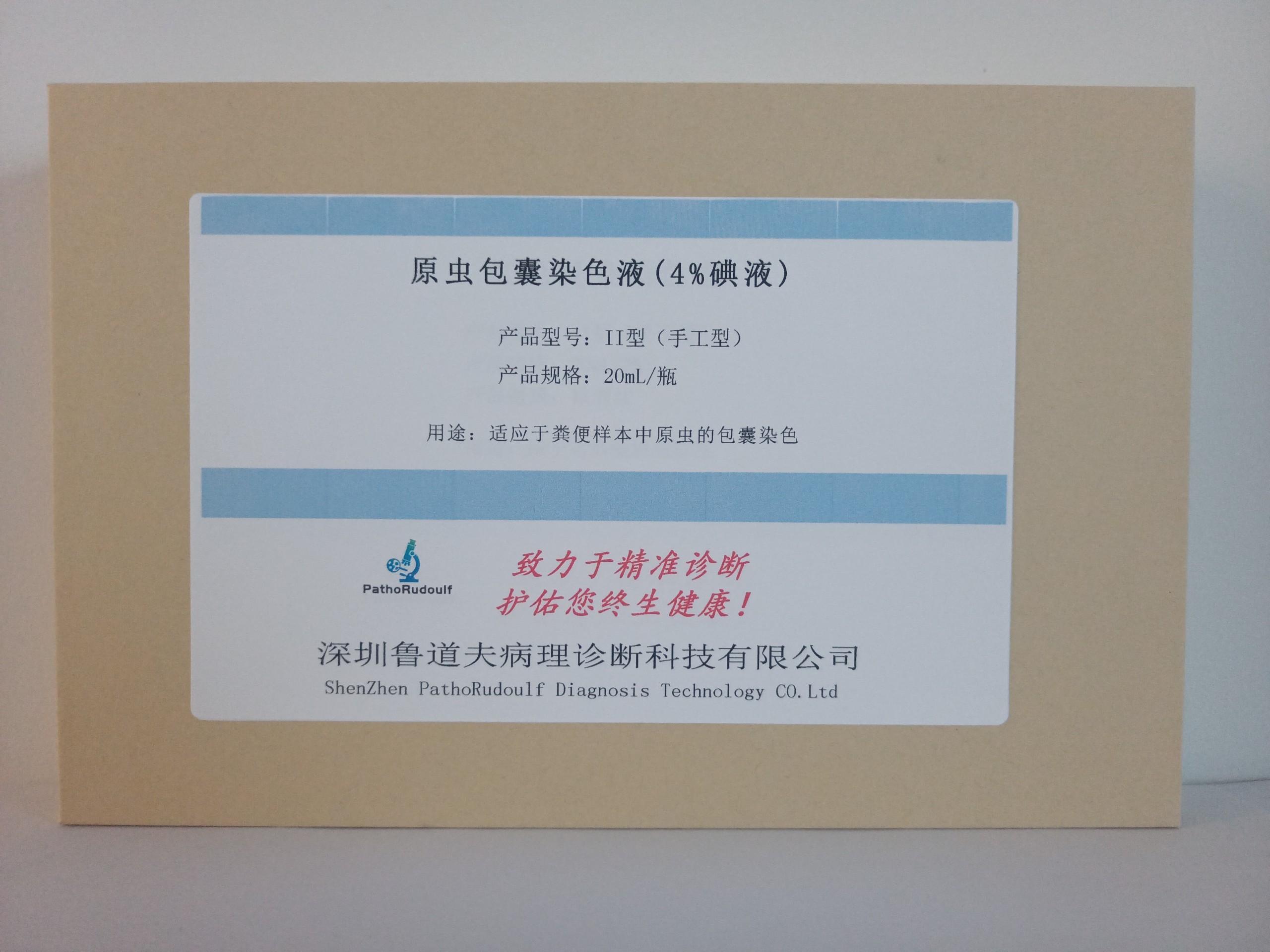
Fecal examination is a common pathogenetic test for the diagnosis of parasitic diseases. Commonly used methods include direct smear method, thick smear transparency method, etc. Protozoa encapsulation staining solution (4% iodine solution) is a kind of direct smear method, which is an aqueous solution of iodine and potassium iodide, similar to Lugol's iodine solution, and is mostly used for fecal examination of helminth eggs, protozoa encapsulation and trophozoites; the effective content of iodine in it is 4%, which is simple to operate, and it can be sampled and examined for many consecutive days, which improves the detection rate, but the negative result does not completely exclude that there are parasitic infections.
It is mainly composed of iodine and potassium iodide, and the concentration of iodine solution is 4%, which is mainly used for staining the encapsulation of protozoa in fecal samples.





 0752-2228195