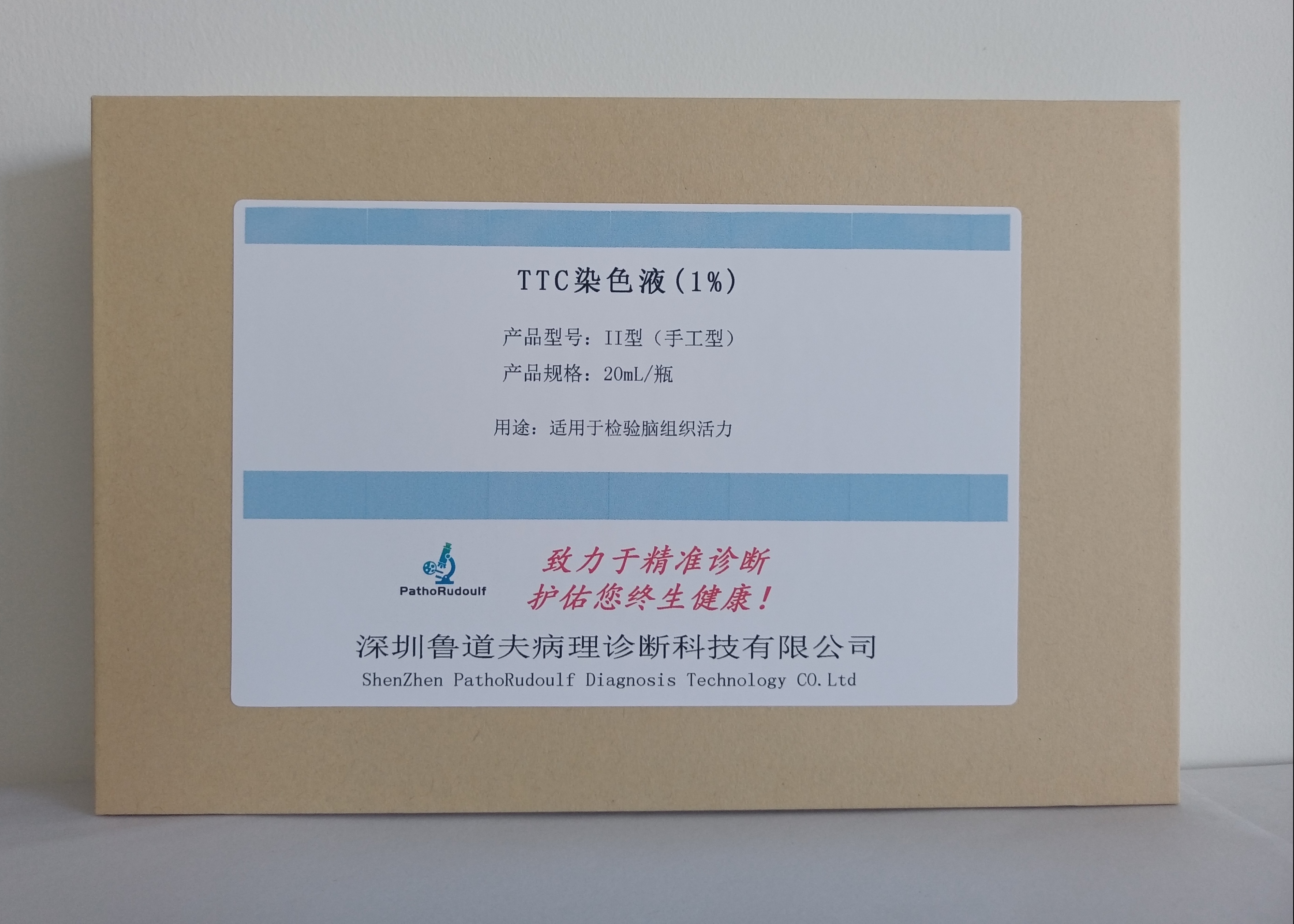
2,3,5-Triphenyltetrazolium chloride (TTC) has a molecular weight of 334.80, a molecular formula of C19H15ClN4, and a CAS number of 298-96-4.TTC is a fat-soluble, light-sensitive complex that was initially used to assay seed viability, and was later used in staining for the detection of ischemic infarcts in mammalian tissues.TTC is the proton receptor for the pyridine nucleoside-binding enzyme system in the respiratory chain.TTC reacts with respiratory enzymes in normal tissues and appears red, whereas respiratory enzymes in ischemic tissues have decreased activity and are unable to react, so they don't produce a change in a pale white color.This staining is a macroscopic staining method used for evaluating the activity of dehydrogenases in tissues.TTC is used to detect ischemic infarction in mammalian tissues.
TTC staining solution (1%) for myocardial infarction and brain tissue necrotic zone observation earlier than electron microscopy 3-6h, earlier than light microscopy 24h, mostly used in autopsy of fresh cardiac tissue and brain tissue as well as the staining of early infarcted tissue in experimental animal models. Its characteristics: ① TTC staining directly from the fresh tissue can be stained, without fixation, embedding and other steps; ② TTC staining time is short, generally 20 ~ 30min; ③ TTC staining solution can be reused, 10ml can be stained 20 slices.





 0752-2228195