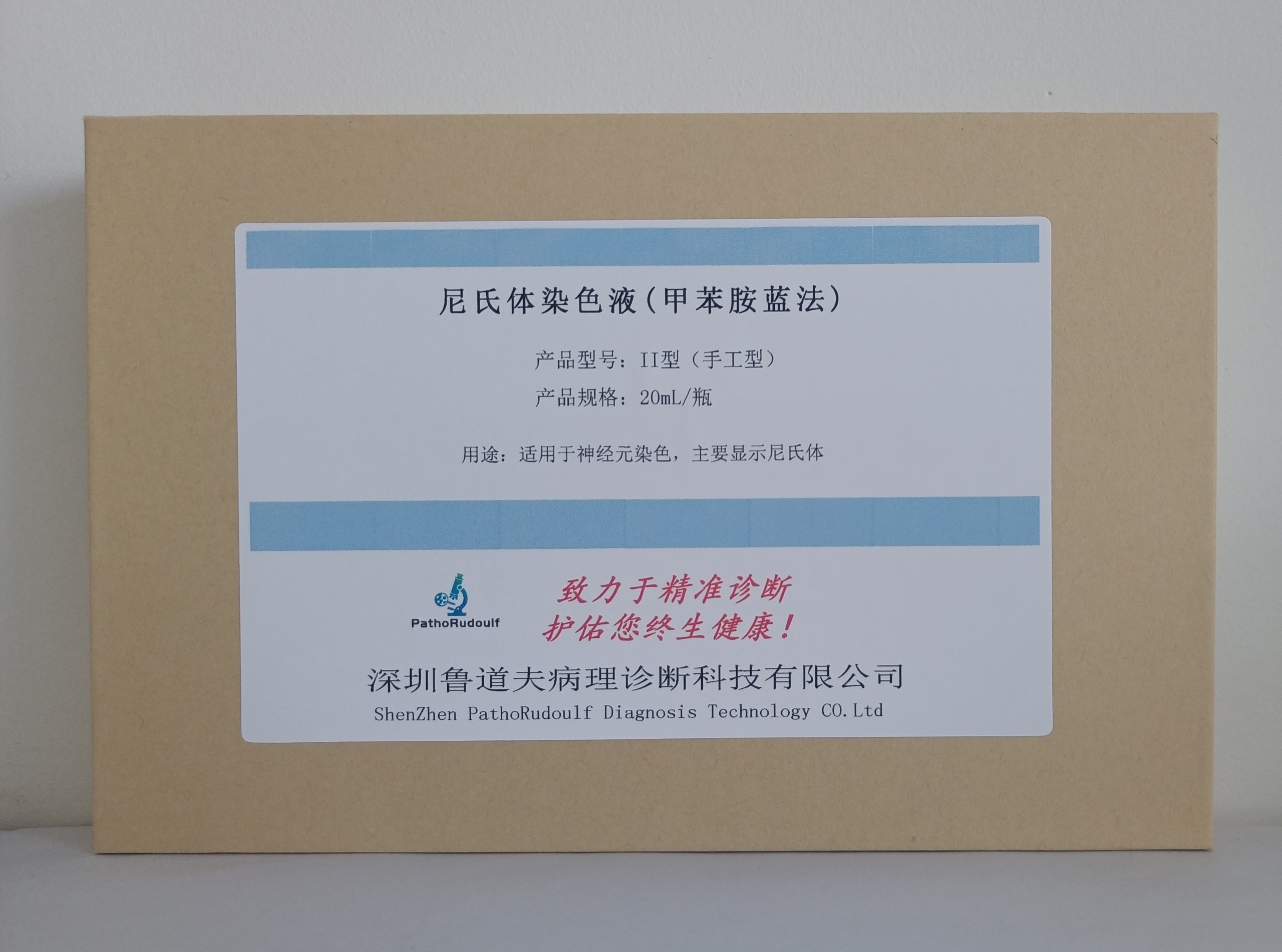
The neuronal cell body consists of a large nucleus with a ruffled nuclear membrane, sparse chromatin, and a distinct nucleolus, in which the cytoplasm is composed of Nysted's granules, i.e., basophilic granules that are representative of the rough endoplasmic reticulum and that give rise to specific patchy basophilic manifestations in many neurons. Nysted granules can be visualized with many stains such as neutral red, methylene blue, toluidine blue and methyl violet. Variations in staining, pH, and time of differentiation allow some stains to highlight both the Nissl substance alone as well as the nucleus and glia of the neuron. Nissl bodies, or Nissl microsomes, are small, triangular or oval shaped masses distributed within the cytoplasm of neuronal cells that can be stained a purplish-blue color by alkaline dyes such as thixotropic cordycein, methylene blue, toluidine blue, and tarry violet. Various kinds of nerve cells contain nidus, but their shape, quantity, and distribution location are often different, nidus also exists in dendrites, but not in axons and axon thalamus of the periphery; nidus will change due to changes in physiological state, nidus is an important site for synthesis of synthetic proteins synthesized within the neuron, and the nidus within the periphery will be significantly reduced when the neuron is stimulated.
Nissl Stain (Nissl Stain, Toluidine blue method) adopts Toluidine blue (Toluidine blue) as the core dye, which can be used for Nissl staining of paraffin tissue sections; the presence and disappearance of Nissl is an important indicator of whether nerve cells are damaged or not; when encephalitis, cerebral ischemia, and axonal reaction occur, Nissl will dissolve or even disappear.





 0752-2228195