Hemosiderin is a hemoglobin-derived pigment, a golden-yellow or brownish-yellow granule, which is called iron-containing hemosiderin because of its iron content and golden-yellow color. When red blood cells are phagocytosed by macrophages, hemoglobin is broken down into iron-free orange blood plasma and iron-containing ferric-containing hemosiderin under the action of lysosomal enzymes. Iron-containing hemosiderin staining, also known as Perls Prussian blue reaction (Prussian blue reaction), is used to show a variety of hemorrhagic lesions in localized tissues, commonly in phagocytes, and can be well differentiated between iron-containing hemosiderin and other pigments.
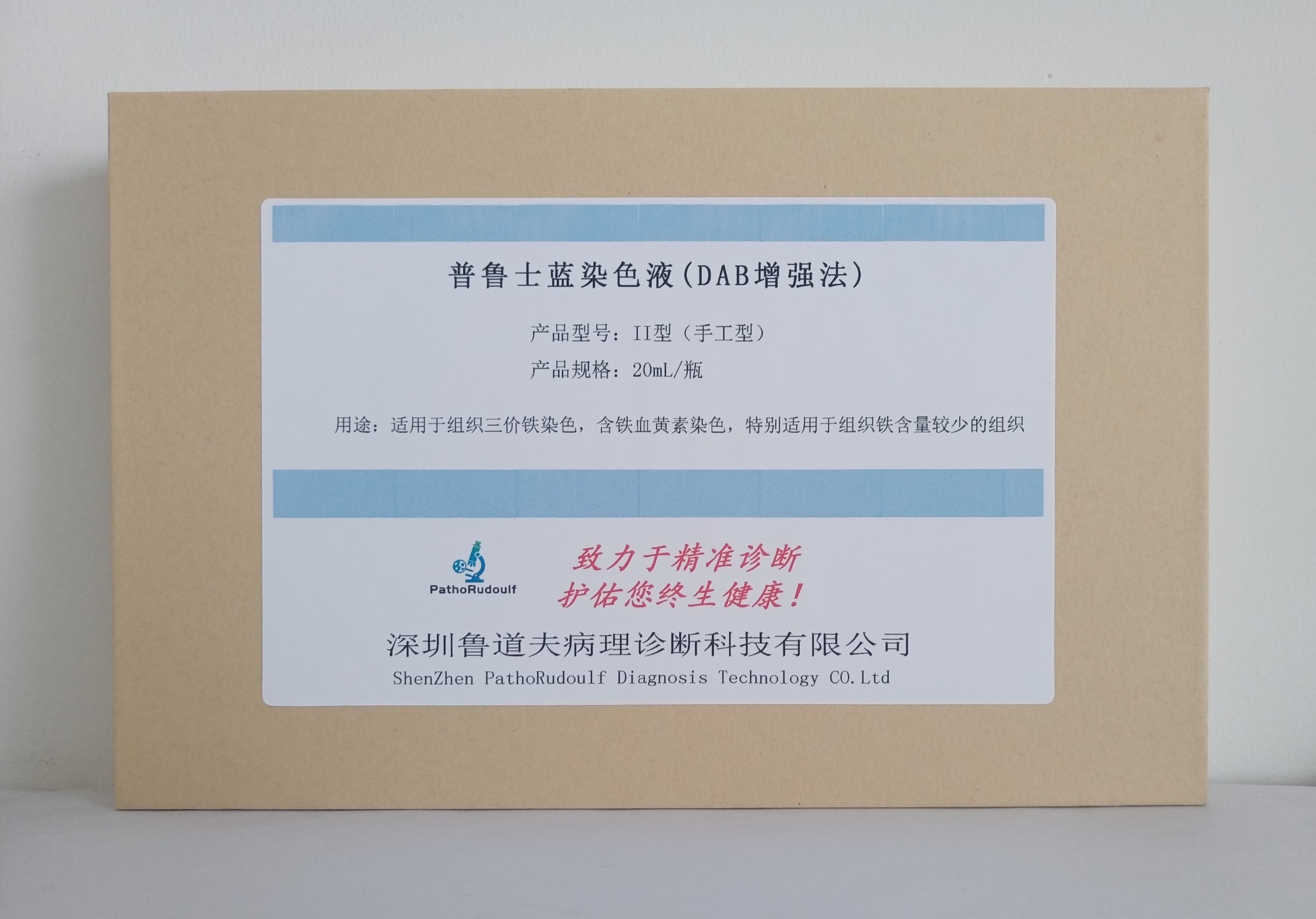
Prussian blue staining solution (DAB enhancement method) its staining principle is the tissue of trivalent iron ions from the protein by dilute hydrochloric acid separation, and potassium ferrocyanide to form an insoluble blue ferric ferrocyanide precipitate and show the high content of iron in the tissues, when the tissue of the iron content of iron is very small, the staining can not show the blue localization of the iron element, add DAB, and ferric ferrocyanide precipitate to occur After adding DAB, it reacts with ferric ferrocyanide precipitation to form a brown compound, which enhances the specificity of the test and is especially suitable for tissues with low iron content.





 0752-2228195