Melanin is a non-hematogenous endogenous pigment, a group of pigments ranging in color from light brown to black produced by melanoblasts, which are commonly found in the epidermis of the skin, the eye, the substantia nigra of the brain, and hair follicles. Melanin has the remarkable physical property of being completely insoluble in most organic solvents ---- almost certainly due to the fact that the melanin that has been formed in the melanosomes binds tightly to proteins; another physical property of melanin is that it is capable of being bleached by strong oxidizing agents, albeit this process is slow. In pathological cases, this pigment can also be found in benign nevus cell tumors and in malignant melanomas. It does not appear black but rather tan or brownish-black in conventional HE staining, and a number of methods can be used to identify melanin and melanogenic cells, such as reduction methods, such as the Masson-Fontana silver technique and the Schmorl trivalent iron-potassium ferrocyanide reduction assay; enzyme methods (e.g., dopa reaction); fluorescence methods; and immunohistochemistry.
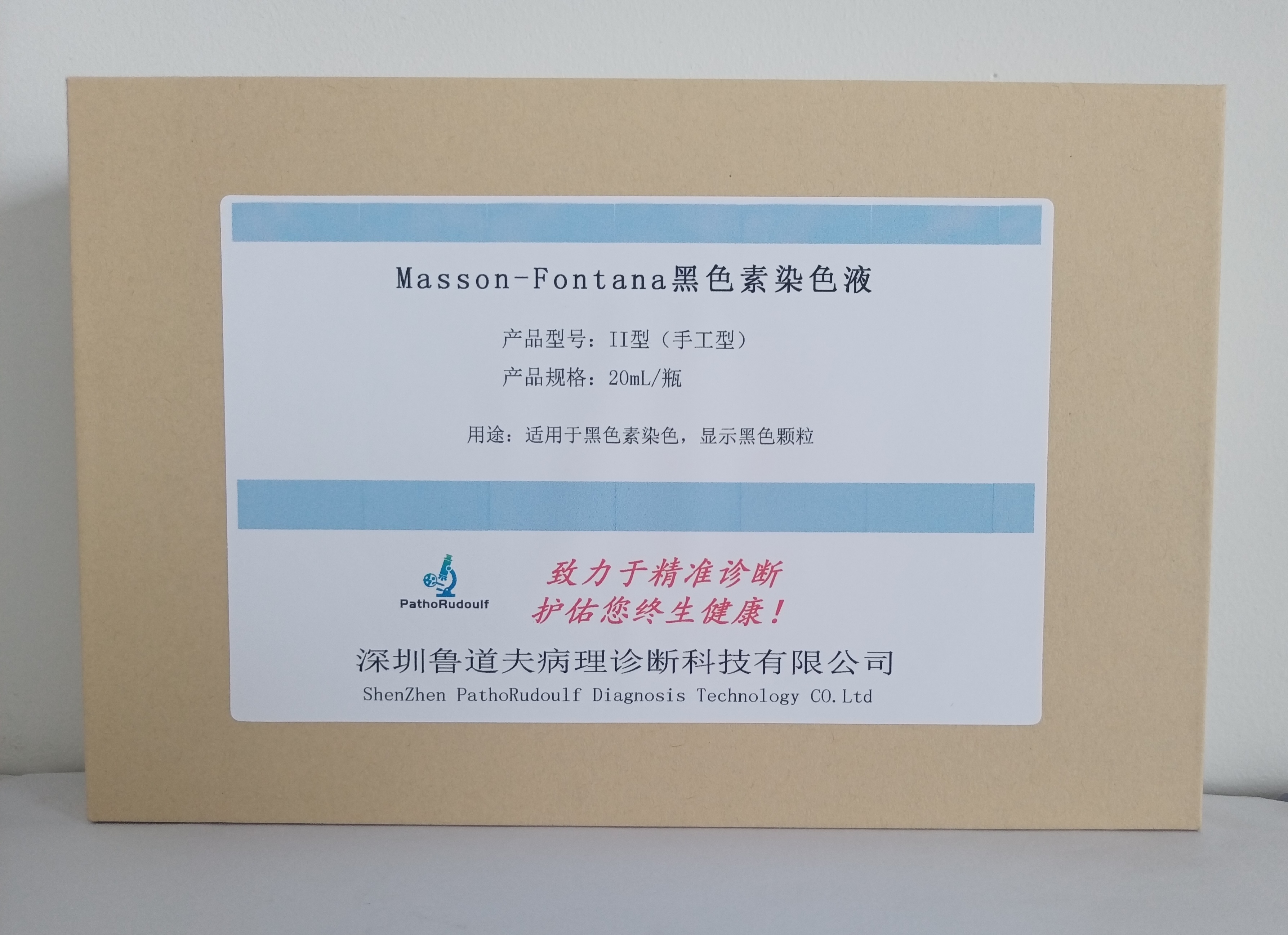
Masson-Fontana melanin staining solution is the use of melanin has a silver ammonia solution will be reduced to metallic silver properties that is, the principle of silver-loving reaction to show melanin, stained melanin is black, the method belongs to the commonly used melanin special staining method, the effect is more ideal than other staining.





 0752-2228195