Melanin is a non-hematogenous endogenous pigment, a group of pigments that range in color from light brown to black. This pigment is usually found in the skin, eyes, substantia nigra of the brain, and hair follicles.Melanin has the remarkable physical property of being completely insoluble in most organic solvents ---- almost certainly due to the fact that the melanin that has been formed in the melanosomes binds tightly to proteins; another physical property of melanin is that it is capable of being bleached out by strong oxidizing agents, although this process is slow. In pathological cases this pigment can also be found in benign nevus cell tumors and in malignant melanomas; lipofuscin is a tawny pigment with a granular consistency, consisting of fat-containing residues and lysosomal digests, and is thought to result from the oxidation of lipids and lipoproteins; the process of oxidation of lipofuscin occurs slowly and progressively, and the pigment therefore displays different staining reactions, varied colors, and variations in shape and size; lipofuscin can be seen in a variety of ways. Lipofuscin can be found in liver, kidney, cardiac muscle, adrenal gland, nerve cells and ganglion cells, etc. It is mostly distributed around the cell nucleus.
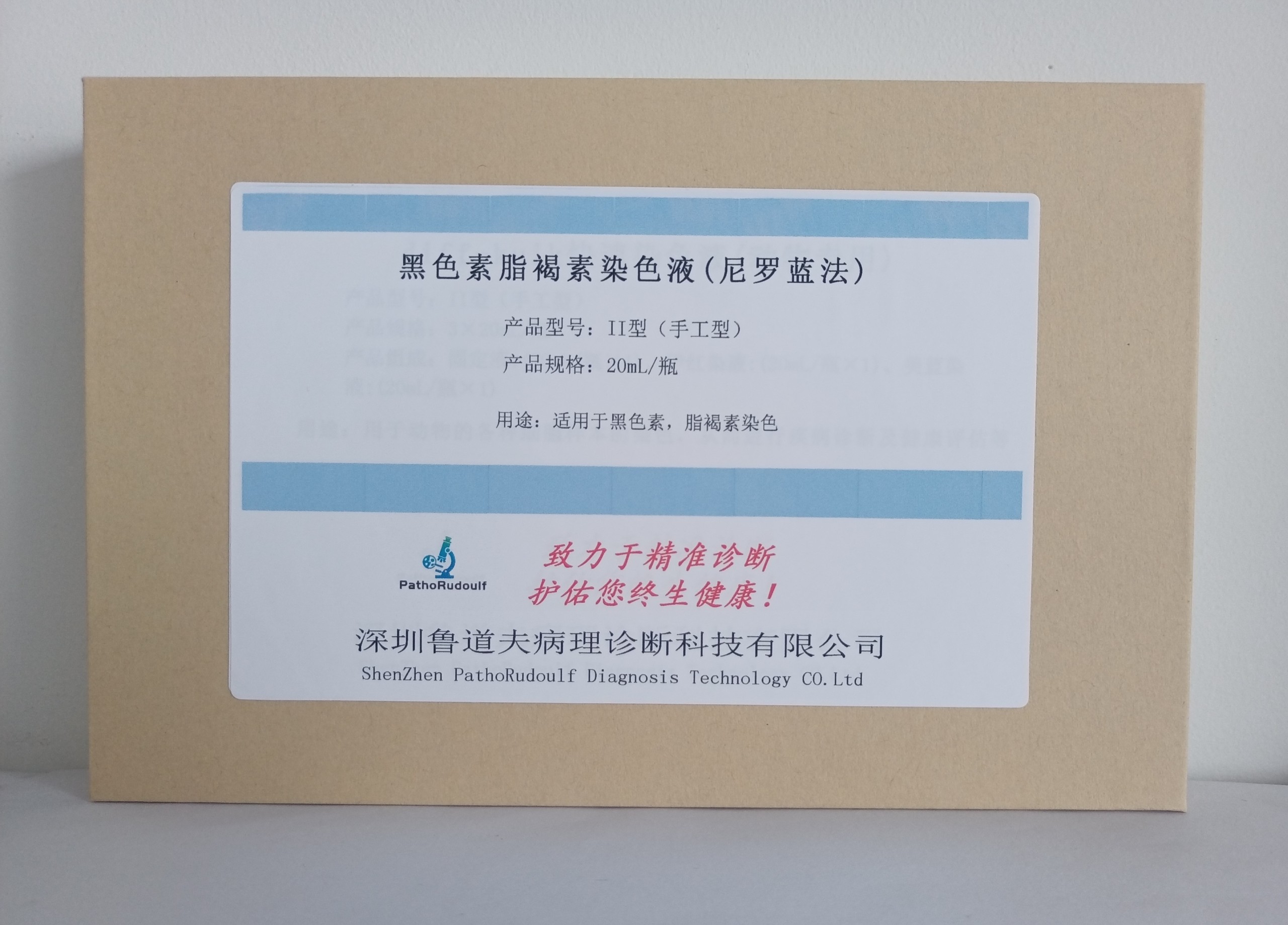
Melanin-lipofuscin staining solution (Nile blue method) utilizes Nile blue to show melanin and lipofuscin. This staining solution may not be effective in staining some samples, but the method is easy to operate.





 0752-2228195