Hematoxylin (Hematoxylin) and Eosin (Eosin) co-staining referred to as HE staining is one of the most commonly used staining methods in pathology and histology. Hematoxylin is an alkaline natural dye that can color the nucleus of cells, and the main component of chromatin in the nucleus is DNA. In the double helix structure of DNA, the phosphate groups on the two nucleotide chains are outwardly oriented, so that the outside of the DNA double helix is negatively charged and acidic, and it can easily be stained with positively charged Hematoxylin alkaline dyes that combine with ionic bonds or hydrogen bonds. The acid used in Van Gieson staining strips most of the hematoxylin of its color to the point where the nucleus is barely visible, in which case the use of ferric hematoxylin or lapis lazuli blue can resist the effects of the acid to satisfactory effect.
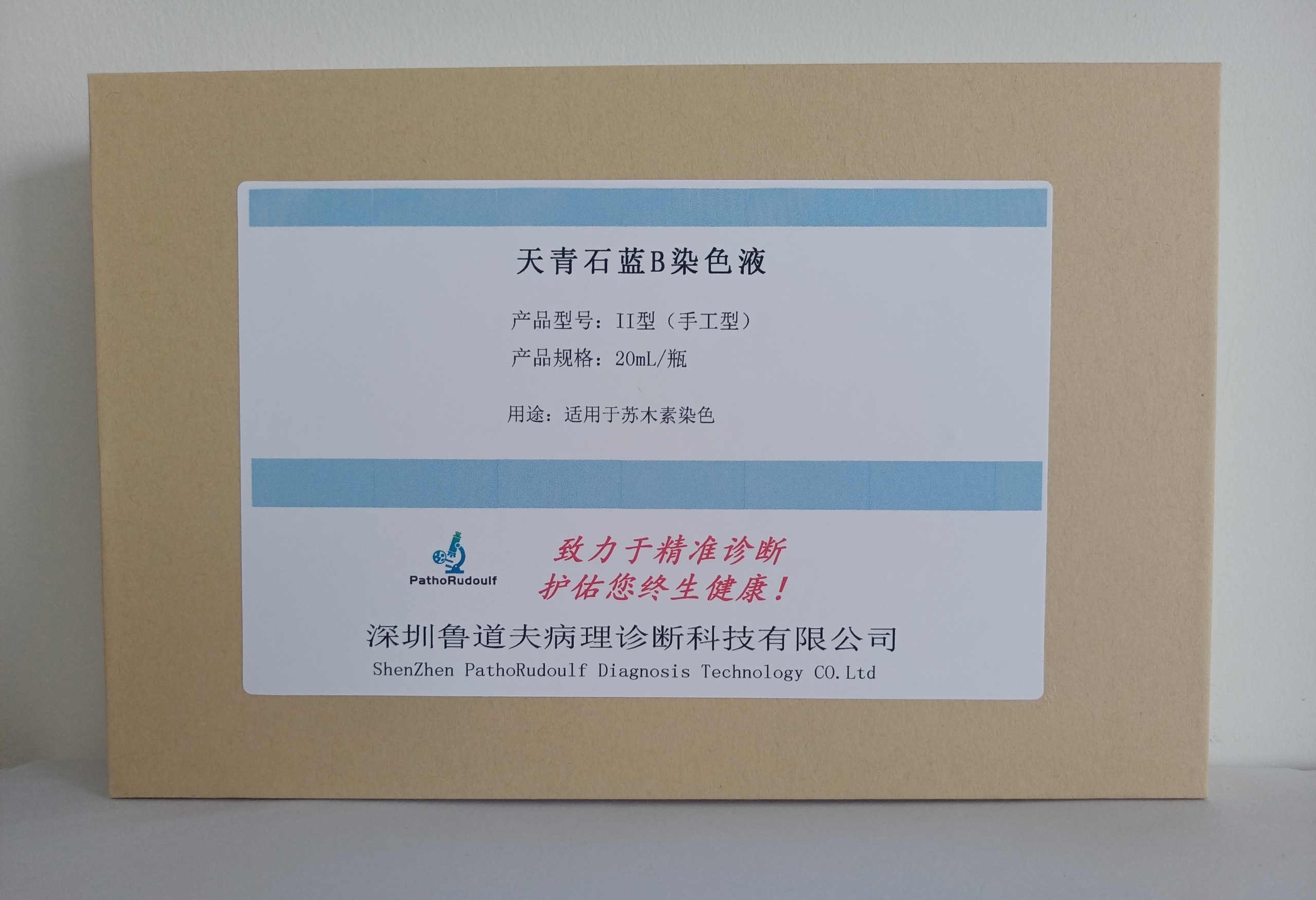
Azurite blue B staining solution mainly consists of 0.5% azurite blue B, mostly used in combination with alum hematoxylin, its advantage is that azurite blue B can resist acid, and high iron salts can strengthen the binding force of alum hematoxylin and cell nucleus, so that the cell nucleus staining is deeper, so it can achieve the purpose of resisting acid, so that hematoxylin color is not easy to fade away.





 0752-2228195