Amyloid is an extracellular eosinophilic substance without a fixed shape that can be present in different tissues and organs, resulting in a disease known as amyloidosis; amyloid is mainly composed of proteins, which are mostly arranged in an inverted β-folded lamellar structure. Under the electron microscope amyloid is arranged in protofibrils, and in the case material is a large number of extracellular unbranched filaments, mostly randomly arranged. Histological methods used to identify amyloid include methyl violet staining, Congo red staining, and polarized light microscopic observation. Current research has found that the traditional methyl violet staining method has low sensitivity and poor specificity, and the classic and effective method is Congo red staining. In 1922, Bennhold discovered that Congo red could be used to identify amyloid in vivo, and applied it to tissue sections.
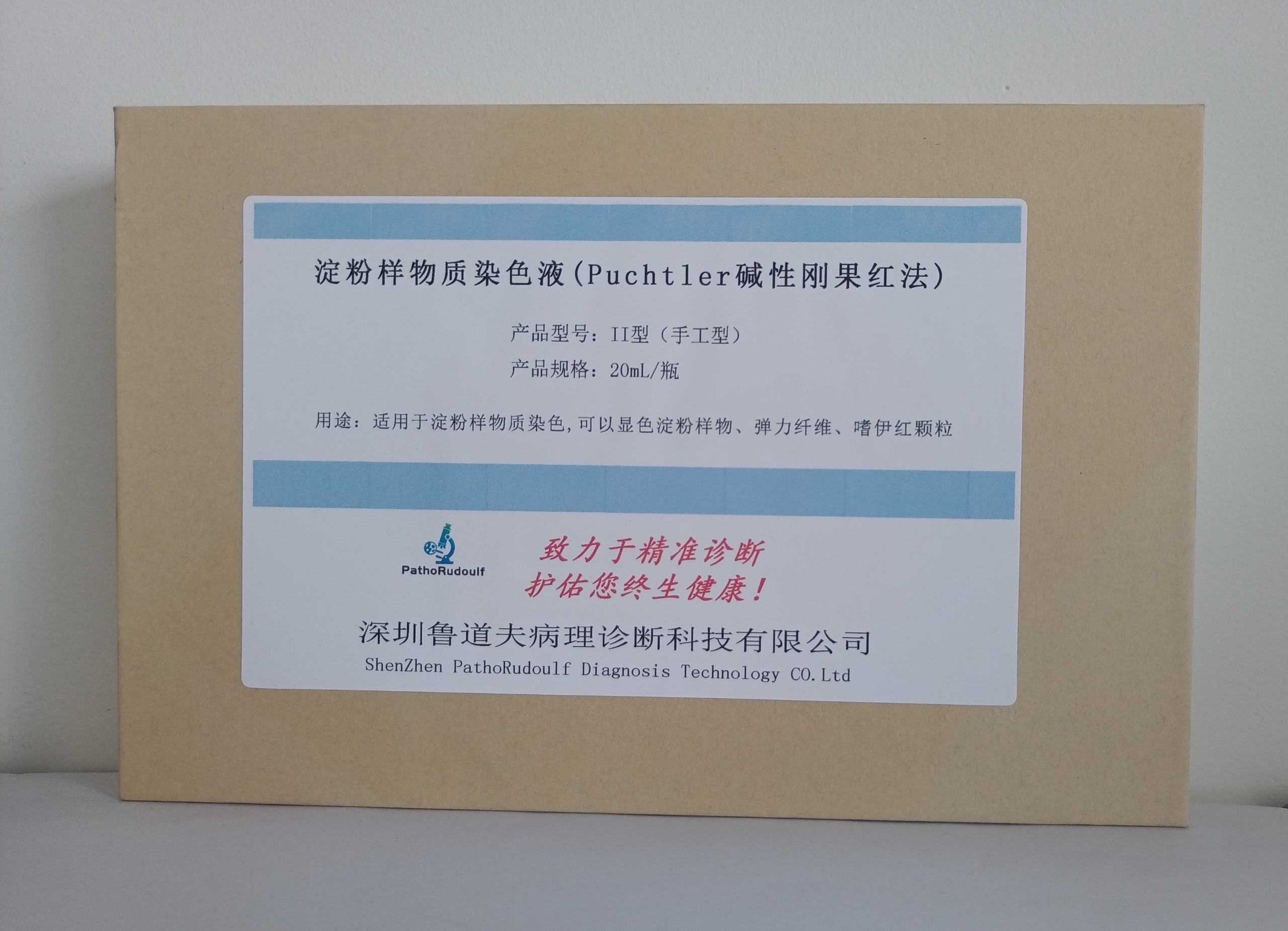
The amyloid staining solution (Puchtler alkaline Congo red method) mainly consists of Congo red staining solution, hematoxylin staining solution, etc. The staining principle is that amyloid has a greater affinity for Congo red than other tissue structures, and its hydroxyl group combines with the amine group of the Congo red, which makes amyloid stained into red, the staining method has stable performance, and it is a very classic method of amyloid staining. It is suitable for amyloid staining, and can develop the color of amyloid, elastic fiber and eosinophilic granules.





 0752-2228195