
62011002580275620
3×50mL/bottle(Ⅰ-01) 3×100mL/bottle(Ⅰ-02)3×250mL/bottle(Ⅰ-03)3×20mL/bottle(Ⅱ-01)3×50mL/bottle(Ⅱ-02)

62011002580275620
3×50mL/bottle(Ⅰ-01) 3×100mL/bottle(Ⅰ-02)3×250mL/bottle(Ⅰ-03)3×20mL/bottle(Ⅱ-01)3×50mL/bottle(Ⅱ-02)
Pathological endogenous deposits are part of pigmented deposits, where tissue cells undergo certain pathological changes to form deposits with different shape characteristics, and this polymerization forms special proteins that are capable of displaying fibrin proteins when stained. Fibrin is a special protein formed by the polymerization of fibrin molecules present within the blood, also known as fibronectin. This protein is present in the tissues in the form of curved filamentous fibrils, most of which are in the form of a reticulum, sometimes in the form of a coarse fibrillar network, and the old ones can be agglomerated into amorphous clumps.
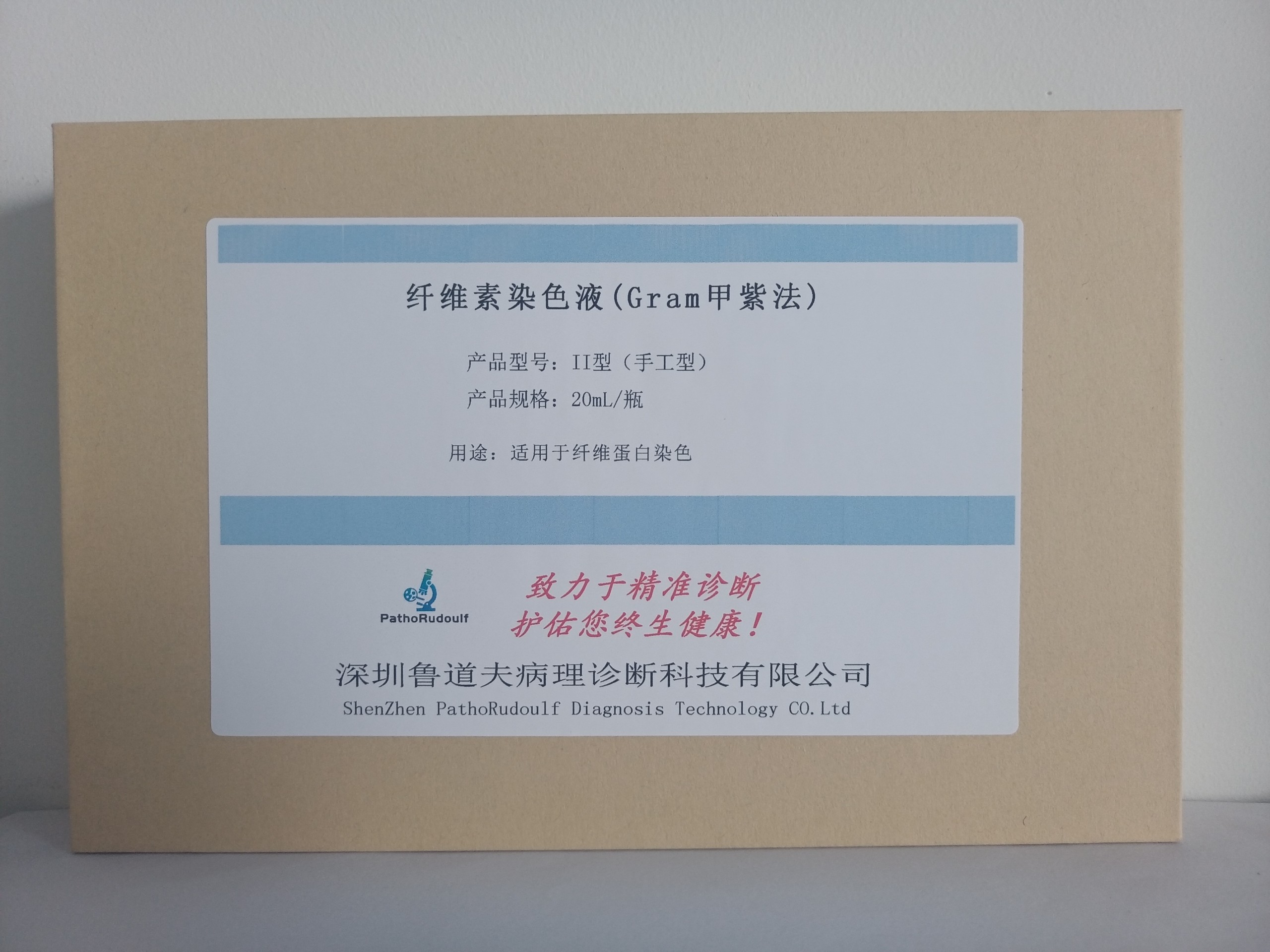
Fibrin staining solution (Gram methyl violet method) mainly consists of Gram eosin staining solution, methyl violet staining solution, and Gram iodine solution, which is an easy and inexpensive fibrin staining solution that stains fibrin blue.