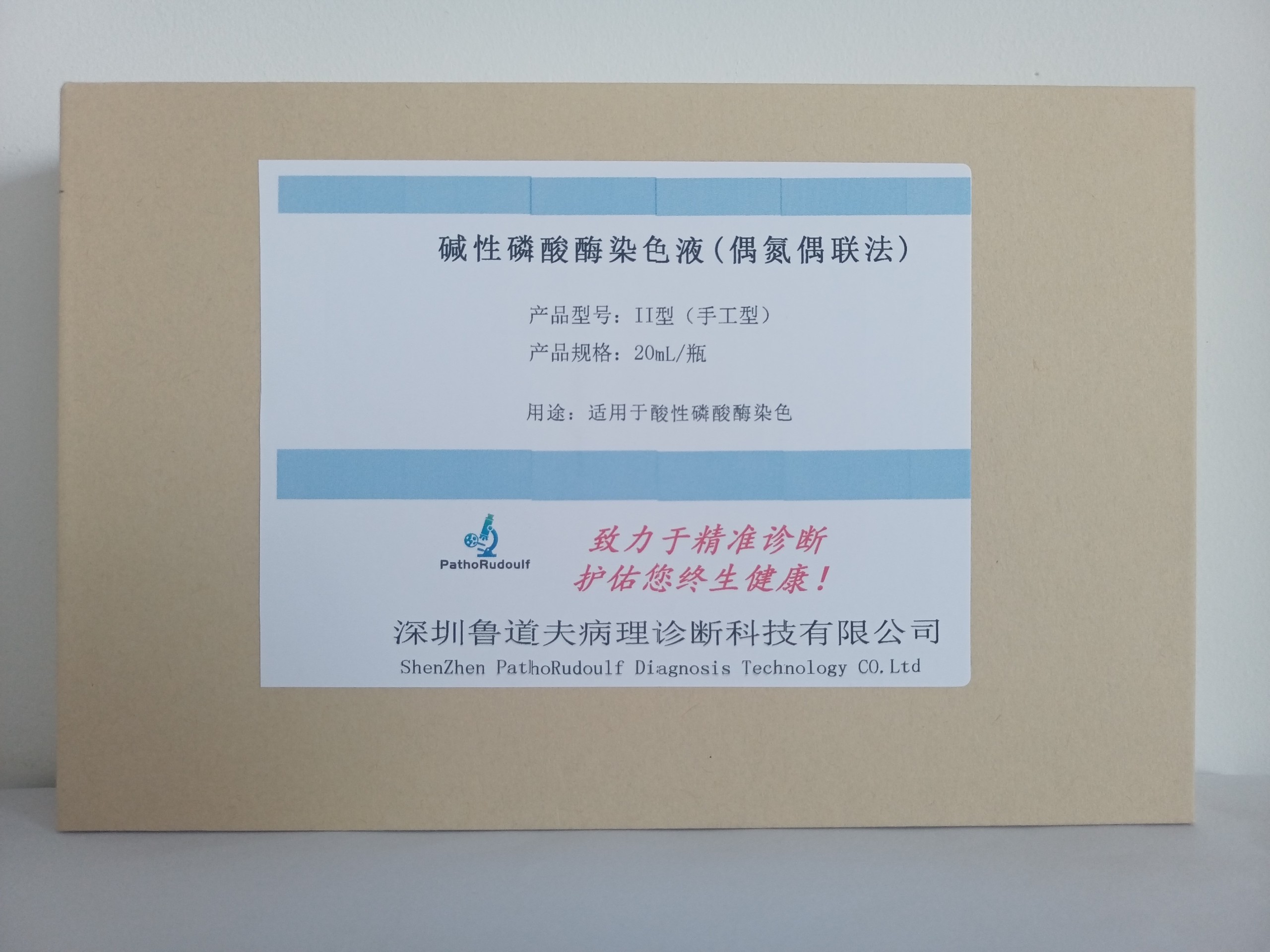
Alkaline phosphatase (ALP or AKP) is a class of phosphatase enzymes widely distributed in mammalian tissues, with an optimal pH for its activity of 9.2-9.8. The enzyme is mainly found in places of active substance exchange (cell membranes), such as the intestinal epithelium and the brush border of the proximal tubule of the kidneys, the static cilia of the epithelium of the epididymis, the capillary bile duct membranes of the liver, and the endothelium of the arterial portion of microarterioles and capillaries. Endothelium of arteries and capillary arterioles, endoplasmic reticulum, Golgi complex, vesicles, lysosomes of intestinal epithelium, neutrophil neutrophil granules, and cell membranes of smooth muscle.
Alkaline phosphatase staining solution (azo-coupling method) does not use the metal precipitation method to show alkaline phosphatase activity, but uses the azo-coupling method (also known as simultaneous coupling method), the principle is that in the alkaline conditions of pH 9.2 ~ 9.8 intracellular alkaline phosphatase can hydrolyze the AS-BI phosphate, releasing phosphoric acid and naphthol, which is coupled with the coupling of the diazonium salt to generate a colored product, which is localized in the cytoplasm. This staining solution can be used for alkaline phosphatase staining of blood, bone marrow or cell smears, frozen sections, paraffin sections after gradient into water, etc. The active site of alkaline phosphatase is blue and located in the cytoplasm, and the result is more reliable than that of metal salt precipitation method.





 0752-2228195