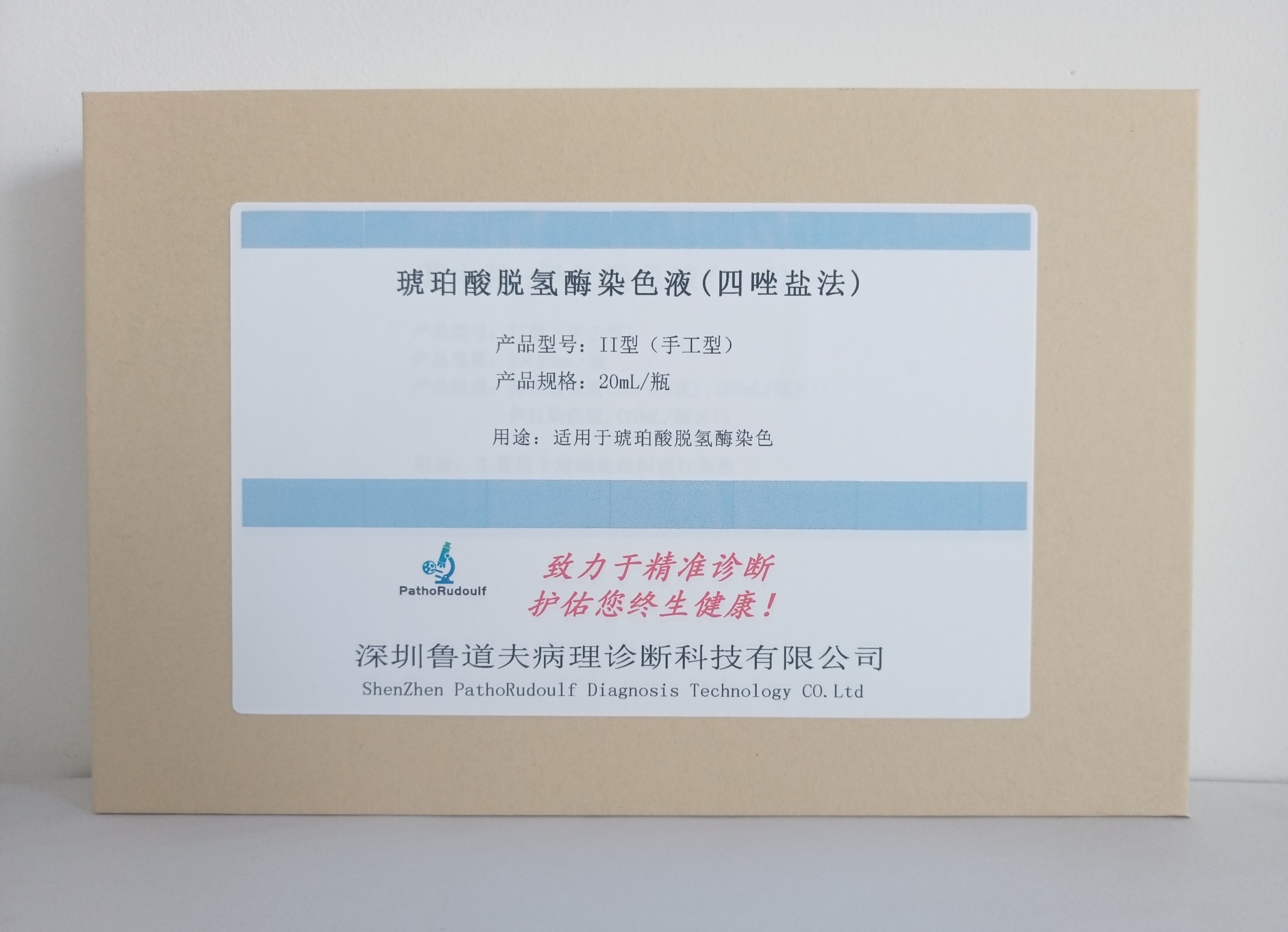
Succinate dehydrogenase (SDH) is the first enzyme of this succinate oxidase system, located in the mitochondria. Succinate dehydrogenase is a flavoprotein enzyme containing -SH in the molecule, which determines the activity of the enzyme; therefore, all those who enclose the -SH can be used as inhibitors; the optimal pH of this enzyme activity is 7.6-8.5, and it participates in the tricarboxylic acid cycle, which is often used as a representative of the tricarboxylic acid cycle in histochemistry. In histochemistry, this enzyme activity is often used as a representative of the tricarboxylic acid cycle, and is also used as one of the marker enzymes of mitochondria. Tissues with high activity of this enzyme are myocardium, epithelium of renal tubules, and hepatocytes, and this enzyme is sensitive to fixative, so it is necessary to use fresh tissue sections.
Succinate dehydrogenase staining solution (tetrazolium salt method) uses succinate as the substrate, which is dehydrogenated under the action of the enzyme, nitro blue tetrazolium (nitro BT) is the hydrogen acceptor, which is reduced to methoxylate after accepting hydrogen, and appears in blue-violet color, which is used to represent the activity of succinate dehydrogenase. NBT incubation solution contains a special intermediate hydrogen delivering body, which makes the localization more accurate and the staining more clear.





 0752-2228195