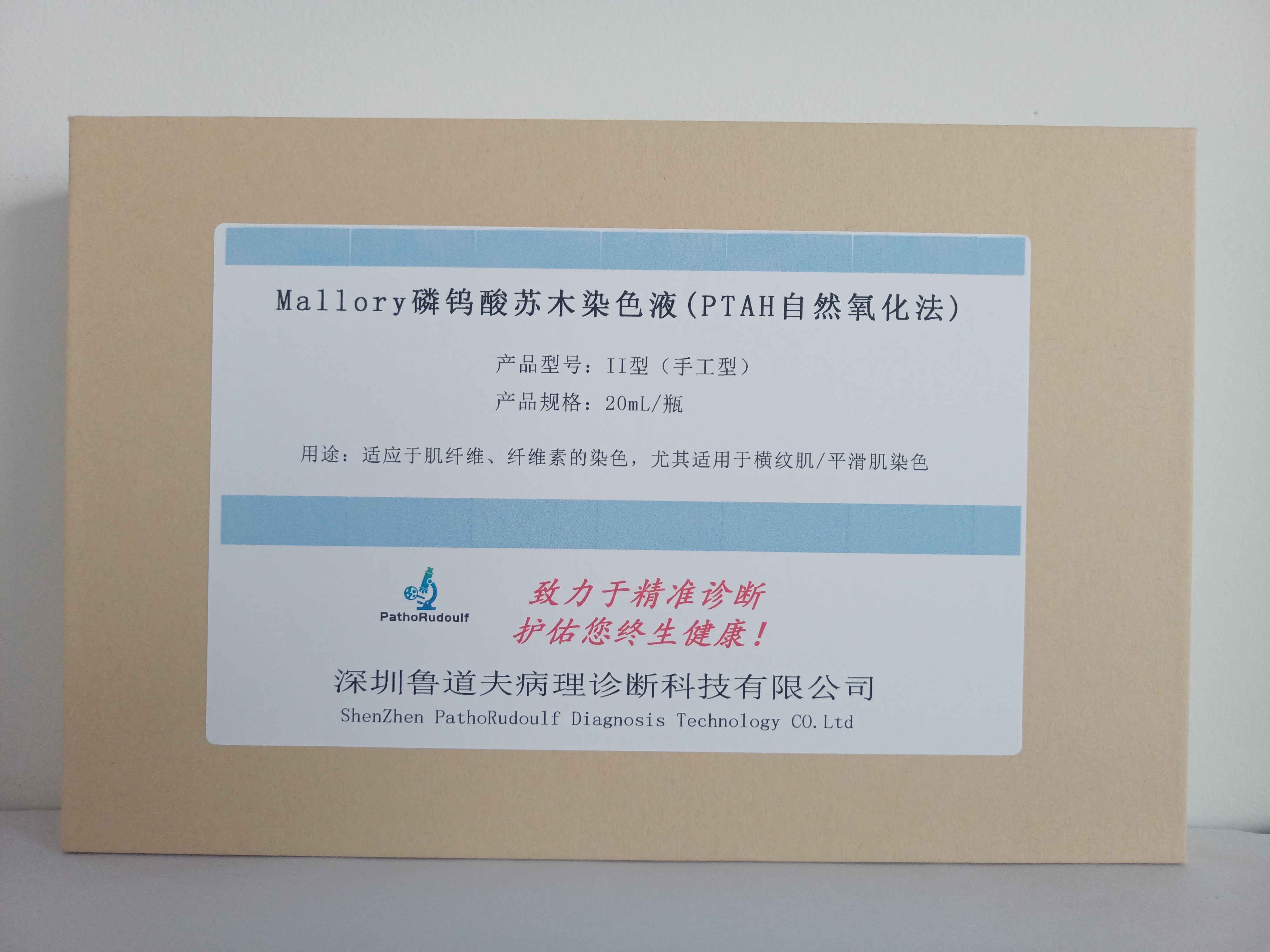
Muscle fiber (Muscle fiber) belongs to the muscle tissue components, composed of myocytes, according to the morphology and functional characteristics, muscle fibers can be divided into smooth muscle (also known as transverse muscle), skeletal muscle, cardiac muscle, muscle fiber staining methods have a variety of methods, such as Li Chun red method, aniline blue method, tungsten phosphotungstic acid hematoxylin method, and so on. Initially invented phosphotungstic acid hematoxylin staining solution, Mallory's PTAH method there are a variety of tungsten phosphoric acid hematoxylin method, around 1900 Mallory will be phosphotungstic acid aqueous solution and hematoxylin staining solution, found that the method is better for myofibrillar staining, and is now widely used that is the Mallory Phosphotungstic acid hematoxylin staining solution (PTAH natural oxidation), hematoxylin available Hematoxylin can be chemically oxidized by PTAH, but the effective period is shorter and the staining power is easy to decrease. Although natural oxidation is time-consuming, the hematoxylin produced can be used for more than 2 years, and the staining power is not easy to be lost, so it is a more ideal staining solution for CNS, general tissue structure and all the standard fixative-fixed tissues, and the staining time varies according to the preparation method, the use of fixative and the structure of the tissue shown.
Mallory phosphotungstic acid hematoxylin staining solution (PTAH natural oxidation method) mainly consists of PTAH oxidizing agent, oxalic acid solution, and Mallory PTAH staining solution. Mallory PTAH staining solution is a naturally matured staining solution, with better staining power and long preservation time, and is mostly used to show the transverse striations of the transverse myocardium, which is clinically applied to the diagnosis of rhabdomyosarcoma. The histological morphology of rhabdomyosarcoma is varied, and it is difficult to distinguish it from undifferentiated mesenchymal tumors, after using phosphotungstic acid hematoxylin staining, if blue transverse stripes are found in the cytoplasm of tumor cells, it can be proved that the tumor is showing rhabdomyosarcoma differentiation, and this staining solution can also be stained for the fibrils of inflammation exudation, fibrils in capillaries of DIC, and the neuropathology, and other aspects.





 0752-2228195