Alisin Blue, also known as Aisin Blue or Alsin Blue, etc., is a macromolecular conjugate dye, copper-titanium anthocyanine-like dye, initially used for dyeing textile fibers, this cationic dye binds to acidic groups, i.e., Alisin Blue forms insoluble complexes with anionic groups contained in tissues, such as carboxylate groups and sulfate groups. Alisin Blue 8GX and 8GS are recommended for histological staining. The exact mechanism by which Alisin Blue stains carbohydrates is unknown, and it is widely believed that the isothiourea group of the cation is electrostatically linked to the polyanions within the tissue, which cannot precipitate glycogen. The sulfate or carboxyl groups of chondroitin sulfate, dermatophyllin sulfate, acetylheparin sulfate, and hyaluronic acid ionize at pH 2.5 and thus carry a negative charge, which results in the reaction of proteoglycans/hyaluronic acid in connective tissues and cartilage, as well as epithelial acidic mucins (e.g., salivary and sulfuric mucins from the large intestine) with aliskiren blue at pH 2.5, and neutral mucins (e.g., those in the gastric mucosa and the Neutral mucins (such as those in the gastric mucosa and Brunner's gland sites) do not react with Alisin Blue.
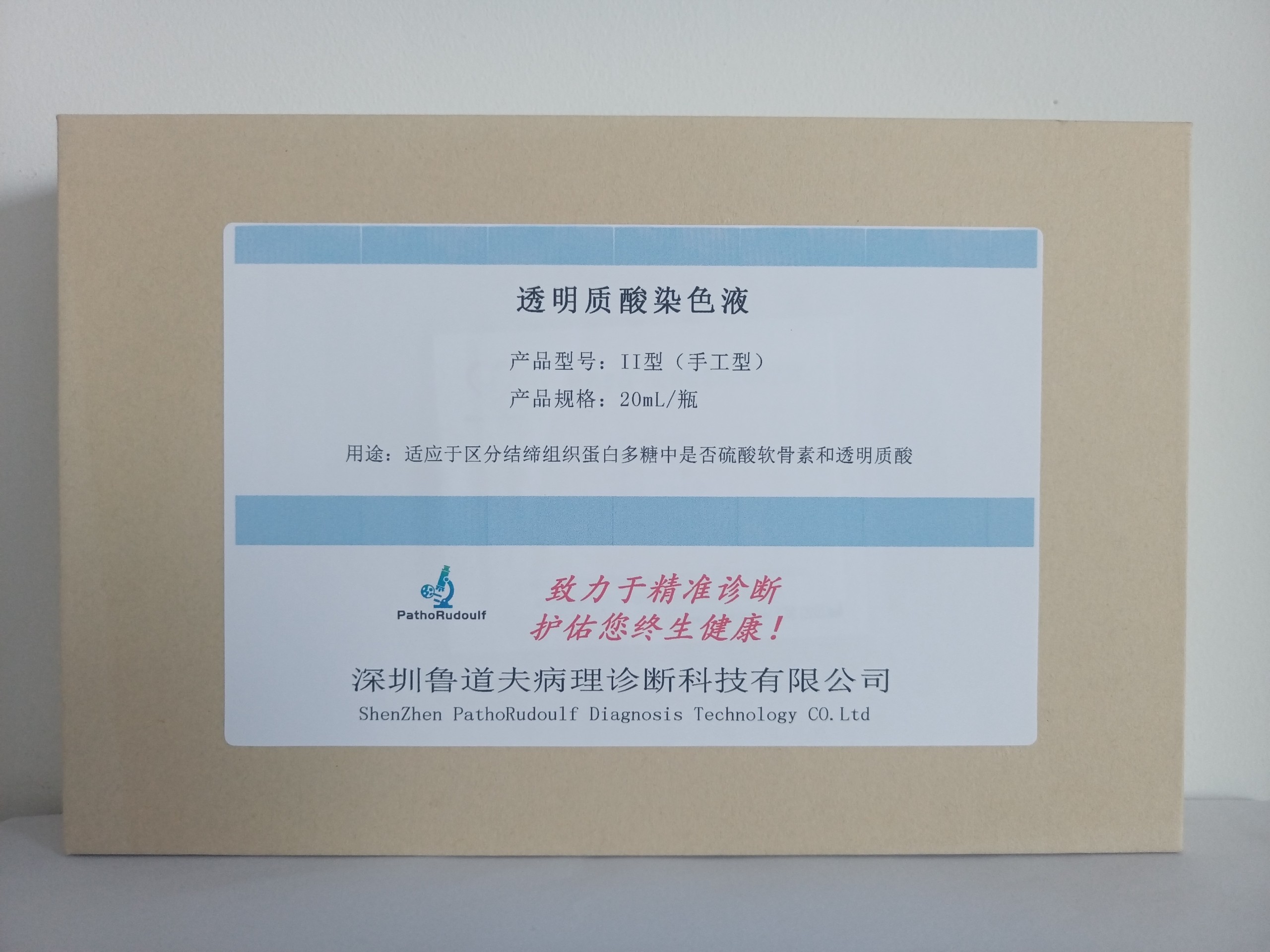
The hyaluronic acid staining solution was cleaved by hyaluronidase and combined with Alisin blue staining, which was based on the principle that the glycosidic bond in hyaluronic acid and chondroitin sulfate could be cleaved by hyaluronidase, and the specimen was pretreated with hyaluronidase before staining with Alisin blue. Compared with untreated sections, the presence of hyaluronan or chondroitin sulfate in the tissue was indicated if the treated sections did not stain, and the absence of hyaluronan in the tissue if the pretreatment had no effect. Although lacking specificity, remaining negative after hyaluronidase treatment can rule out the presence of hyaluronic acid.





 0752-2228195