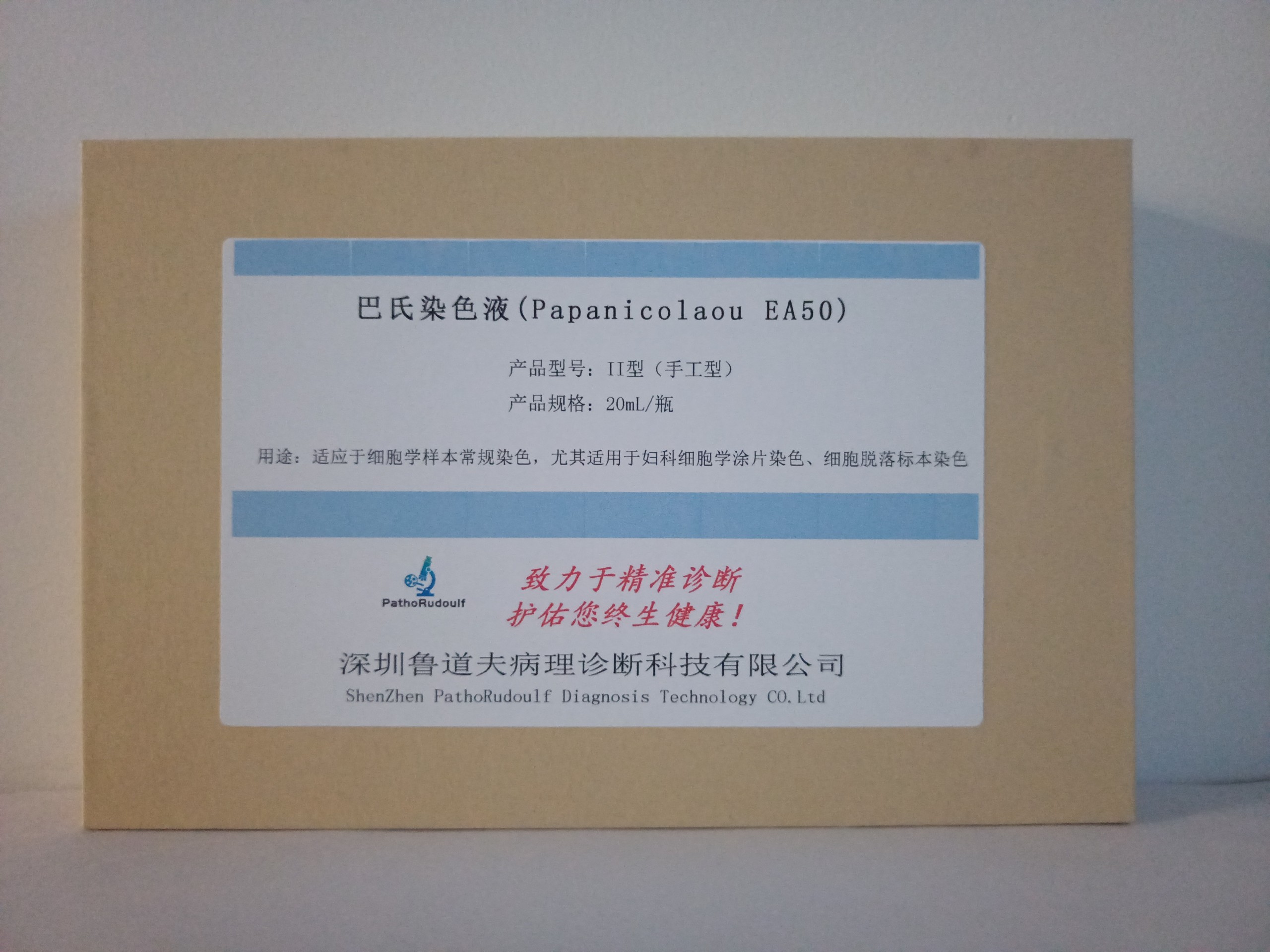
Routine cytology staining commonly used Papanicolaou (Papanicolaou) method, Papanicolaou Stain was initially used only for the detection of vaginal epithelial estrogen levels and pathogens such as Candida and Trichomonas genitalis, Orange G6 in combination with EA36 or EA50 can stain cytoplasm with distinctive colors of green, blue, and pink; most laboratories currently use finished products Staining solution, so each staining solution should pay attention to its improved optimal conditions, the final cytoplasmic staining should be transparent and visible, the nuclear chromatin should be easily identified; the current improved Bartlett's stain contains a variety of ions, with polychromatic staining efficacy, stained cytoplasm is bright, good transparency, and the nuclear membrane, nucleolus, and chromatin structure is clear. Nucleus staining solution is mainly Harris hematoxylin stain, cytoplasmic staining solution is mainly EA36 stain, EA50 stain, Papanicolaou stain is used for cell detachment specimens, the nucleus of the cell is blue or black, keratinized squamous cell cytoplasm is pink or orange.
Papanicolaou EA50 is used for cytoplasmic staining with EA50 staining solution and nucleus staining with modified hematoxylin staining solution, which is not only suitable for gynecological cytology smear staining, such as screening of cervical cancer and pre-cancerous lesions, but also for the staining of non-gynecological cellular samples, such as pleural fluid, ascites, sputum, and so on.





 0752-2228195