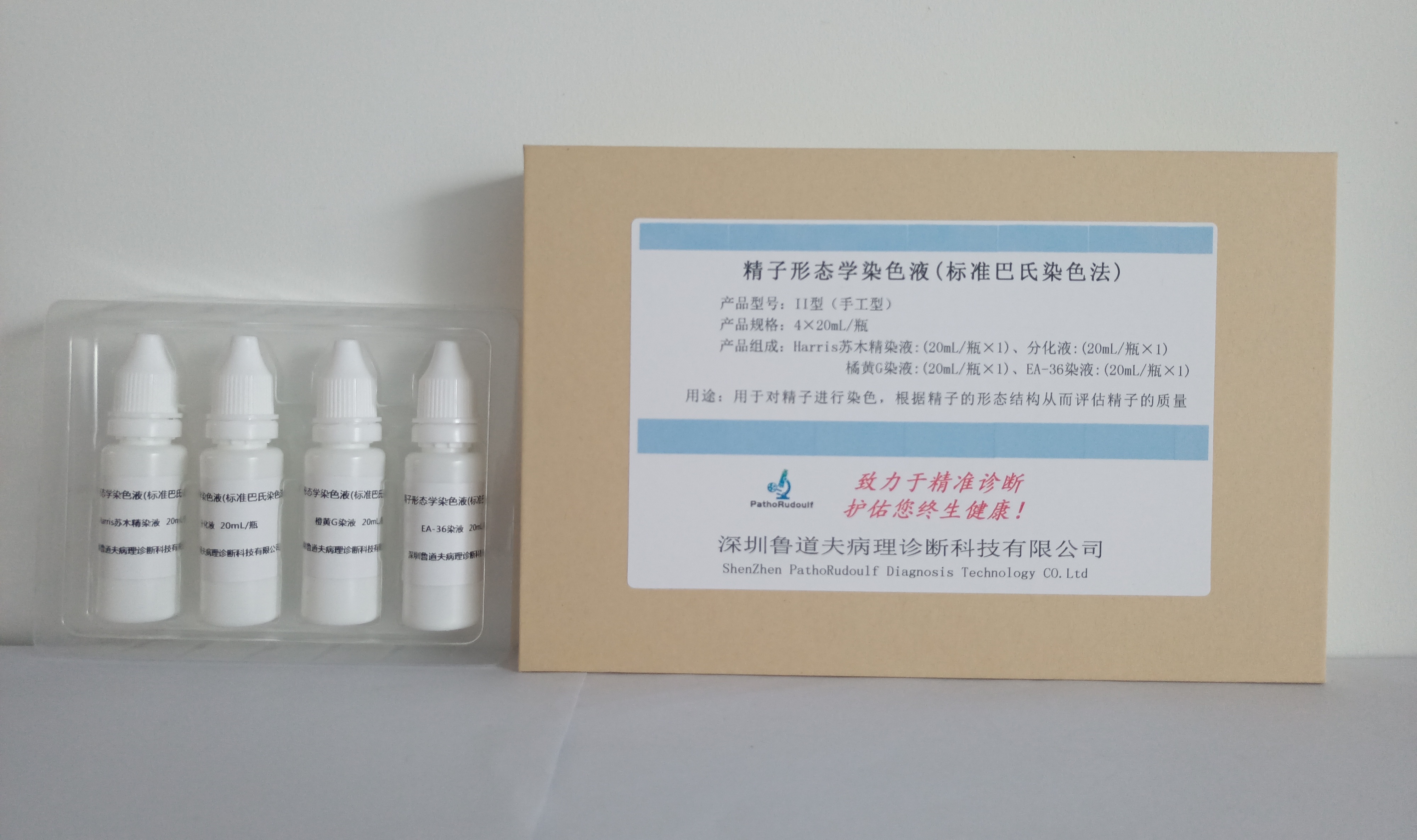
Routine cytologic staining is commonly performed using the Papanicolaou (Papanicolaou) method, and the Papanicolaou Stain was originally used only to detect vaginal epithelial estrogen levels and pathogens such as Candida and Trichomonas in the genital tract. Orange G6 is used in combination with EA36 or EA50 to stain the cytoplasm into vividly colored green, blue, and pink, and most laboratories now use finished stains, so each stain should be noted for its modified optimal conditions, and the final cytoplasmic stain should be transparent and visible, and the nuclear chromatin should be readily recognizable; the current modified Papanicolaou Stain contains a variety of ions with multichromatic staining efficacy, and stains cytoplasmic After staining, the cytoplasm is bright and transparent, and the structure of nuclear membrane, nucleolus and chromatin is clear.
Sperm morphology staining solution (pasteurization method) because spermatozoa and intracellular proteins with different isoelectric points under the same acidity with different charges, can selectively bind to the corresponding dyes and coloring, the nucleus consists of acidic substances, which has a strong affinity for alkaline dyes; while the cytoplasm is the opposite, which contains alkaline substances and acidic dyes have a greater affinity Cytoplasmic staining is particularly used in the sperm staining of the improved EA50 The cytoplasmic staining is made of modified EA50 stain for spermatozoa staining, and the cytosolic staining is made of modified hematoxylin stain, which is especially suitable for spermatozoa staining, and it can also be used for staining of cellular samples such as pleural fluid, ascites and sputum.





 0752-2228195