Different amino acids with different chemical properties of the side chain groups, some with basic side chain, some with acidic side chain, the resulting composition of the protein has a different number of basic groups and acidic groups, these groups will make the protein in different pH solutions with different net charge, the whole protein molecule with more positive charge, that is, basic protein (isoelectric point bias acidic); the whole protein with more negative charge, that is, acidic protein (isoelectric point bias acidic). The whole protein molecule is more positively charged, i.e., basic protein (isoelectric point is acidic); the whole protein is more negatively charged, i.e., acidic protein (isoelectric point is acidic). Using the dual nature of proteins (acid-base) and the ability to form salts with acidic and basic dye ions, all proteins can be stained with solid green at pH=2.2 (i.e., all proteins under the isoelectric point), and basic proteins are stained with solid green within the range of pH=8.1~8..2.
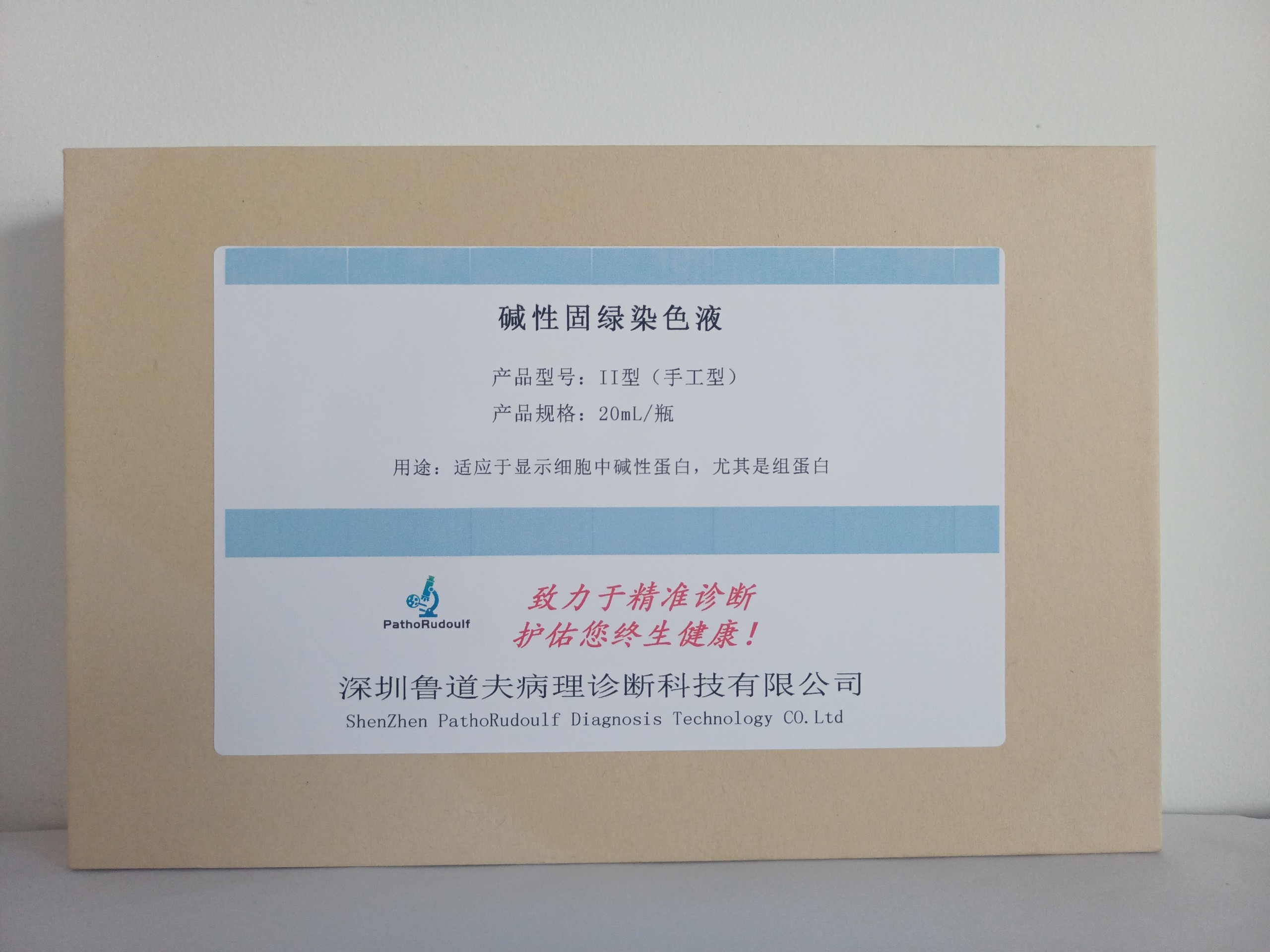
Alkaline solid green staining solution uses alkaline proteins combined with the negatively charged alkaline dye solid green for staining. The most abundant alkaline proteins in cells are histones, which are mainly found in the nucleus, and therefore most of the nucleus is stained green after staining.





 0752-2228195