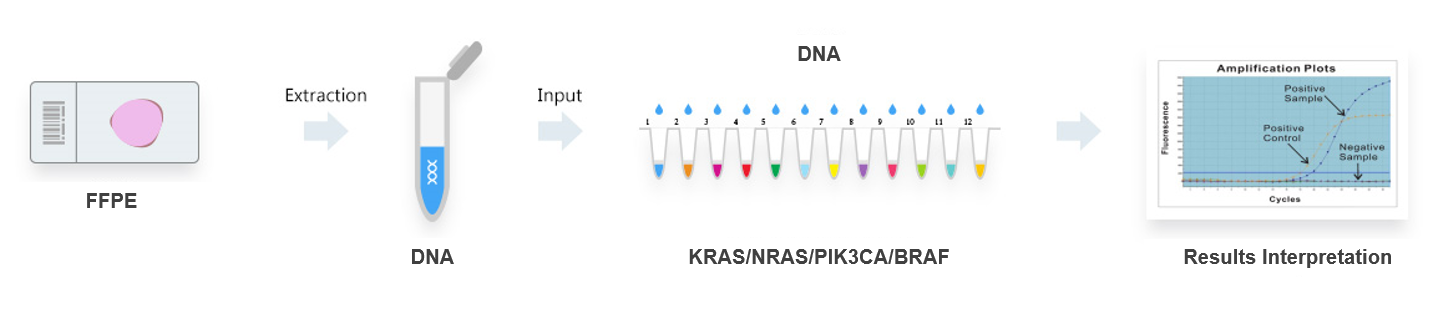
KRAS, NRAS, PIK3CA and BRAF genes are four important genes in the EGFR-dependent downstream signaling pathways RAS-RAF-MAPK pathway and PI3K-AKT pathway, and mutations in these genes lead to the continuous activation of the downstream signaling pathways, which cause aberrant cell proliferation and differentiation, and ultimately lead to the development of tumors.Mutations in the genes of KRAS, NRAS, Mutations in KRAS, NRAS, PIK3CA and BRAF genes are commonly found in various malignant tumors, and the mutation rates in colorectal cancer patients are 20-50%, 1-6%, 10-30%, and 8-15%, respectively.Mutations in the genes of KRAS, NRAS, PIK3CA, and BRAF are generally associated with a poor prognosis, and patients with colorectal cancer are resistant to anti-EGFR antibodies. that patients with PIK3CA mutations have a higher survival rate with aspirin.
Therefore, the combined detection of KRAS/NRAS/PIK3CA/BRAF mutations can improve the targeting of tumor clinical treatment, reduce the cost of treatment, and save valuable treatment time. It assists clinicians in screening cancer patients with colorectal cancer and other cancers that can benefit from tumor-targeted drugs.





 0752-2228195