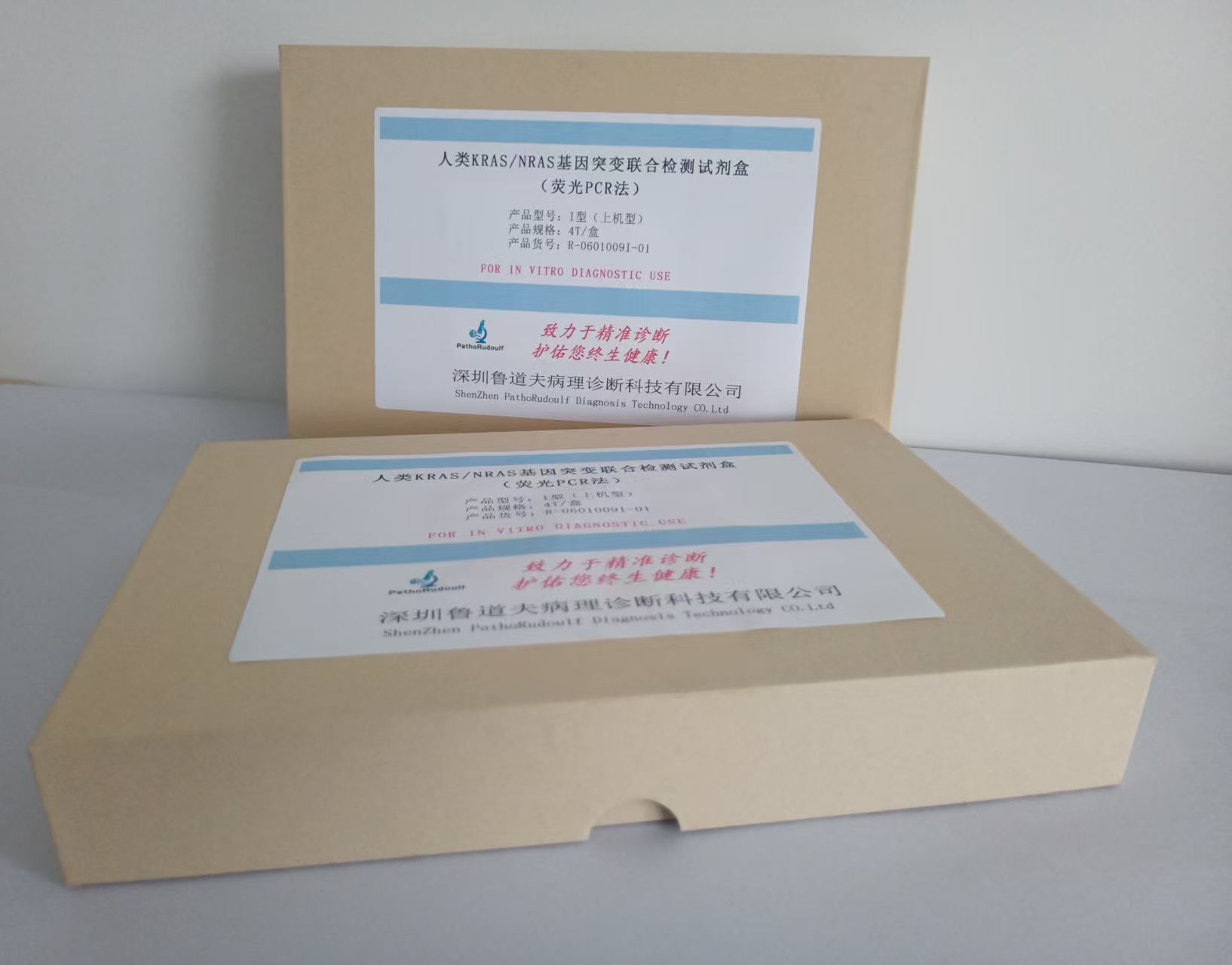
KRAS and NRAS are both members of the RAS gene family and belong to the proto-oncogene class of intracellular signaling proteins. RAS proteins are membrane-bound GTP/GDP-binding proteins, which can act as molecular switches to participate in the transmission of signals to the intracellular compartments, such as extracellular growth, proliferation, differentiation, and other processes. Mutations in the KRAS and NRAS genes can lead to aberrant activation of RAS, stimulating sustained cell growth or differentiation and ultimately leading to tumorigenesis. Mutations that cause KRAS to be in an activated state are mainly located in exons 2, 3 and 4 of the KRAS gene, and NRAS mutations are mainly located in exons 2, 3 and 4 of the NRAS gene. The rates of KRAS and NRAS mutations in colorectal cancer patients are 20-50% and 1-6%, respectively.
Clinical studies have found that patients with KRAS and NRAS mutated colorectal cancer do not benefit from anti-EGFR antibody-based drug therapy, and that the use of anti-EGFR drugs would increase the risk of adverse reactions and the cost of treatment; whereas patients with KRAS and NRAS wild-type can significantly benefit from such drugs.3 large clinical studies in the 2013 CSCO annual meeting pointed out that only RAS wild-type Three large clinical studies at CSCO 2013 indicated that only RAS wild-type patients with metastatic colorectal cancer could benefit from anti-EGFR targeted therapies; in light of this, the European Medicines Agency (EMA) and the United Kingdom Medicines Agency (UKMA) updated the therapeutic indications for cetuximab in December 2013, suggesting that it is important to clarify the significance of RAS wild-typing (wild-typing of exons 2, 3, and 4 of both the KRAS and NRAS genes) prior to treatment with this drug.





 0752-2228195