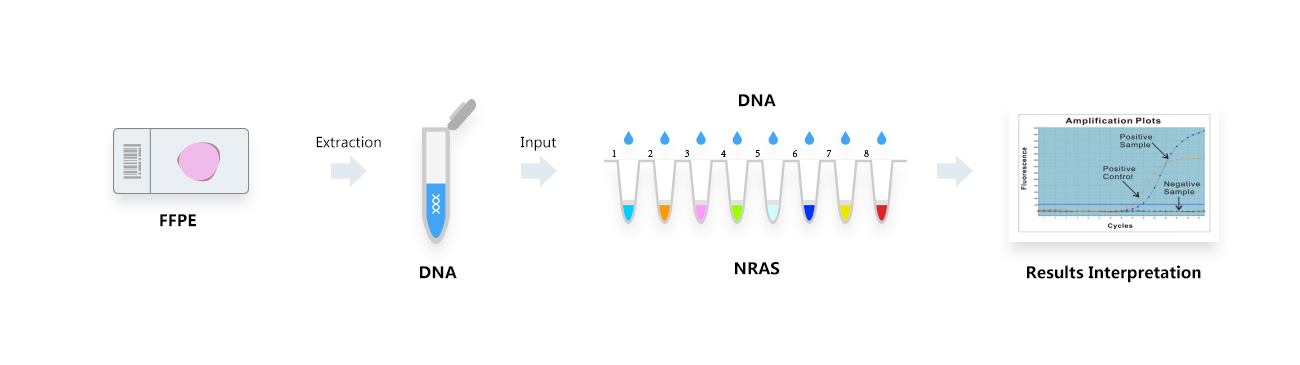
Mutations that cause KRAS to be in an activated state are mainly located in exons 2, 3, and 4 of the KRAS gene.Data from the PRIME study and the OPUS study suggest that clinicians should test not only exon 2 of the mutated hotspot of the KRAS gene, but also other exons of the KRAS gene and the NRAS gene, prior to the use of an anti-EGFR monoclonal antibody, such as panitumumab, in the treatment of patients with metastatic colorectal cancer. On December 30, 2013, Merck Serono, in conjunction with the European Medicines Agency (EMA) and the United Kingdom Medicines Hazard Agency (MHRA), updated the therapeutic indications for Epiduo, suggesting the importance of clarifying the status of wild-type RAS (exons 2, 3 and 4 of KRAS and NRAS) prior to administration of the medication.
The KRAS gene is a common cancer-causing gene in human tumors. Mutations in this gene are common in a variety of malignant tumors, with mutation rates ranging from 15 to 30% in lung cancer patients and 20 to 50% in colorectal cancer patients.
The National Consortium for Comprehensive Cancer Therapy (NCCN) Clinical Practice Guidelines for Colorectal Cancer (V1.2015) clearly states that (1) all patients with metastatic colorectal cancer should be tested for KRAS gene status, and (2) only patients with wild-type of KRAS are recommended to be treated with EGFR inhibitors (e.g., Epidermol and Panitumumab). The Colorectal Cancer Diagnostic and Treatment Guidelines (2010 Edition) issued by the Ministry of Health also clearly states that when recurrent or metastatic colorectal cancer is identified, the KRAS gene status of tumor tissues should be tested in order to determine the appropriate treatment plan.





 0752-2228195