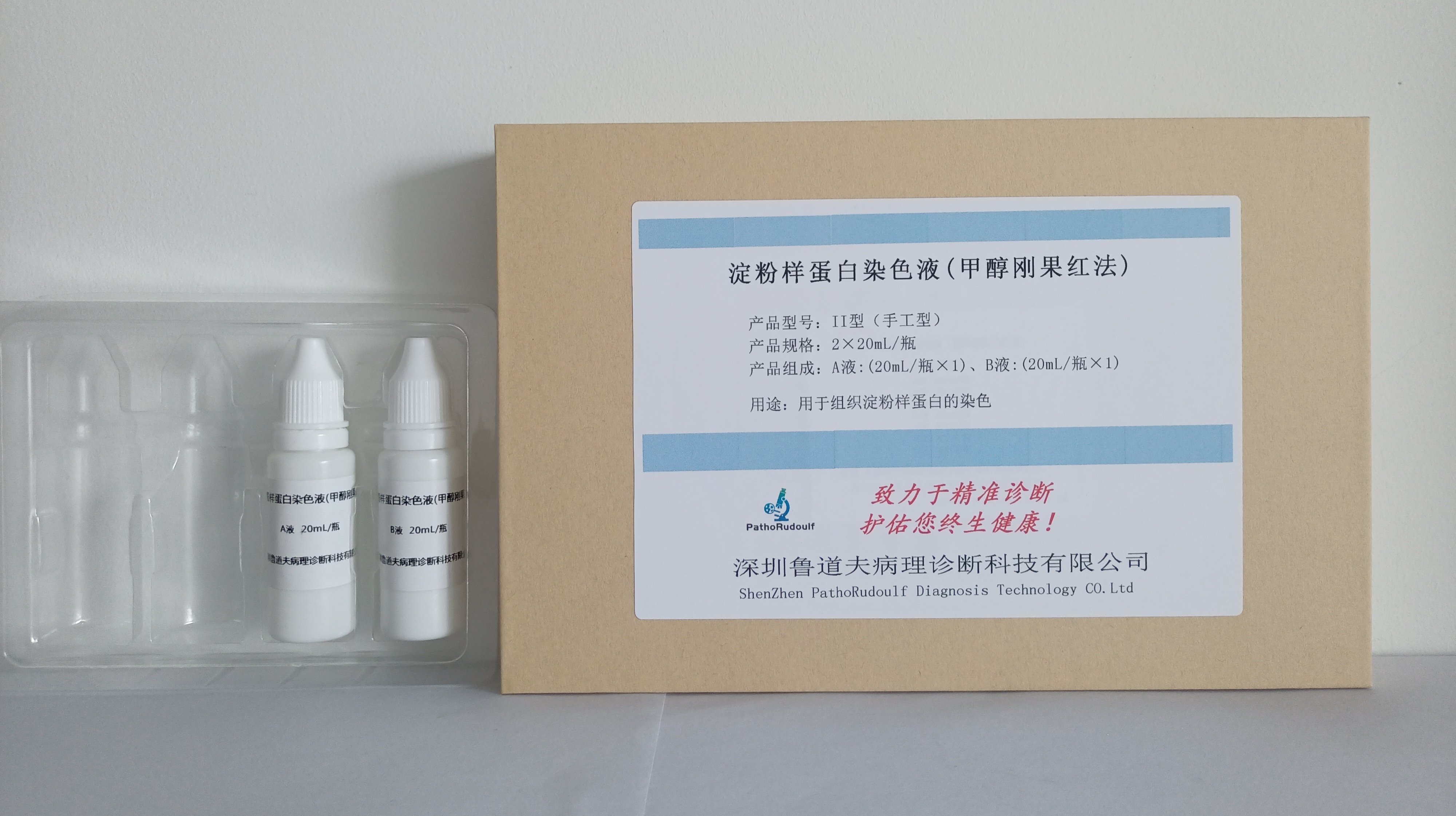
Amyloid is an extracellular eosinophilic substance without a fixed shape that can be present in different tissues and organs, resulting in a disease called amyloidosis. The amyloid is mainly composed of proteins, which are mostly arranged in a reverse beta-folded lamellar structure. In electron microscopy amyloid is arranged as protofibrils, and in case material as a large number of extracellular unbranched filaments, mostly randomly arranged. The histological methods used to identify amyloid include methyl violet staining, Congo red staining, and polarized light microscopy, etc. Current research has found that the traditional methyl violet staining method has low sensitivity and poor specificity, and the classic and effective method is Congo red staining. In 1922, Bennhold found that Congo red could be used to identify amyloid in vivo, and it was applied to tissue sections. It was later improved by Highman, and the staining effect was better.





 0752-2228195