Uterine stromal tumors
The 2014 WHO classification combines histological characteristics, clinical prognosis, and molecular genetic data of ESTs. ESTs with BCOR gene abnormalities have a prognosis similar to that of HGESS, and the academic community therefore believes that this type of tumor should also be included in the HGESS category.
HGESS is an extremely rare EST with a more aggressive biological behavior than LGESS. The median age at diagnosis is 50 years, and it often presents with extensive myometrial invasion and extrauterine metastasis. Most patients are diagnosed at an advanced stage and frequently experience early recurrence. Microscopically, the tumor exhibits tongue-shaped invasion of the uterine myometrium, with common features of necrosis and lymphovascular invasion. Tumor cells are high-grade round cells, with over half of cases showing areas of low-grade spindle cells. High-grade round cells may form nests, and occasionally pseudoglandular, pseudopapillary, rosette-like structures, and sex cord-stromal differentiation may be observed. The cell nuclei are larger than those in LGESS, with some nuclear pleomorphism, and active mitotic activity (>10/10 HPF). The low-grade spindle cell component has a fibroblast-like or fibromucinous appearance, with lower cell density and mitotic activity generally ≤3/10 HPF. The low-grade spindle cell component expresses CD10, ER, and PR, with a low Ki-67 positivity index, while the high-grade round cell component typically does not express CD10, ER, and PR, but cyclin D1 and BCOR are often strongly positive. Therefore, immunohistochemical labeling of BCOR and cyclin D1 proteins is an effective method for initial screening of HGESS in routine clinical practice.
BCOR (bcl-6 co-inhibitory molecule) regulates transcriptional activity through covalent modification of histones. Abnormalities in BCOR are associated with various hematological and malignant solid tumors. In HGESS, BCOR gene abnormalities are partially secondary to ZC3H7B-BCOR gene fusion and partially due to short tandem repeat sequences within the BCOR gene.
HGESS with ZC3H7B-BCOR fusion genes typically exhibit a mucinous background, with histological features resembling mucinous leiomyosarcoma, and active mitotic activity in localized areas (≥10/10 HPF). These tumors show high positivity rates for CD10 and cyclin D1 (approximately 80% of cases), but only 50% exhibit diffuse positivity for BCOR immunohistochemistry. Therefore, in clinical practice, initial screening of uterine spindle cell tumors with a mucinous background and active mitotic activity using CD10, cyclin D1, and BCOR immunohistochemistry, with ZC3H7B-BCOR fusion gene testing as needed, is a necessary and effective approach for distinguishing HGESS.
It should be noted that short tandem repeat sequences in exon 15 of the BCOR gene are also present in another subset of HGESS. HGESS with BCOR short tandem repeats predominantly occurs in young individuals (mean age 24 years) and shares morphological similarities with HGESS harboring the ZC3H7B-BCOR fusion gene, suggesting that abnormalities in these two BCOR gene variants may lead to similar BCOR functional defects. These tumors diffusely express cyclin D1 and BCOR by immunohistochemistry, but definitive diagnosis requires sequencing to detect BCOR short tandem repeats.
Undifferentiated-unclassified sarcoma
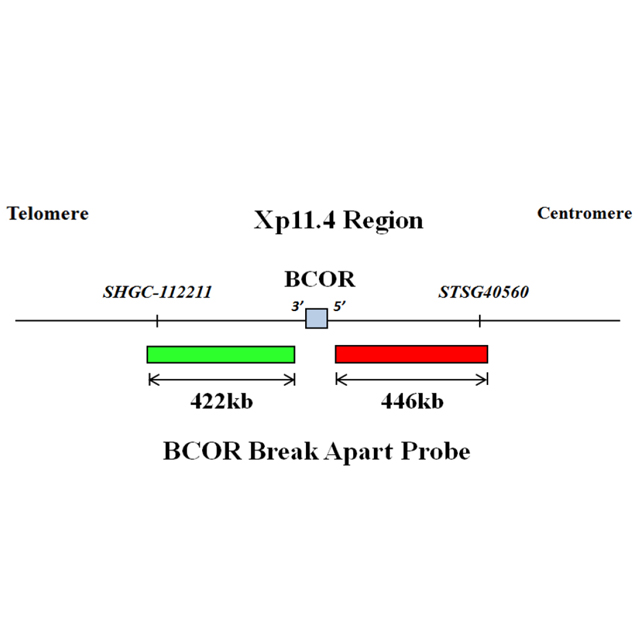
Significance Refer to the BCOR/CCNB3 fusion gene. However, it should be noted that in addition to CCNB3, the BCOR gene can also fuse with multiple genes, such as ZC3H7B and MAML3. BCOR breakage probes can detect these fusions, resulting in breakage-positive results.





 0752-2228195