Breast Cancer
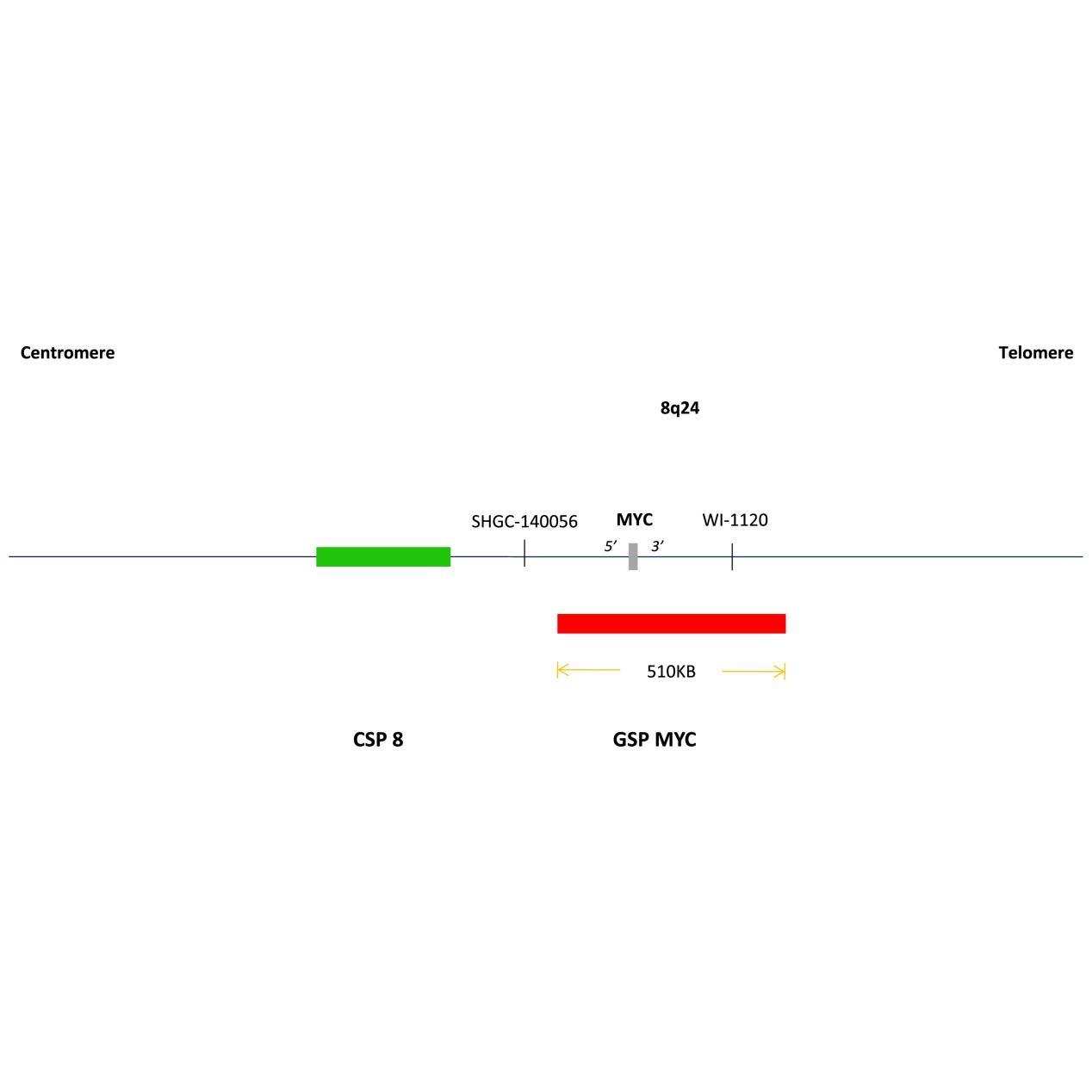
The MYC gene can be amplified in a variety of tumors, such as breast and cervical cancer, with a poor prognosis;
detects chromosome 8 polyploidy.
Cervical cancer
Patients with MYC gene amplification have a poor prognosis but respond well to high-dose chemotherapy.
CNS tumors
MYC gene amplification occurs in about 16% of medulloblastomas Group3 and has a poor prognosis.
Undifferentiated/unclassified sarcoma
Angiosarcoma that occurs after radiation therapy, usually 5 years or more, is called post-radiation angiosarcoma. About 50% of cases are multiple, with up to 50 simultaneous lesions. They are prevalent in older women around 70 years of age and span 36-90 years of age;
Immunohistochemistry of postradiotherapy angiosarcoma tumor cells are strongly positive for c-Myc nuclei, whereas FISH detects Myc gene amplification. This is different from atypical vascular lesions;
Post-radiation angiosarcoma is mainly differentiated from atypical vascular lesions and other poorly differentiated spindle and epithelioid malignancies including malignant melanoma, carcinoma and pleomorphic sarcoma.
Chronic lymphocytic leukemia (CLL)
MYC gene amplification occurs in a variety of tumors such as bladder/breast/cervical/lymphoma with a 5% incidence in CLL;
Poor prognosis but responds well to high-dose chemotherapy.





 0752-2228195