Other Soft Tissue Tumors
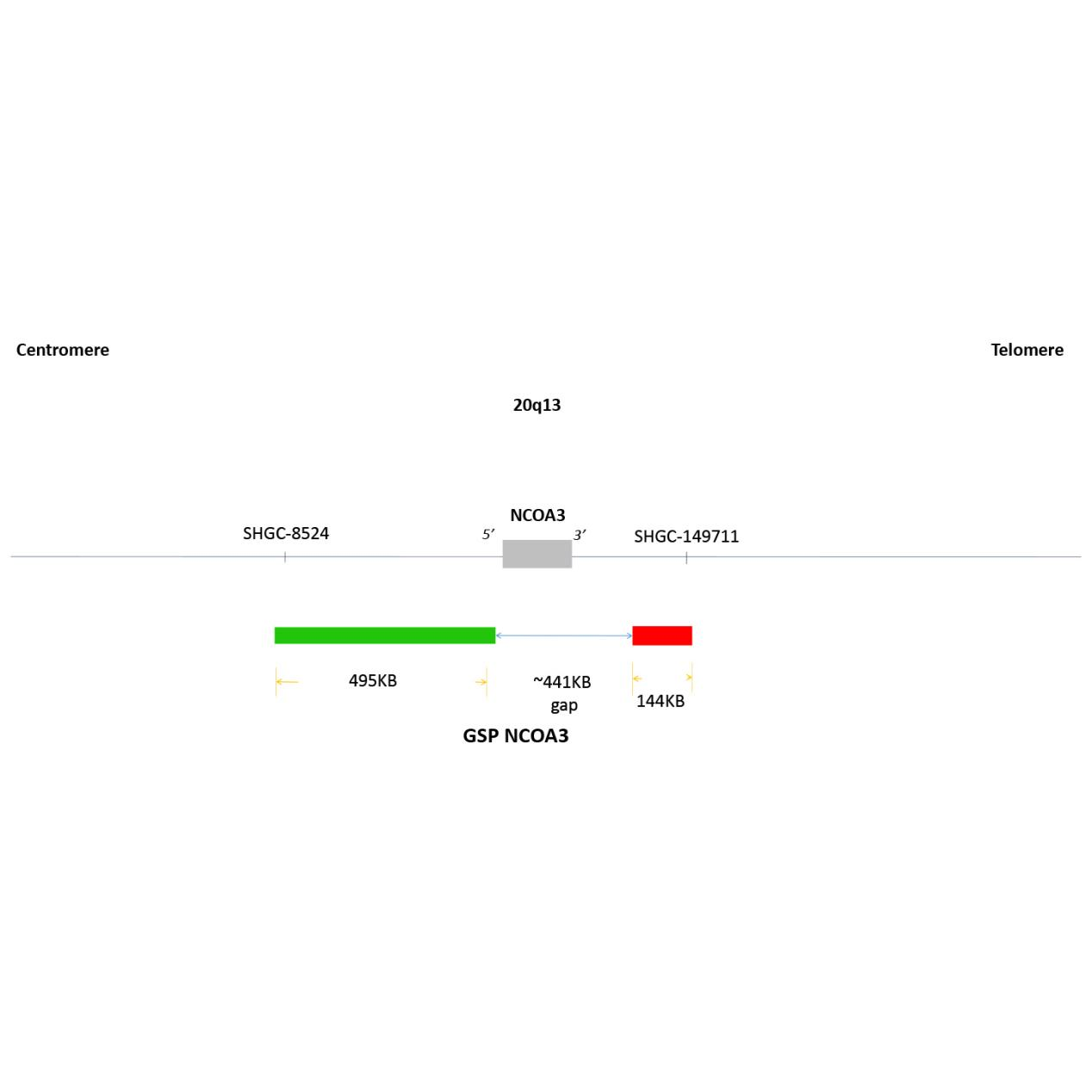
This probe can be applied as an adjunctive diagnostic for uterine tumor resembling ovarian sex cord tumor (UTROSCT), a rare and distinctive tumor with unclear tissue composition and undetermined malignant potential. This tumor is morphologically similar to ovarian sex cord mesenchymal tumors and has a polyphenotypic immunophenotype. Its molecular pathogenesis has not yet been elucidated. However, it is noteworthy that this tumor lacks the alterations found in other uterine tumors with gonad-like differentiation, such as endometrial mesenchymal sarcoma.After identifying the index patient with the ESR1-NCOA3 fusion gene by RNA sequencing in a study related to this case published in AJSP 2019, the authors retrospectively examined other cases of UTROSCT. Two of the four patients were found to have an ESR1-NCOA3 fusion, and each also had ESR1-NCOA2 and GREB1-NCOA2 fusions, respectively. The authors concluded that UTROSCT has a characteristic concomitant NCOA2 translocation and NCOA3 translocation abnormality that can be directly used for diagnostic evaluation. This study confirms that UTROSCT is molecularly distinct from endometrial mesenchymal sarcomas and raises interesting new questions about the pathogenesis of these tumors and their possible relationship with other NCOA fusion-positive uterine tumors.
Uterine Mesenchymal Tumors
should be used as a companion diagnostic similar to the uterine tumor resembling ovarian sex cord tumor (UTROSCT).
After identifying the index patient with the ESR1-NCOA3 fusion gene by RNA sequencing in this case-related study published in AJSP 2019, the authors retrospectively tested other cases of UTROSCT. Two of the four patients were found to have an ESR1-NCOA3 fusion, and each also had ESR1-NCOA2 and GREB1-NCOA2 fusions, respectively. The authors concluded that UTROSCT has a characteristic concomitant NCOA2 translocation and NCOA3 translocation abnormality that can be directly used for diagnostic evaluation. This study confirms that UTROSCT is molecularly distinct from endometrial mesenchymal sarcomas and raises interesting new questions about the pathogenesis of these tumors and their possible relationship with other NCOA fusion-positive uterine tumors.





 0752-2228195