Lymphoma
MYC gene disruption is present in 5%-15% of patients with diffuse large B-cell lymphoma, and MYC gene disruption and BCL2 gene disruption and or BCL6 gene disruption can be used in the diagnosis of double/triple-hit lymphoma (DHL);
FISH testing for these three targets is recommended by the 2018 CSCO Guidelines for both first-episode and relapsed-after-treatment DLBCL;
The 2016 edition of the WHO The 2016 WHO classification “High-grade B-cell lymphoma, non-specific” replaces the 2008 classification “B-cell lymphoma, characterized by an indistinguishable type between diffuse large B-cell lymphoma and Burkitt lymphoma”. It includes the following two categories of high-grade B-cell lymphomas: (1) all double-hit B-cell lymphomas (i.e., high-grade B-cell lymphomas with MYC rearrangements and BCL2 and/or BCL6 rearrangements), regardless of whether they are morphologically diffuse large B-cell lymphomas or Burkitt-like; and (2) cases with morphology intermediate between diffuse large B-cell lymphomas and Burkitt lymphomas. cases between;
For patients with double-hit lymphoma, intensive treatment regimens such as R-HyperCVAD and R-DAEPOCH are usually used. The R-DAEPOCH regimen as a first-line treatment significantly prolonged the PFS compared with the R-CHOP regimen, but there was no statistically significant difference in the OS;
30%-35% of DLBCLs express MYC proteins, and 20%-35% also BCL2, but most do not carry the MYC/BCL2 gene abnormality, which is referred to as “dual-expression lymphoma” (not a diagnostic term, the literature reports that the common expression thresholds are 40% for MYC and 50% for BCL2) and suggests a poor prognosis; MYC immunohistochemistry (clone Y69) is not a useful tool in the diagnosis of aggressive B-cell lymphomas such as BL or DLBCL; however, it has been shown to be effective in the treatment of these tumors. MYC immunohistochemistry (clone No. Y69) in aggressive B-cell lymphomas (such as BL or DLBCL) has multiple abnormalities in cytoplasmic, nuclear membrane, and intranuclear expression with different expression abundance;
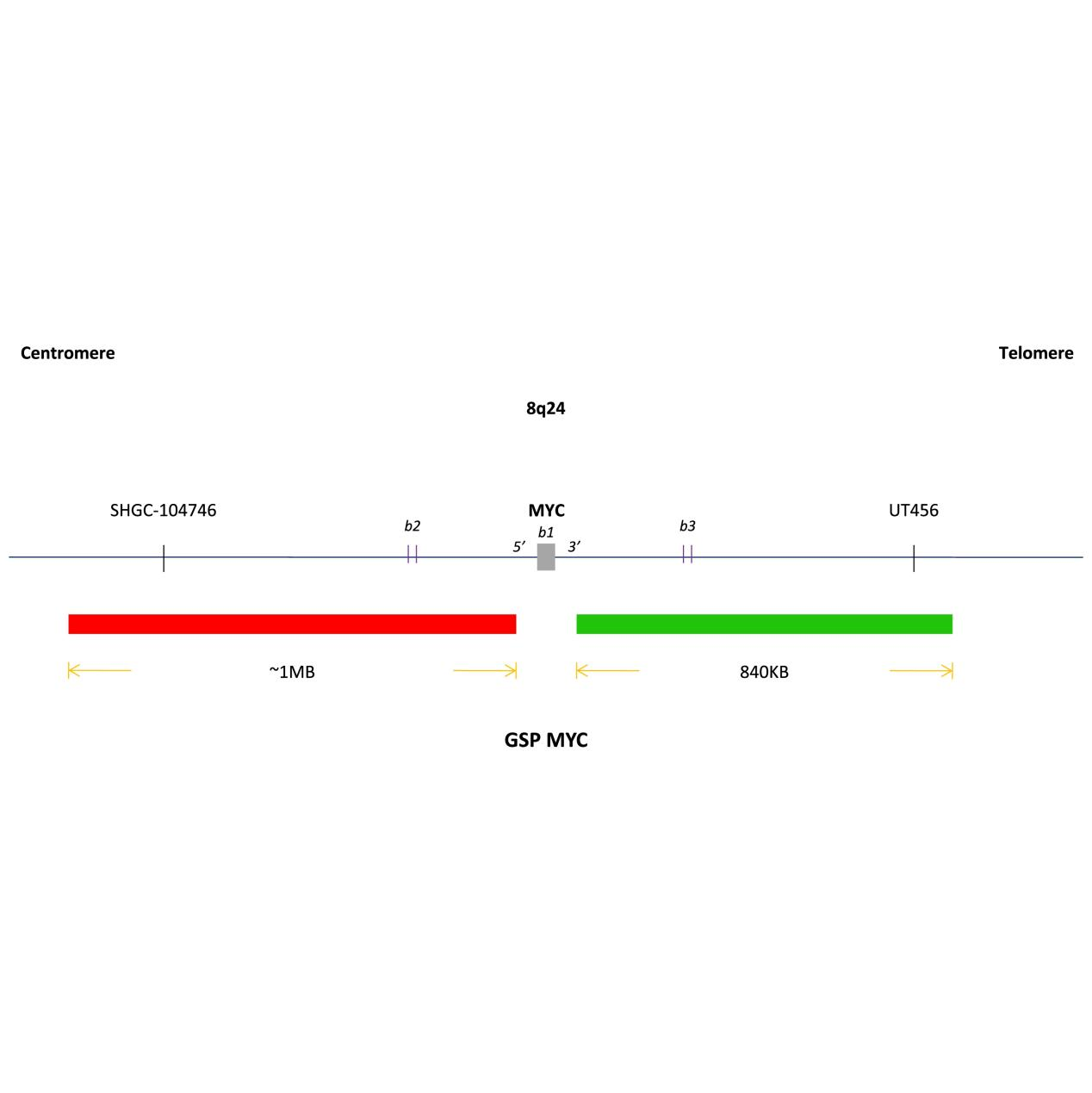
In DLBCL, there are multiple breakpoints in the MYC gene, which is much more complex than that of BL or MM, and due to the diversity of breakpoints when using MYC breakpoint probes, atypical positive signal other than the typical positive signals 1Red, 1Green, and 1Yellow may be displayed, which is often correlated with a poor prognosis. The main types of abnormal signals and their proportions should be noted in the report;
In DLBCL or other high-grade B-cell lymphomas, the use of MYC and BCL2 breakage probes often encounters breakage-negative but multisomal cases, extracted from the bulk data of Jiangsu Provincial People's Hospital in China for reference: MYC translocation positivity was 22/180=12%, MYC copy number increase was 13/180=7%. BCL2 translocation positivity was 22/282=7.8%,BCL2 copy number increase was 56/282=20%;
2017 review of the bulk data of 1106 cases of DLBCL showed that the proportion of MYC protein expression and gene translocation positivity in the GCB subtype of cellular origin was 27% and 21%, respectively, compared with the data of 35% and 5% for the ABC subtype, respectively.The proportion of BCL2 protein expression and gene translocation were 43% and 25%, respectively, while the data for ABC subtypes were 63% and 5%, respectively. In other words, MYC and BCL2 translocations were more common in the GCB subtype, although a higher percentage of their proteins were expressed in the ABC subtype;
Acute lymphoblastic leukemia (ALL)
MYC gene breakage abnormalities occur in 5% of B-ALL patients and can be fused to multiple genes;
Approximately 75% of mature B-cell acute leukemia patients morphologically exhibit FABALL-L3, often with typical t(8;14)(q24;q32);
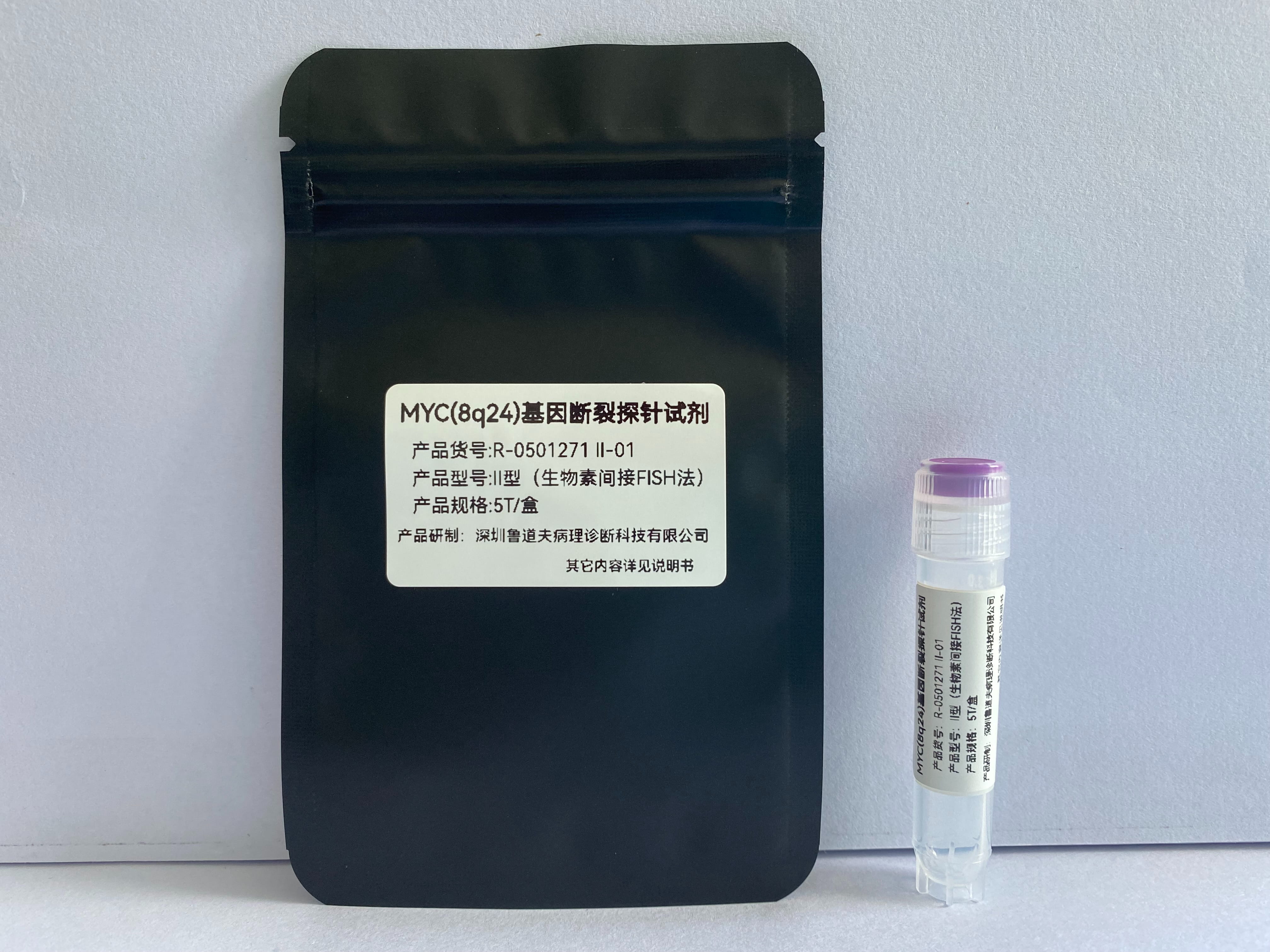
MYC gene breakage abnormalities imply a very poor prognosis, with resistance to chemotherapeutic agents and rapid disease progression and a more aggressive clinical picture.MYC (8q24) gene breakage probe reagents





 0752-2228195