The Chinese 2019 edition of the HER2 testing guidelines for breast cancer states that cases with a HER2/CEP17 ratio <2.0 and a mean HER2 copy number/cell ≥6.0 (Group 4 cases) are directly judged as FISH positive, a point that differs from the US 2018 edition of the ASCO/CAP guidelines;
The Chinese panel was based on the following evidence: it is very important to focus on the status of HER2 itself, and cases with amplification of the HER2 gene itself should not be categorized as FISH-negative because of a HER2/CEP17 ratio of <2.0, nor should their IHC results change the judgment of FISH.Donaldson et al. showed that in 10 cases with a HER2/CEP17 ratio <2.0 with a mean HER2 copy number/cell ≥6.0 became HER2/CEP17 ratio ≥2.0 with a mean HER2 copy number/cell ≥4.0 in 7 cases after retesting with the D17S122 replacement probe;
The China 2019 edition states that there is a gradual increase in studies on the use of alternative probes in HE2 in situ hybridization. The alternative probes can provide a reference when there are several special results of in situ hybridization mentioned above, or when the results of the in situ hybridization assay are inconsistent with the IHC results;
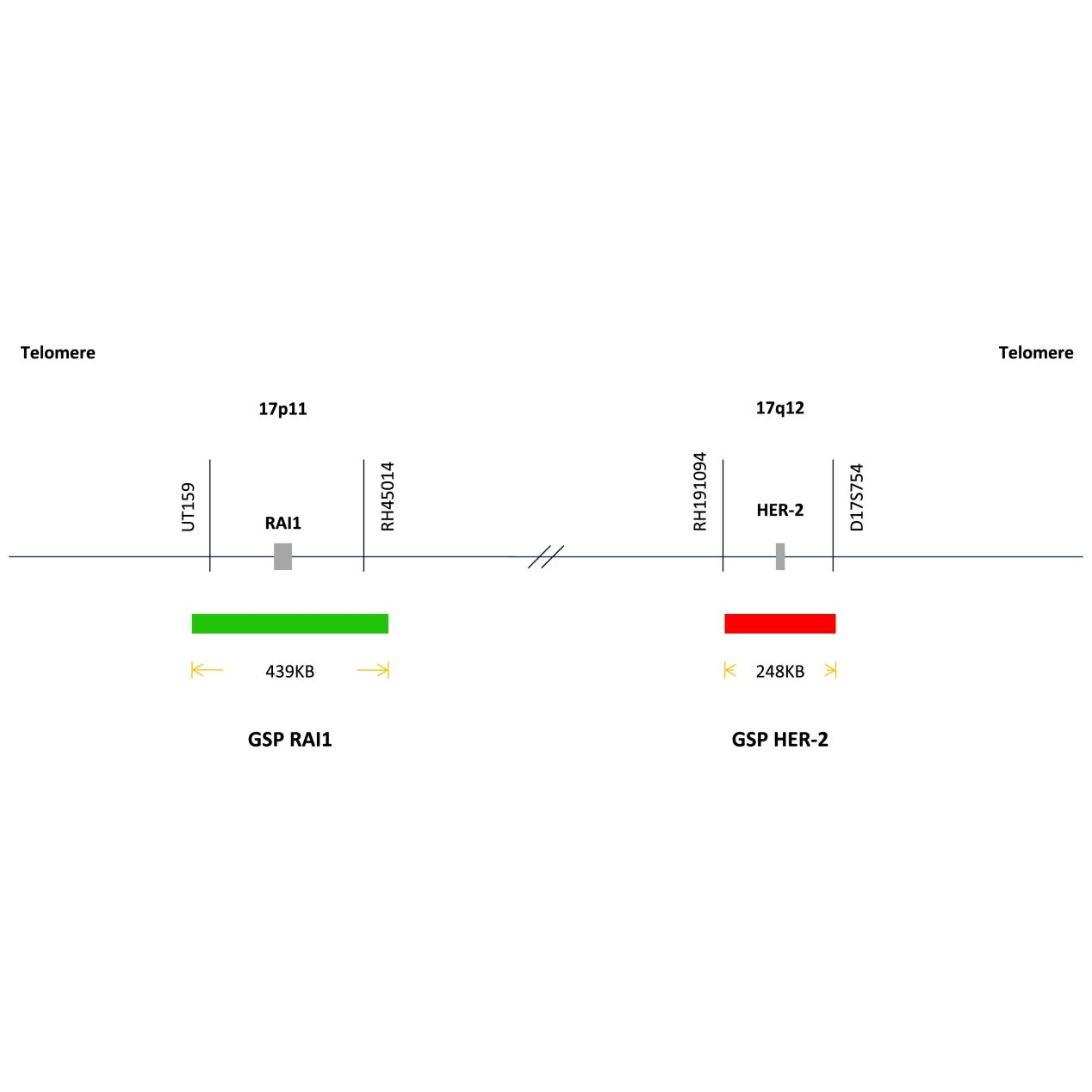
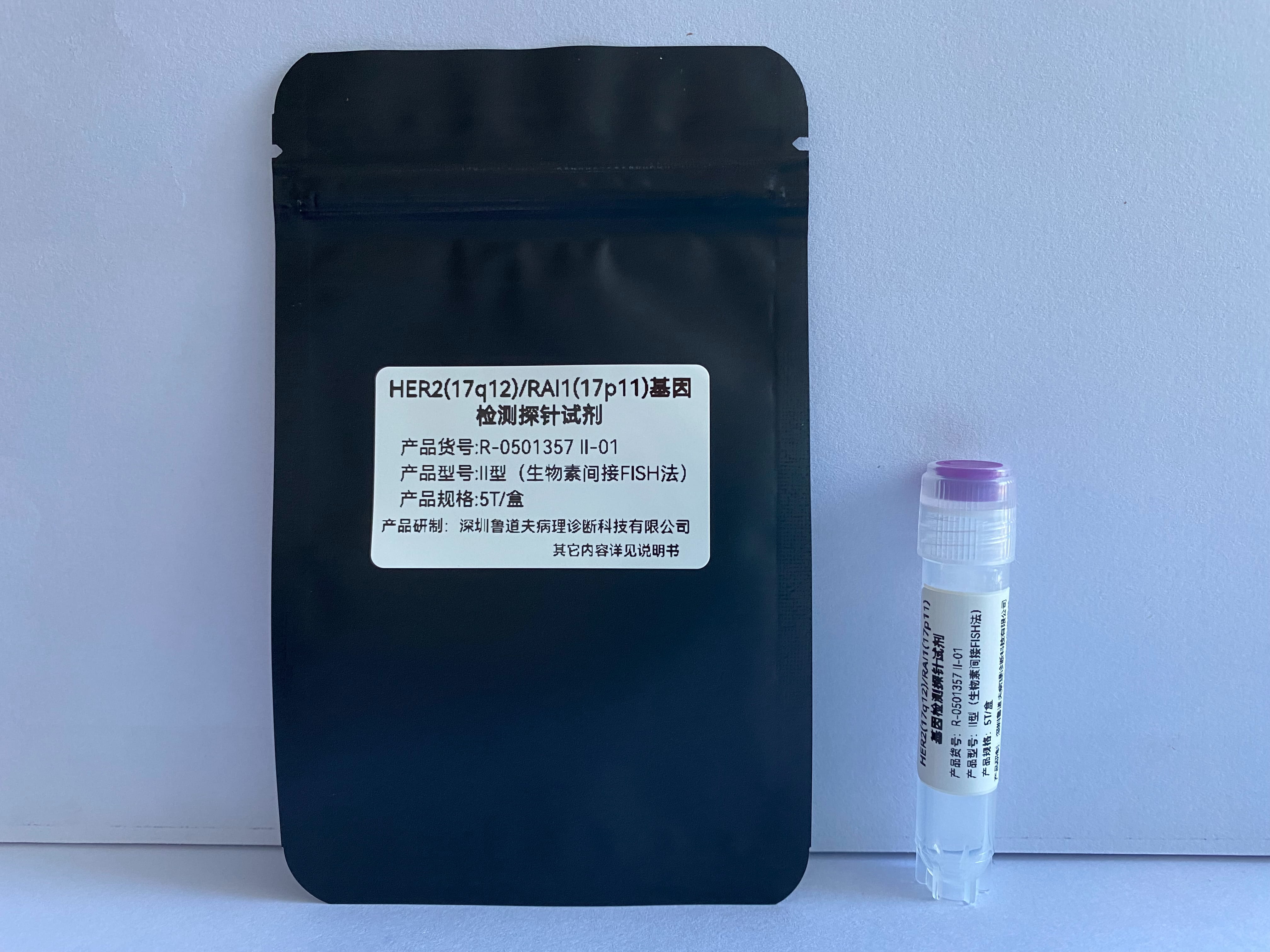
The D17S122 probe is a nonimmunogenic probe; the RAI1 probe in this probe is located in the SMS gene cluster in the 17p11.2 region, which is more conserved in the genome, and it can be used as a substitute for the 17-immunogenic probe to determine the ratio between the two in the encountered group 4 cases.





 0752-2228195