Breast Cancer
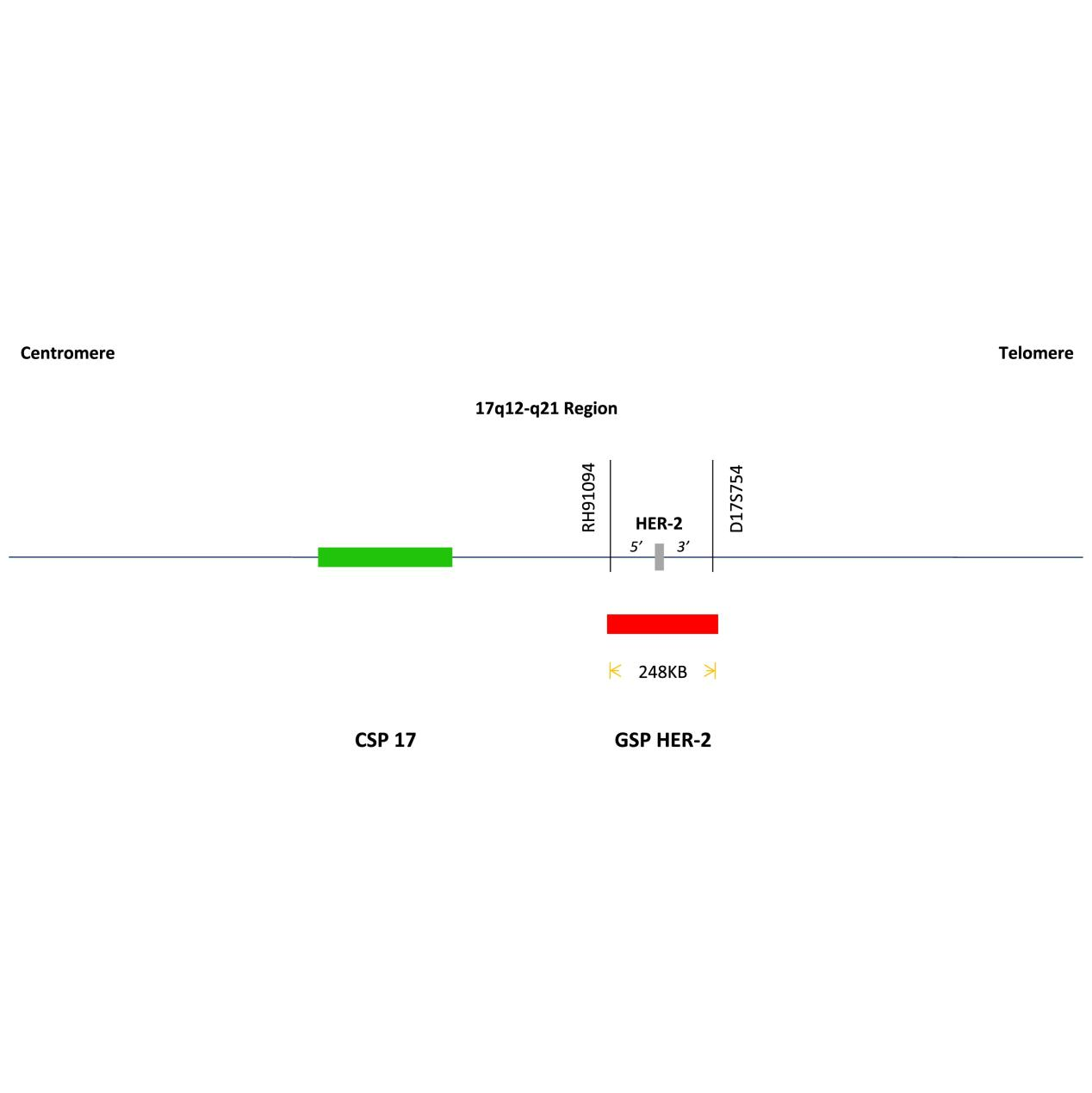
Correctly determining the HER-2 gene status helps in the clinical selection of appropriate endocrine therapy drugs;
Breast cancer patients with HER-2 gene amplification significantly benefit from targeted drug therapy such as Herceptin.
HER-2 gene amplified breast cancer patients are not sensitive to CMF regimens; high-dose anthracycline and paclitaxel-based drug regimens are appropriate.
In 2016, the Chinese Expert Consensus on Molecular Targeted Therapy for Human Epidermal Growth Factor Receptor 2-Positive Advanced Gastric Cancer, the NCCN Clinical Practice Guidelines for Digestive Tumors, and the Anti-HER2 Consensus for Gastric Cancer all emphasized the importance of HER2 testing for patients with advanced gastric cancer, affirmed the importance of trastuzumab in the first-line treatment of HER2-positive gastric cancer, and for the first time explicitly proposed that every patients with pathologically confirmed gastric cancer are required to undergo HER2 testing, and noted that repeat biopsies are required when necessary.
Amplification is also present in small cell lung/ovarian/prostate/colorectal/salivary adenocarcinomas/ and other tumors, with clinical significance similar to breast cancer.
In invasive uroepithelial carcinoma of the bladder in the 2016 edition of the WHO Classification of Tumors of the Urological and Male Genital System, ERBB2 hyperamplification is higher in micropapillary subtype uroepithelial carcinomas than in classic uroepithelial carcinomas, and some studies have found a strong correlation between the amplification of this gene and poor survival after radical cystectomy.
Colorectal cancer
HER2 is a member of the EGFR gene family, and as one of the proto-oncogenes in colorectal cancer, it can inhibit tumor cell apoptosis and promote tumor neovascularization by activating the RAS ⁃RAF ⁃MEK and PI3K ⁃AKT ⁃mTOR pathways. The overall incidence of Her⁃2 amplification/overexpression in colorectal cancer is approximately 5%, with mutual exclusivity with KRAS, NRAS, and BRAF mutations, and a high degree of concordance between primary and metastatic foci. HER2 amplification/overexpression testing is recommended for mCRC patients after failure of standard therapy.
Bladder cancer
The 2016 edition of the WHO Classification of Tumors of the Urological and Male Genital System divides invasive uroepithelial carcinoma of the bladder into 10 subtypes, among which there is the micropapillary subtype of uroepithelial carcinoma: a rare subtype of uroepithelial carcinoma, with an incidence rate of 0.7-8.0% reported in the literature, reflecting the lack of rigorous diagnostic criteria for this subtype, leading to a high degree of inter-observer inconsistency. Morphologically, the tumor characteristically presents as small, closely spaced clusters of high-grade tumors that lack a fibrovascular axis and are located within the trap cavity. Immunohistochemically the tumor cell nests showed inverse expression of MUC1. At the molecular level, ERBB2 hyperamplification was higher in micropapillary subtype of uroepithelial carcinoma than in classic uroepithelial carcinoma, and some studies have found that amplification of this gene is strongly associated with poor cancer-specific survival after radical cystectomy. A recent study found that in 35 bladder cancers containing micropapillary and common carcinoma components, ERBB2 amplification was seen in micropapillary and common carcinomas in 12 (34.3%) tumors, in micropapillary component only in 11 (31.4%), and in common carcinomas in 4 (11.4%), and the overexpression of HER2 protein in the micropapillary component was significantly higher than that in the common carcinoma component. suggesting that ERBB2 amplification and HER2 overexpression were preferentially but not uniquely seen in micropapillary carcinoma components, suggesting that there is intra-tumor heterogeneity of ERBB2 amplification and HER2 expression in micropapillary subtype uroepithelial carcinomas.
Micropapillary subtype uroepithelial carcinomas typically present as highly staged with a high degree of lymphovascular invasion, carcinoma in situ, and lymph node involvement. Importantly, noninvasive micropapillary subtype uroepithelial carcinoma has the characteristic of being more likely to progress to muscular invasive carcinoma and even metastasis. The prognosis of this subtype is worse than that of common uroepithelial carcinoma, but newer studies suggest that its prognosis is similar to that of common uroepithelial carcinoma when staging is adjusted.
Salivary gland tumors
The new 2017 edition of WHO Salivary Tumors adds the concept of high-grade transformation, also known as dedifferentiation, which refers to the loss of the original morphological features of traditional low-grade salivary adenocarcinoma and its transformation into a pleomorphic high-grade carcinoma, which is histologically adjacent to the high-grade carcinoma and is diametrically opposed to the high-grade carcinoma, which is usually poorly differentiated or undifferentiated.
Salivary adenocarcinoma with high-grade transformation has a more aggressive biological behavior. The high-grade area has obvious high Ki-67 positivity index and high expression rate of p53, and most cases even show HER2 overexpression or amplification, which is an important suggestive value for the diagnosis of high-grade transformation.





 0752-2228195