Fibrous Histiocyte Tumors and Neoplastic Lesions
Apply to atypical lipomatous tumor/highly differentiated liposarcoma (atipicallipomatoustumour/well-differentiatedliposarcoma,ALT/WDL);
This tumor often has MDM2 amplification and CDK4 amplification;
When a diagnosis of subcutaneous ALT/WDL is to be made, lipomas with similar morphology should first be excluded, such as spindle cell lipoma, pleomorphic lipoma, chondroplastic lipoma, and cell-rich angiomyolipoma; as well as neurofibromas, highly differentiated sclerosing liposarcomas, and sometimes low-grade MPNSTs need to be identified as well.ALT/WDL often has simultaneous amplification of MDM2, and CDK4, which can help in the Differentiation;
It should be used in dedifferentiatedliposarcoma (DDLPS) and highly differentiated liposarcoma;
Similar to ALT/WDL, it shows a ring chromosome or giant marker chromosome with amplification of the 12q13-21 region, and most retroperitoneal dedifferentiated liposarcomas have MDM2 amplification;
DDLPS can be morphologically low-grade or high-grade, and its grade correlates with prognosis. DDLPS has better 5-year metastasis and survival data compared to other pleomorphic sarcomas.MDM2 amplification can be used to confirm the diagnosis, especially in small puncture samples;
The most common sites of DDLPS are intra-abdominal, retroperitoneal, pelvic and mediastinal. The differential diagnosis includes, among others, mucinous LPS, mucinous fibrosarcoma, MPNST, smooth muscle sarcoma, undifferentiated pleomorphic sarcoma and sarcomatoid carcinoma. Poorly differentiated liposarcoma with epithelial/epithelioid cell morphology is easily misdiagnosed as carcinoma or mesothelioma, and MDM2 amplification has a good differential diagnosis;
Highly differentiated liposarcoma with MDM2 amplification can be used for differential diagnosis with lipoma.
Soft tissue osteochondral-chondroplastic tumors and neoplastic lesions
In bone tumors, MDM2 amplification can be used in the differential diagnosis of highly differentiated osteosarcoma with benign or reactive bone lesions; and low-grade osteosarcoma with other primary fibro-osseous lesions.
Salivary gland tumors
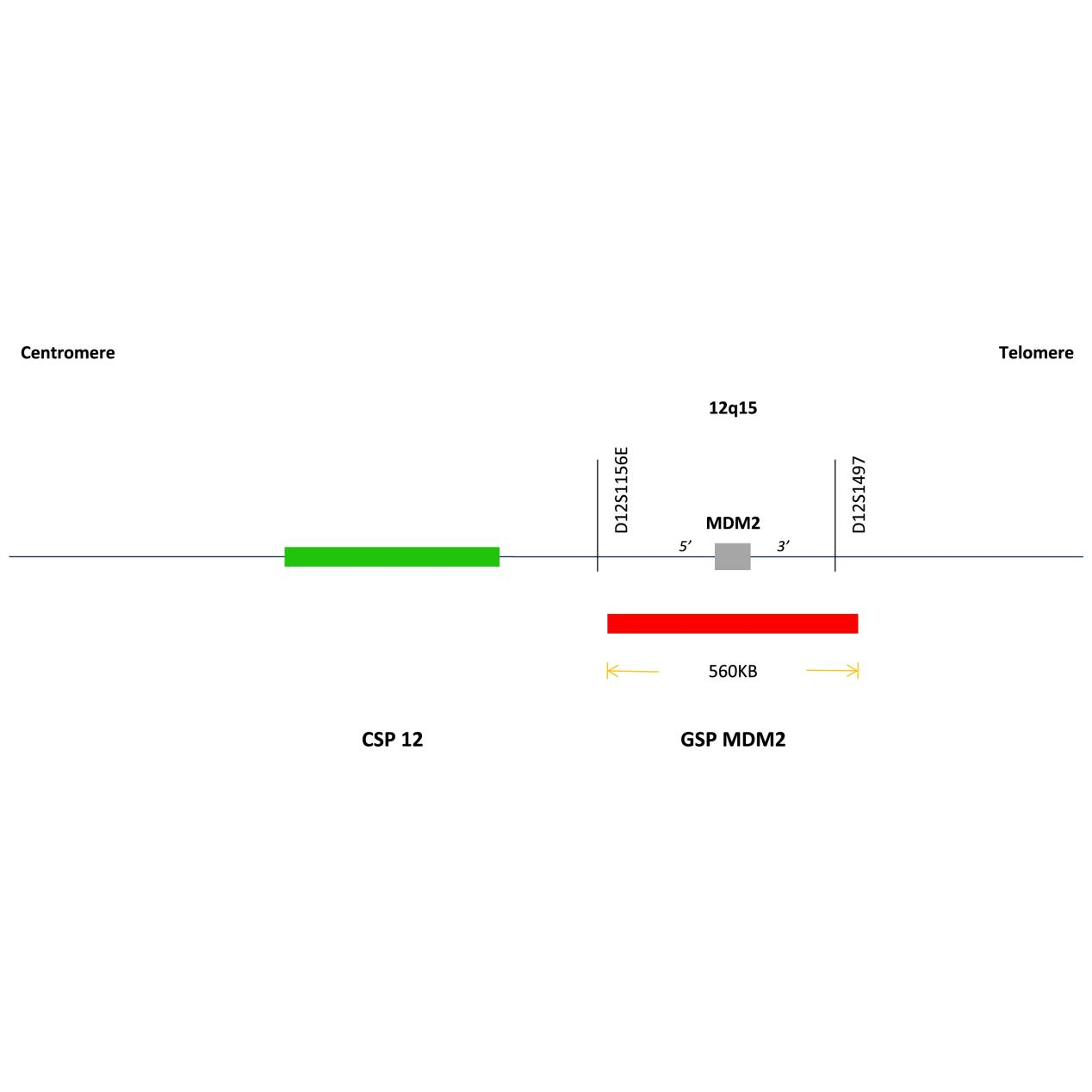
The Salivary Gland Tumors section of the 2017 4th edition of the WHO adds and enriches alterations in tumor genetics. Carcinoma ex pleomorphic adenoma (CAxPA) represents a malignant tumor originating from a pleomorphic adenoma that accounts for 12% of all salivary adenocarcinomas, with a peak age of onset of 60-70 years. Approximately 50% of CAxPA have 12q15 amplification, resulting in amplification-positive MDM2.





 0752-2228195