
简体中文English

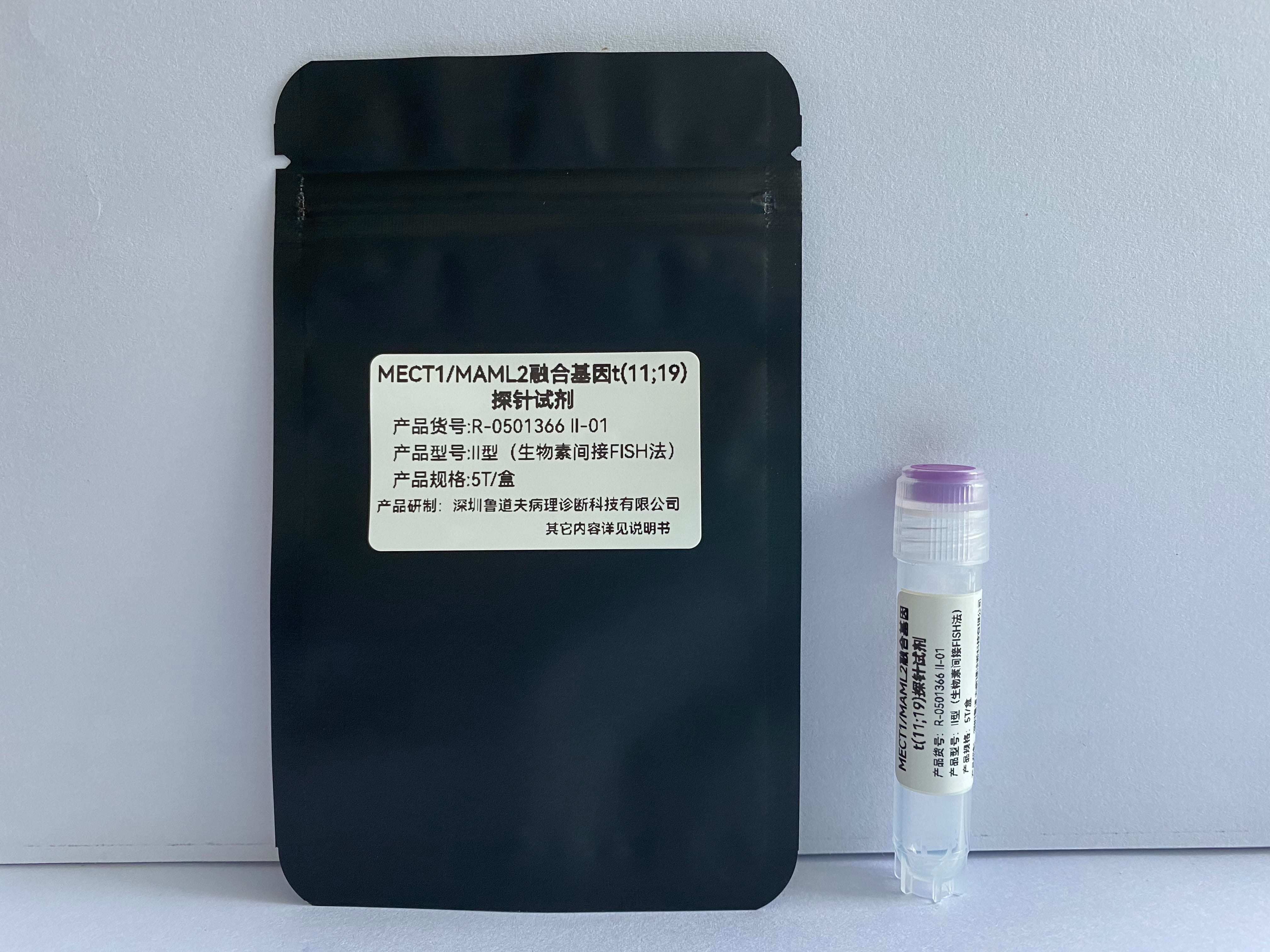
MECT1/MAML2 fusion gene t(11;19) probe reagent
Wholesale Price(RMB):

30006000330066003300660036007200

Product Code:R-0501366Ⅰ-01/R-0501366Ⅰ-02/R-0501366Ⅱ-01/R-0501366Ⅱ-02/R-0501366Ⅲ-01/R-0501366Ⅲ-02/R-0501366Ⅳ-01/R-0501366Ⅳ-02
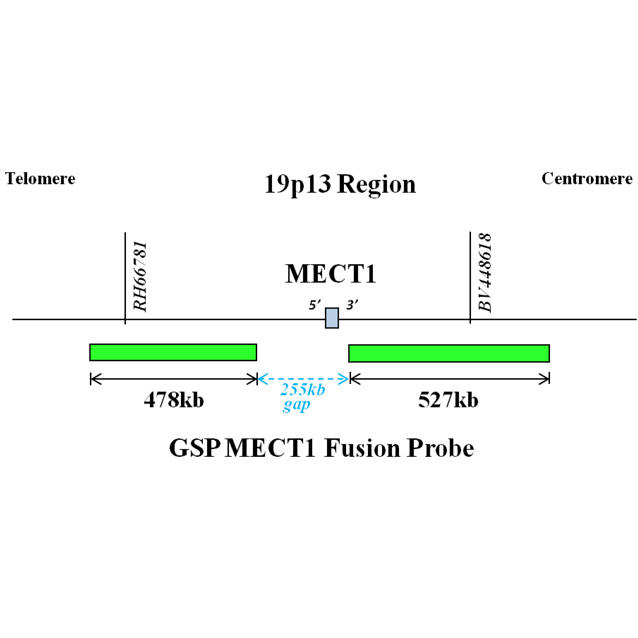
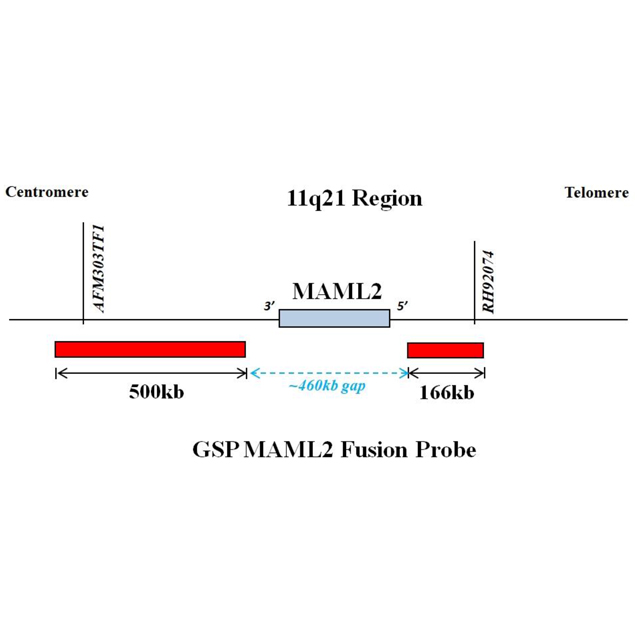
Probe name:GSP MECT1 / GSP MAML2
Product Code:Type I (direct FISH method)/Type II (biotin-labeled indirect FISH method)/Type III (digoxigenin-labeled indirect FISH method)/Type IV (TSA-FISH method)
Registration Number:
Clinical Value

It should be used as an aid in the diagnosis of mucoepidermoid carcinoma. Mucoepidermoid carcinoma is mainly distinguished from Warthin's tumor with squamous metaplasia, pleomorphic adenoma with squamous metaplasia, sebaceous glands or tumors with squamous metaplasia, squamous cell carcinoma, and poorly differentiated carcinoma. Approximately 50% of mucoepidermoid carcinomas have a characteristic t(11;19) translocation leading to the formation of the MAML2-CRTC1 (MECT1) fusion protein. In contrast, mucoepidermoid carcinomas with negative translocations are considered a distinct subtype of adenosquamous carcinoma. It is important to note that CRTC-MAML2 fusions are also present in mucoepidermoid carcinomas of the lung, cervix, thyroid, and oral cavity, as well as in clear cell sweat adenocarcinomas of the skin. In particular, in mucoepidermoid carcinoma of the lung, clinical sensitivity to gefitinib in the absence of an EGFR mutation suggests a possible association with CRTC-MAML2, and offers a possibility for the treatment of other parts of mucoepidermoid carcinoma.