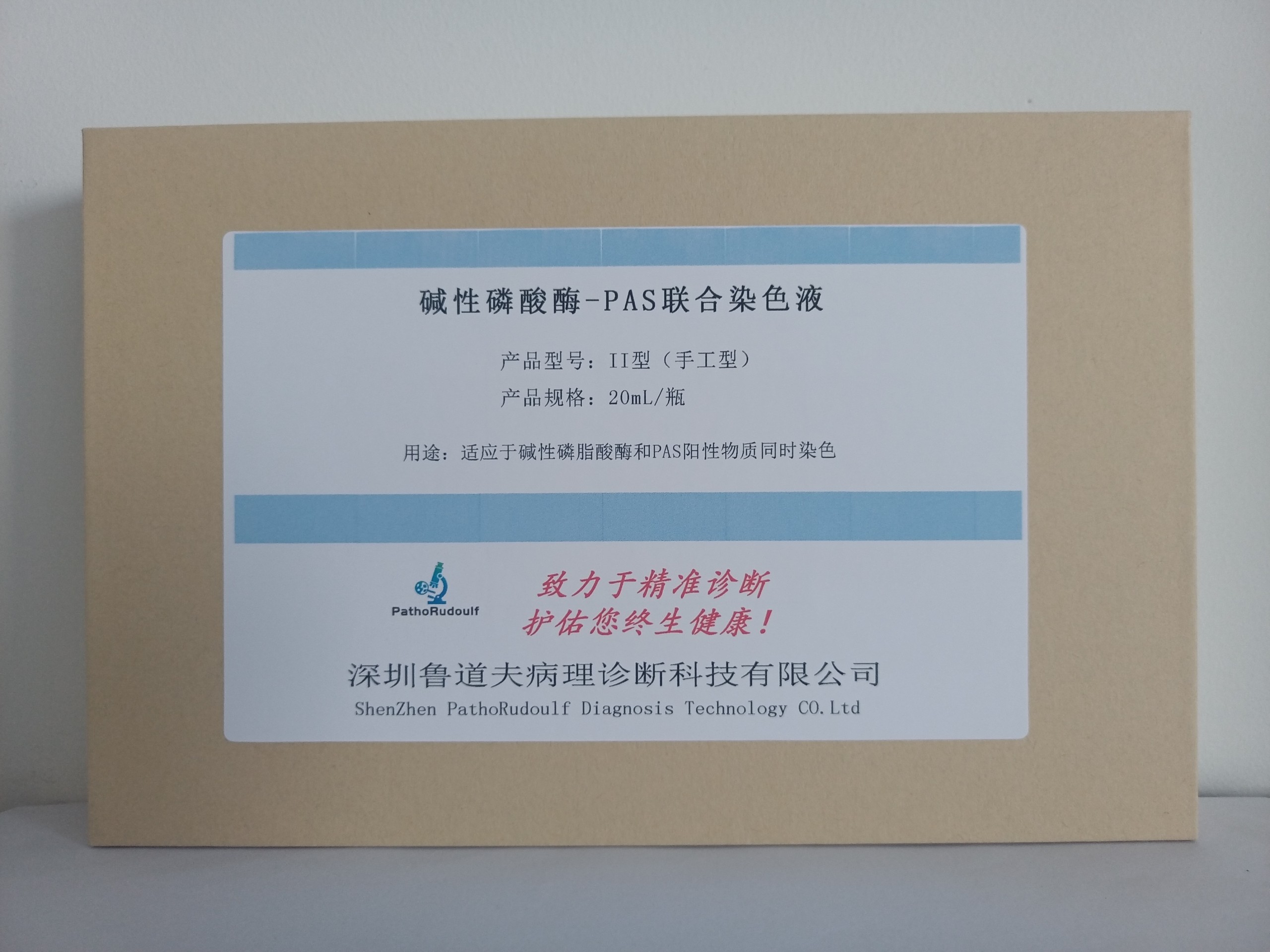
Alkaline phosphatase (ALP or AKP for short) is a class of phosphatase, widely distributed in mammalian tissues, and its activity requires an optimal pH of 9.2-9.8. This enzyme is mainly found in places where material exchange is active (cell membranes), such as the intestinal epithelium and the brush border of the proximal tubule of the kidneys, the static cilia of the epithelium of the epididymis, the capillary cholangiophore of the liver, and the endothelium of the arterial portion of microarterioles and capillaries. The enzyme is also found in the endoplasmic reticulum, the Golgi complex, phagocytic vesicles, lysosomes of the intestinal epithelium, neutrophil neutrophil granules, and the cell membranes and phagocytic vesicles of smooth muscle. 1946, McManus was the first to use the periodate-schiff technique to display mucins, which is commonly used to display glycogen and other polysaccharides; periodate is a strong oxidizing agent that can oxidize sugars and other substances in the body. Periodic acid (periodate) is a strong oxidizing agent, it can oxidize the 1,2-glycol group in sugars and related substances to make them into dialdehyde, and the aldehyde and Schiff's reagent can be combined into a kind of magenta compound, which produces violet-red color. Because periodate can also oxidize other substances in the cell, attention should be paid to selecting the concentration of periodate and the oxidizing time when using it to make the oxidation control at the point that it can oxidize the glycol group into aldehyde group without over-oxidizing.
ALP-PAS co-staining solution can not only show alkaline phosphatase active site and glycogen and other substances, but also distinguish the two, frozen sections and paraffin sections can be.





 0752-2228195