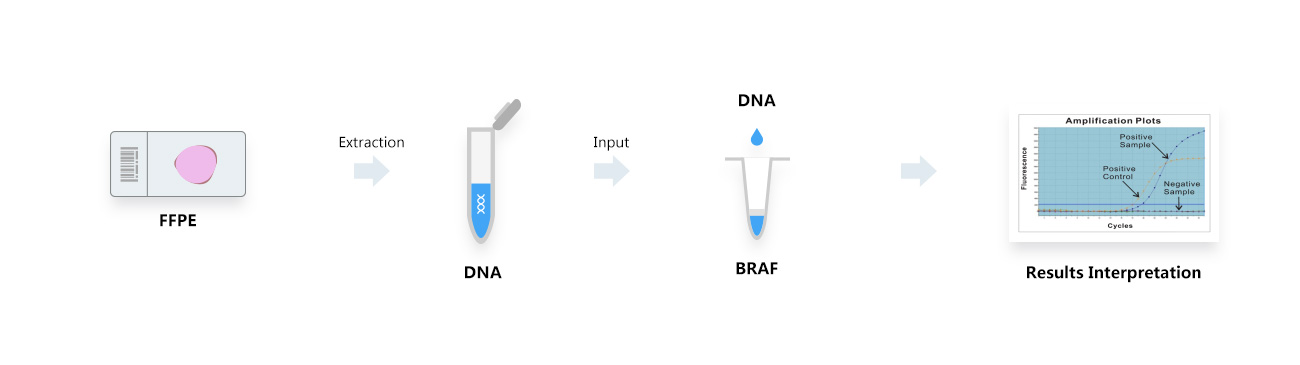
In the treatment of melanoma patients, the mutation rate of the BRAF gene is 80% in primary melanoma, 68% in metastatic melanoma, and 82% in benign nevi. Vemurafenib, a novel targeted drug developed for BRAF gene mutations, is highly effective in patients with positive BRAF gene mutations.
Numerous studies have shown that BRAF gene mutation, as a driving mutation in papillary thyroid cancer (PTC), has become an important indicator for the diagnosis and prognosis of fine needle aspiration cytology specimens of papillary thyroid cancer (PTC).
In colorectal cancer patients, the mutation rate of BRAF gene is 15%, and the National Alliance for Comprehensive Cancer Care's Clinical Practice Guidelines for Colorectal Cancer (V3.2011) suggests that the use of targeted drugs such as epirubicin or panitumumab must be tested for the KRAS gene status of the tumor tissues, and that if there is no mutation in the KRAS, testing for the BRAF gene status should be considered.





 0752-2228195