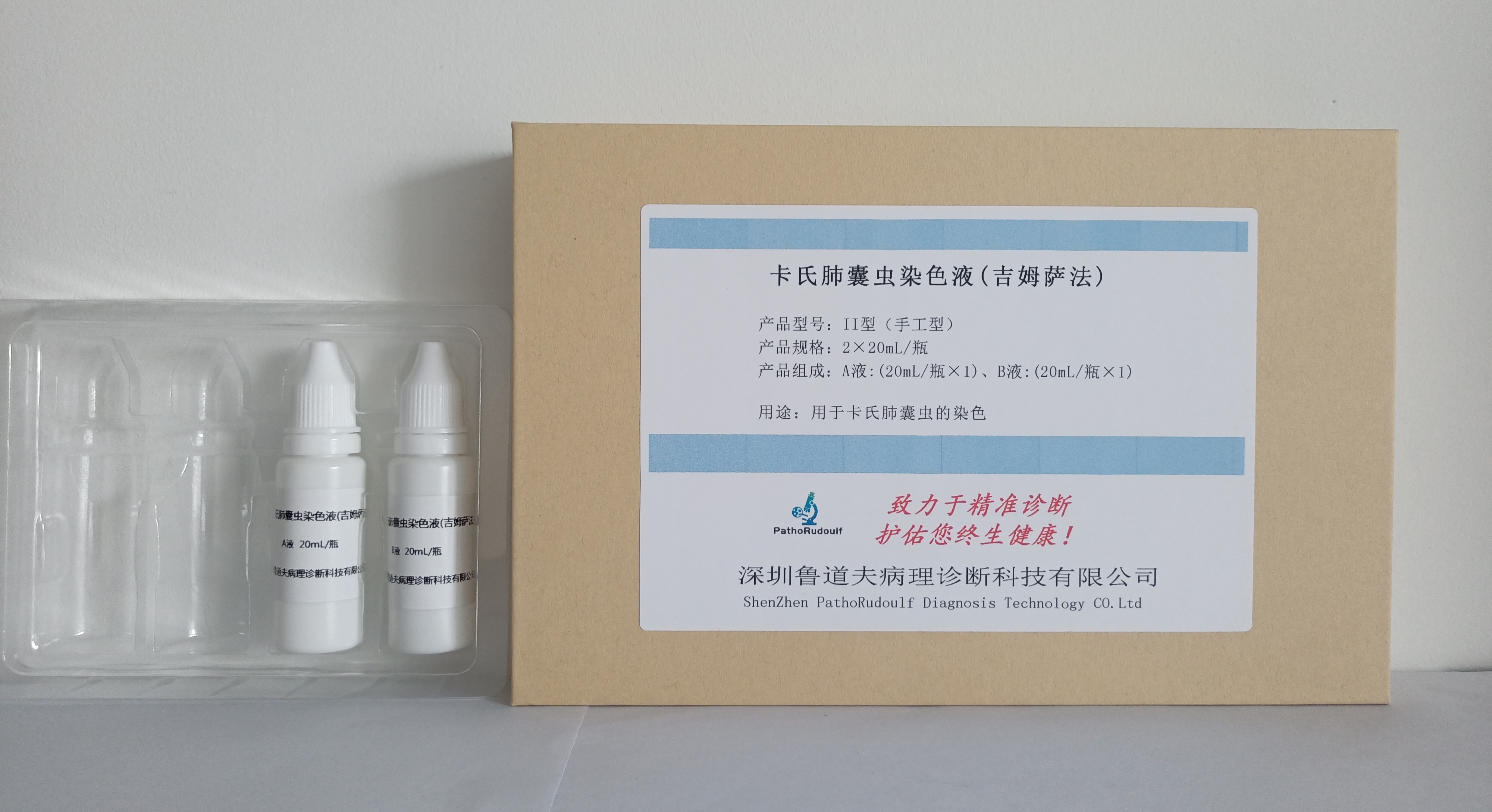
Penumocystis carinii was found in rat lungs by Carinii in 1910, and was found again in rat lungs by Mr. and Mrs. Delanoe in 1912, so it was named Penumocystis carinii. Most scholars believe that this worm is a protozoa, and its life history is completed in alveoli, and the mature encapsulated sacs are round or oval, with a diameter of 5~10μm. The mature cysts are round or oval with a diameter of about 5~10 μm, with peripheral cyst walls and containing 8 intracystic vesicles, which are about 1~2 μm in diameter and in a semilunar shape. Pneumocystis carinii is mostly caused by co-infections, when the immunity is low, it is easy to be infected with pneumocystis pneumonia, HE staining is not suitable to identify Pneumocystis carinii, only the cysts in the alveolar cavity can be seen in the form of small light eosinophilic particles, which is often misdiagnosed as the proteins in the exudate fluid, at present, special stains can be used to show the Pneumocystis carinii, which is relatively easy to be identified, and the common methods are silver hexamethylamine, fluorescence myrtle - tartaric acid yellow method, PAS method and Gram method, etc. The first three methods are preferred.





 0752-2228195