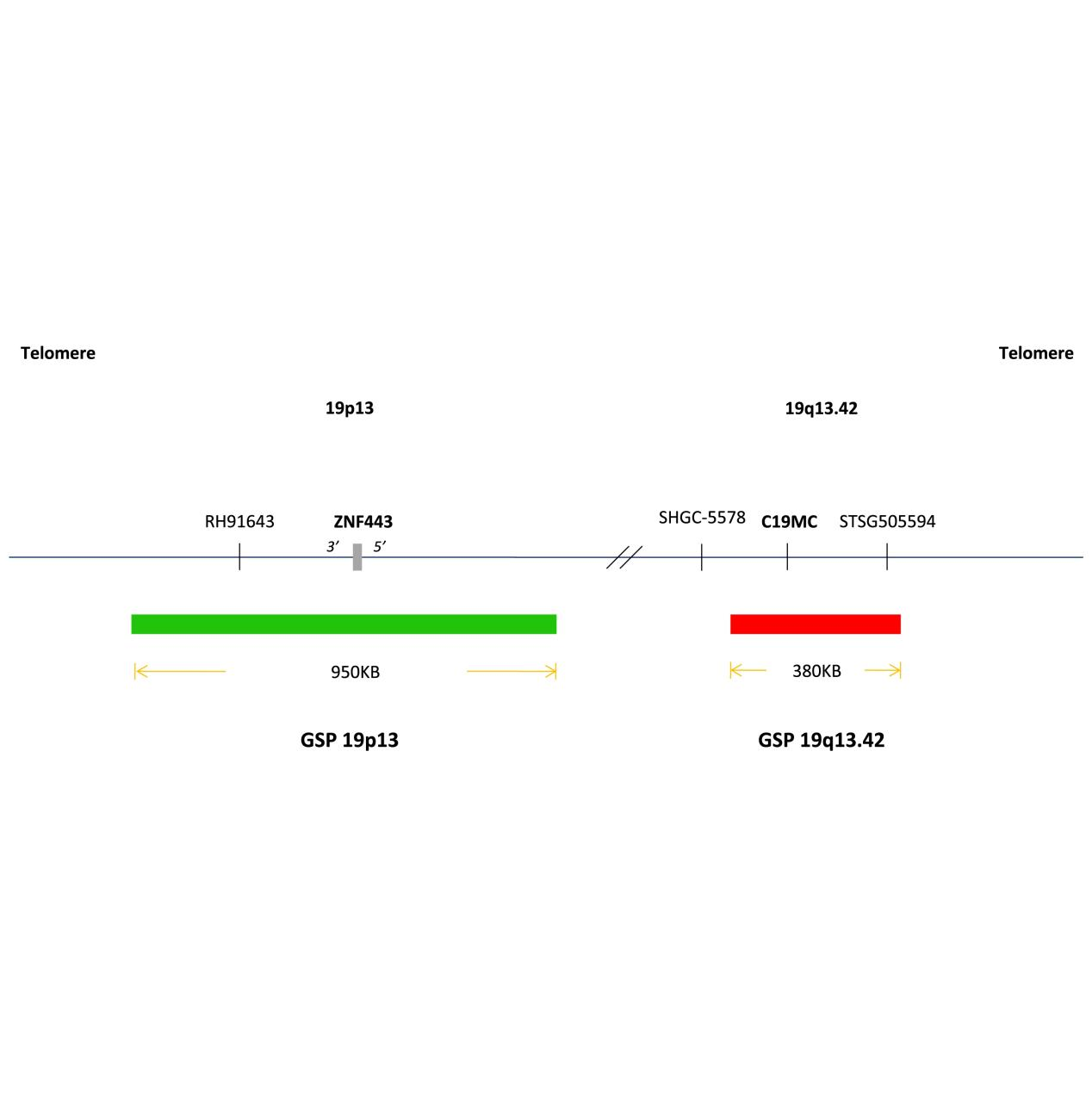
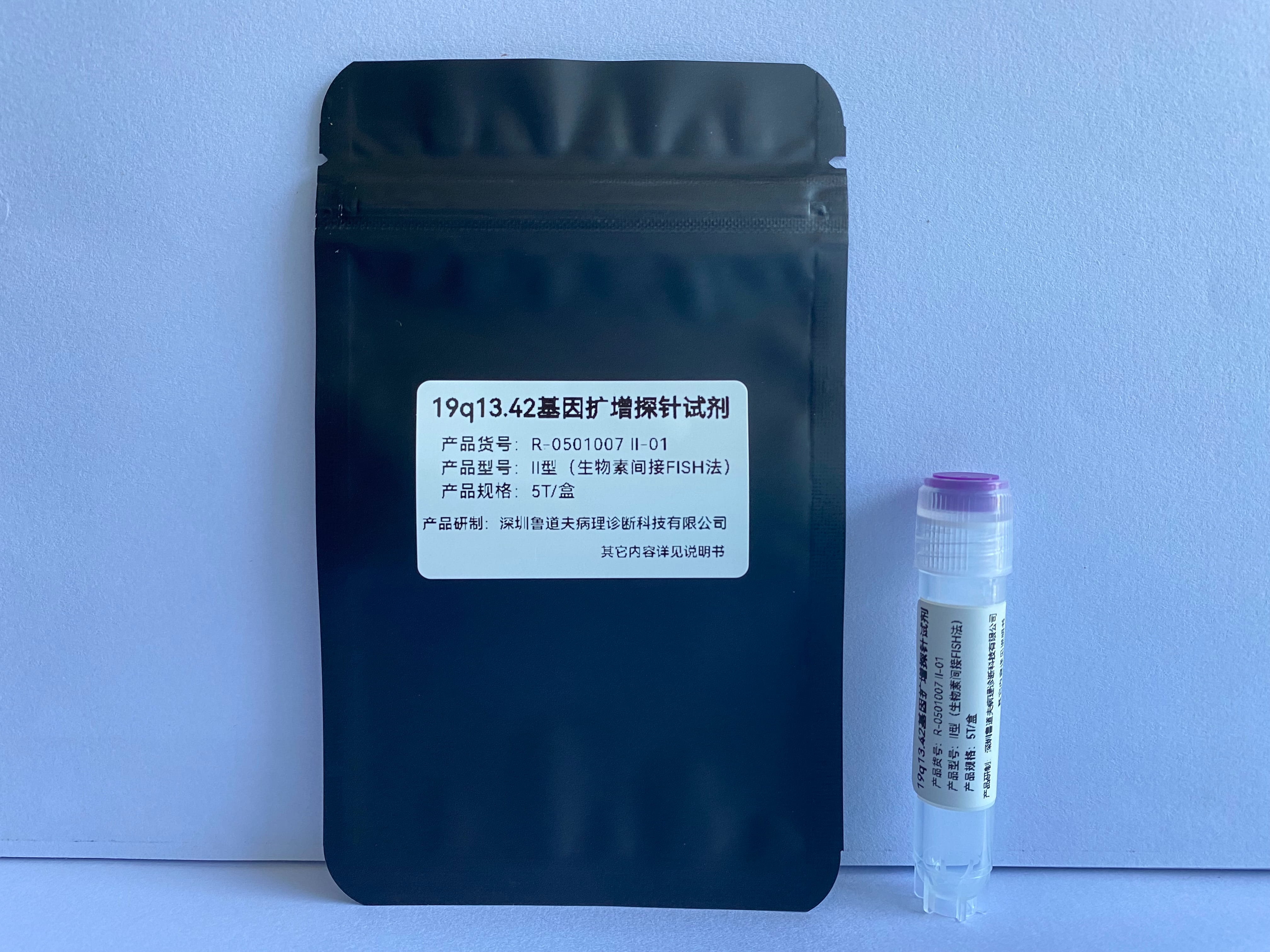
Detection of abnormal number of 19p13.42 loci.
Neurologic Tumors - Oligodendroglioma: NCCN guidelines recommend radiotherapy for high-risk patients with low-grade gliomas. Low-risk features: 1. oligodendroglial or mixed oligodendroglial astrocytoma; 2. age <40 years; 3. KPS ≥70; 4. tumor diameter <6 cm; 5. minimal or no neurologic deficits; 6. double deletion of 1p/19q and IDH1/2 mutation. High-risk features (3 or more risk factors): 1. astrocytoma; 2. age ≥40 years; 3. KPS <70; 4. tumor diameter ≥6 cm; 5. tumor spanning the midline; 6. preoperative neurologic deficit or not to a lesser extent neurologic dysfunction; 7. single deletion or no deletion of 1p/19q; and 8. absence of mutation of IDH1/2.The 1p/19q co-deficiency is present in both grade II and 80%-90% and 50%-70% in grade III oligodendrogliomas; 50%-70% in mesenchymal oligodendrogliomas; 30%-50% in oligodendroglial astrocytomas; and 20%-30% in mesenchymal oligodendroglial astrocytomas, respectively.The clinical significance of 1p/19q co-deletion is different from that of deletion of either 1p or 19q alone.In 2016, the NCCN stated that Mesenchymal oligodendrogliomas and mesenchymal oligodendroglial astrocytomas with 1p/19q co-deletion cannot be treated with chemotherapy alone. Patients with a single deletion or no deletion, however, can still opt for chemotherapy alone. The presence of 1p/19q polysomes in patients with co-deletion of 1p/19q is often associated with shorter disease progression-free survival and overall survival independent of tumor grade. the presence of 1p/19q deletion correlates with the presence or absence of radiographic pseudoprogression. One study showed that pseudoprogression was 10 times more common in the 1p/19q nondeletion group than in the deletion group.





 0752-2228195