Mesothelioma
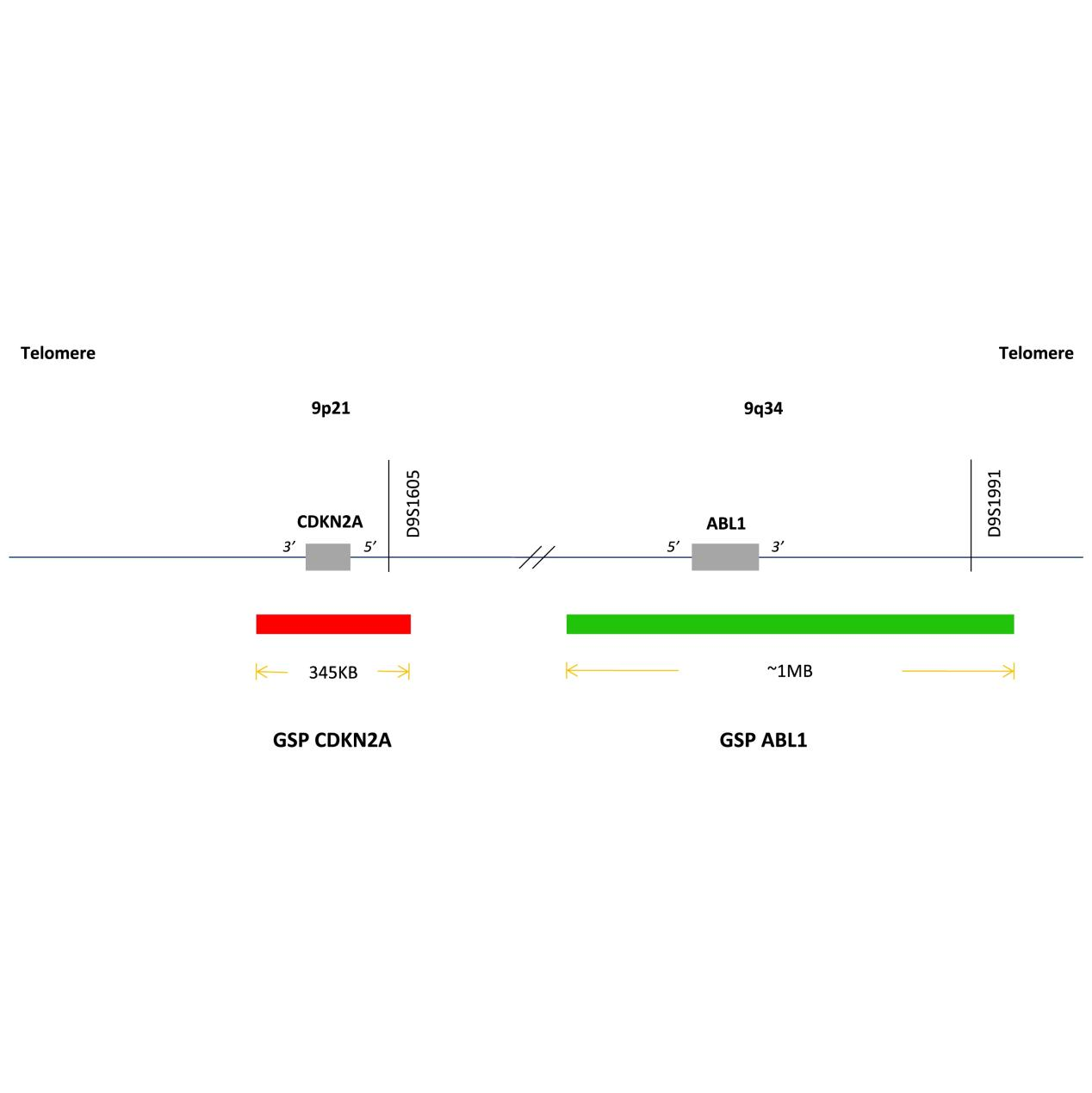
Most mesotheliomas have multiple cytogenetic abnormalities, but no abnormalities of diagnostic significance have been identified. The most common are monosomy 4/22, polysomy 5/7/20, and P16 (9p21) deletion. Diffuse malignant mesothelioma (DMM) is a tumor with a variety of histologic features that closely resemble a large number of neoplastic and non-neoplastic lesions, which dictates that the morphologic spectrum of DMM requires differential diagnosis from many lesions. One of these requires distinguishing reactive mesothelial hyperplasia from neoplastic mesothelial hyperplasia. The differentiation of reactive mesothelial hyperplasia from DMM is difficult, especially with puncture biopsy of small specimens. Detection of p16/CDKN2A deletion by FISH is one of the most important indicators to establish the diagnosis of DMM, especially when the material of the puncture specimen is limited and there is a lack of basis for infiltration.
Acute lymphoblastic leukemia (ALL)
One of the most common abnormalities in ALL, including 10% abnormalities in childhood ALL;
Mostly pure deletions in T-ALL, with equal proportions of pure and heterozygous deletions in B-ALL; poor prognosis.
CNS tumors
CDKN2A/B deletions are associated with molecular abnormalities in several tumor types in the 2021 version of the CNS classification: astrocytoma, IDH-mutant, pleomorphic yellow astrocytoma, and meningioma (WHO grade 3).





 0752-2228195