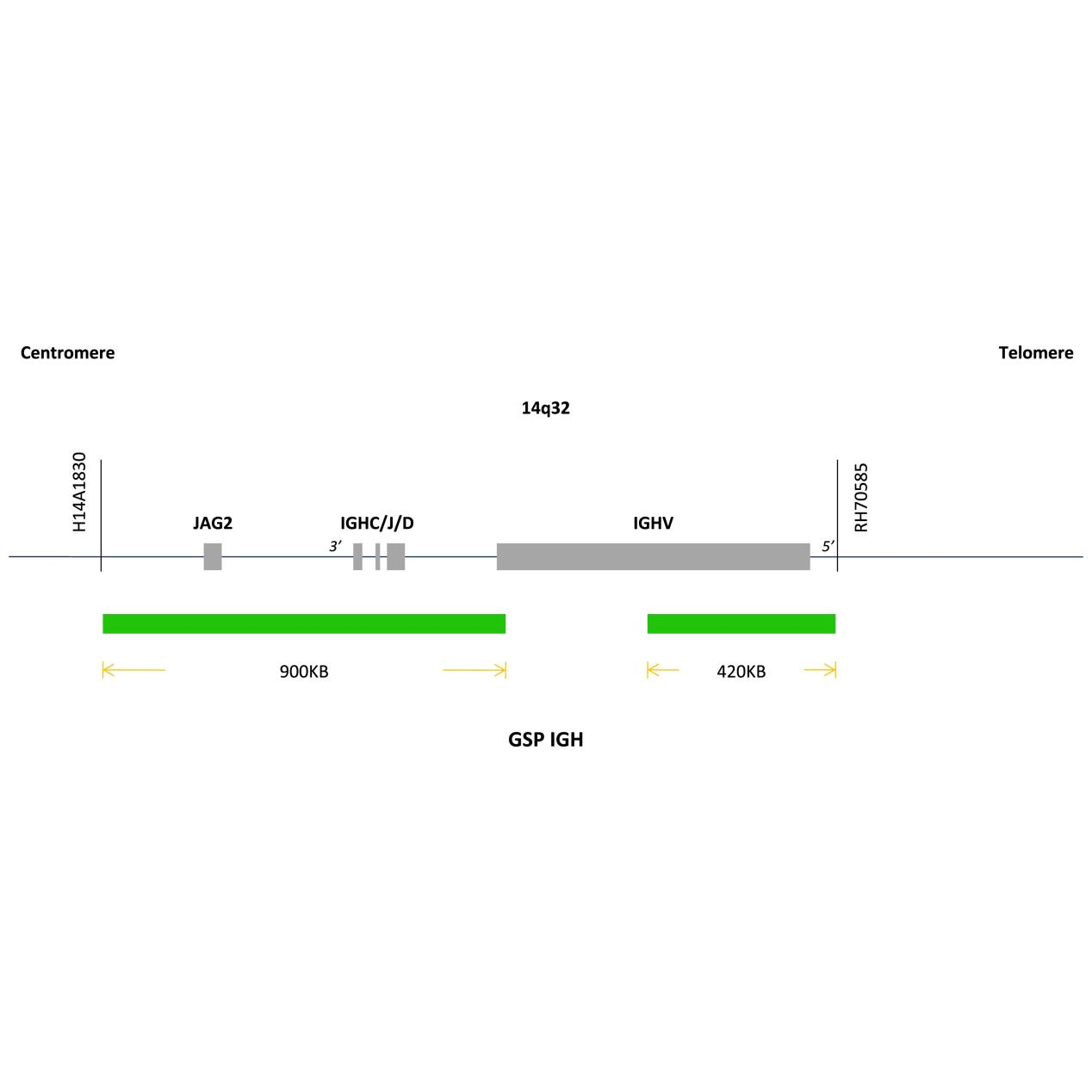
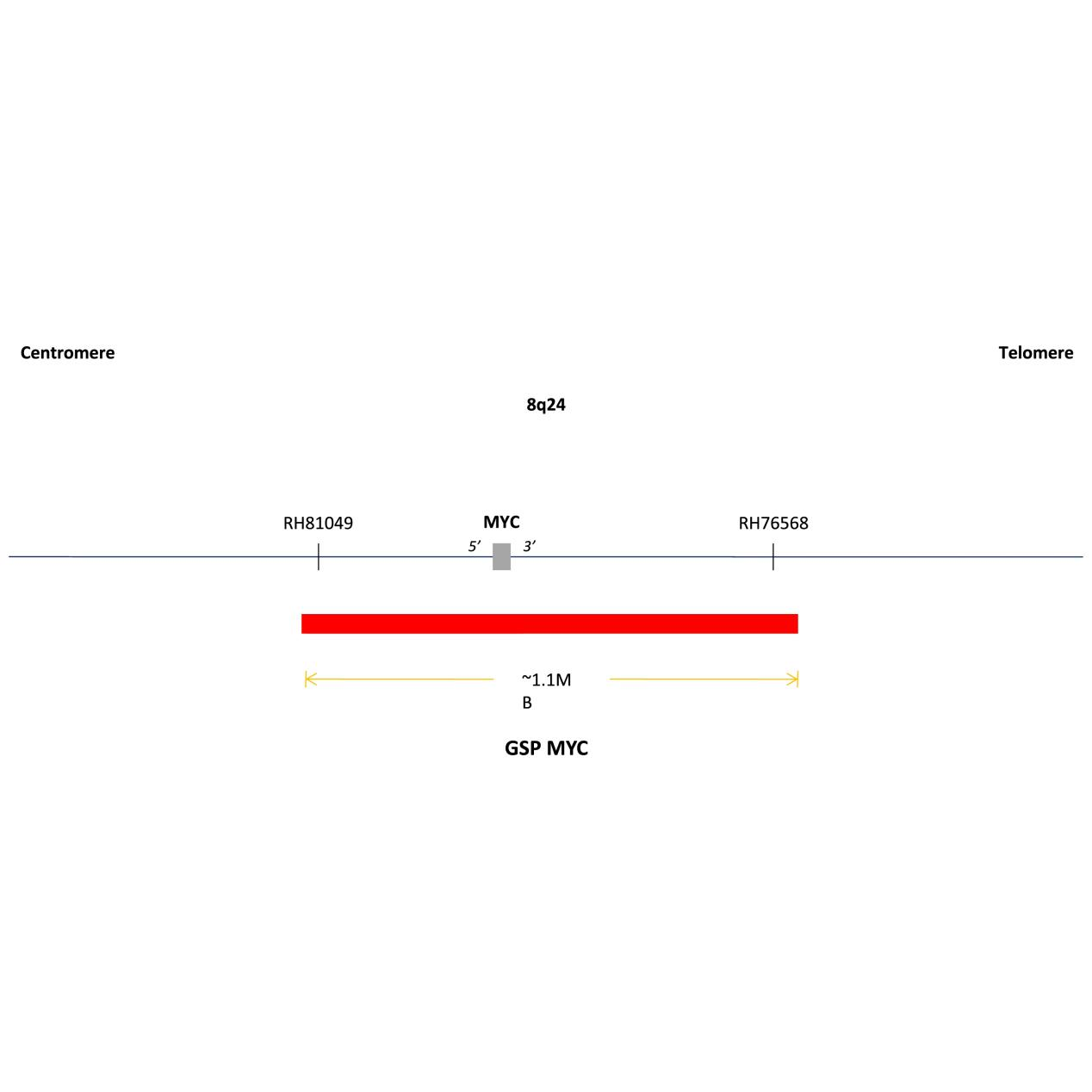
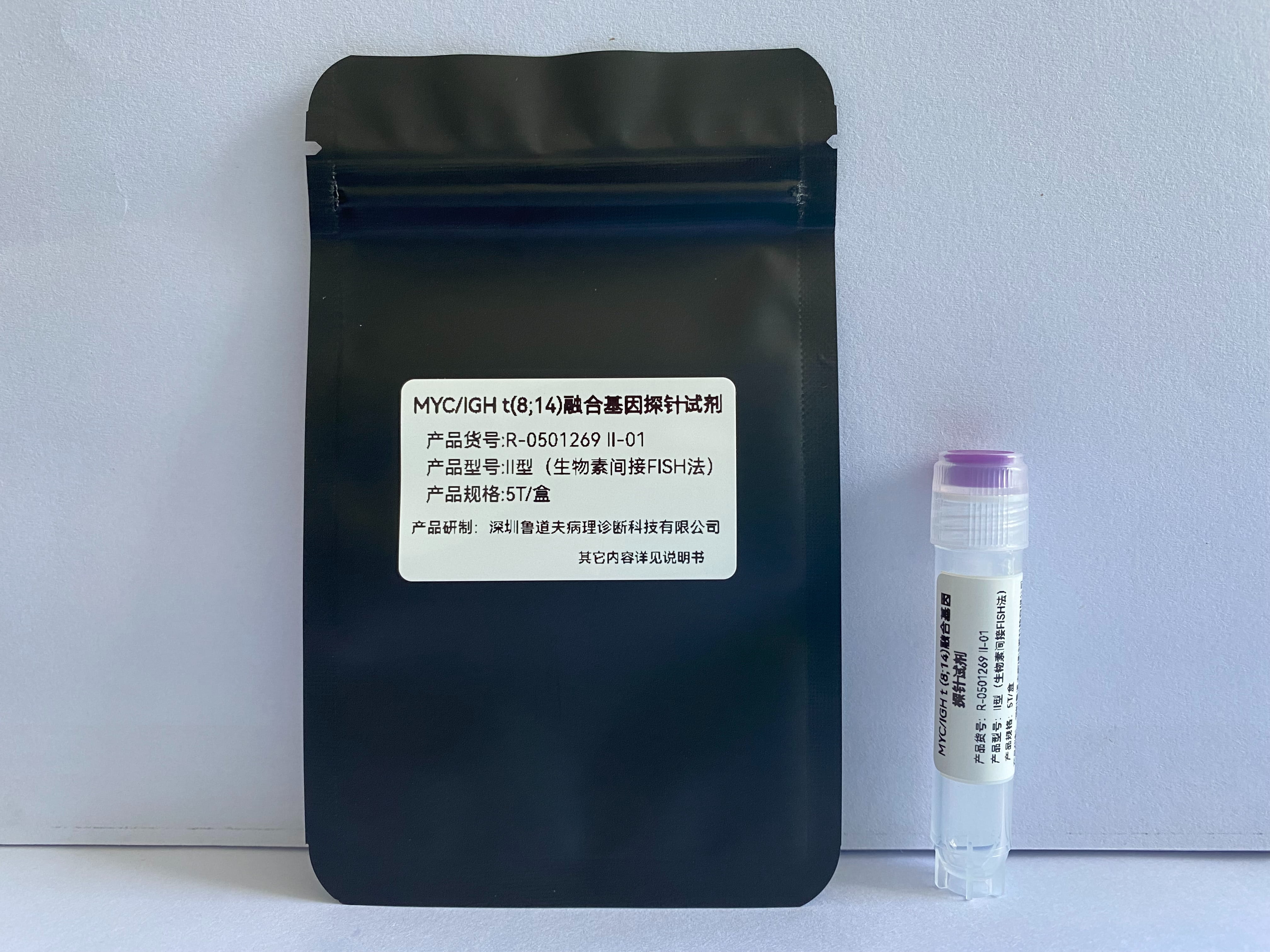
t (8; 14) can be used to aid in the diagnosis of Burkitt's lymphoma (BL) (75% incidence);
It guides the treatment of high-grade B-cell lymphoma, which has a poor prognosis;
There are three breakpoints in the MYC gene in BL: (1) non-African type, the MYC breakpoint is located near the 5' end or in exon 1 or intron 1; (2) African type, the MYC breakpoint is located about 200-300 kb upstream of the 5' end; incidence is 74% in Africa, 33% in South America, and 9% in the United States, and is associated with Tropical and EBV infections, with a certain incidence in our country; (3) Variant type, MYC breakpoint is located at about 300kb downstream of the 3' end, forming a t(8;22) or t(2;8) translocation, with an incidence of 10%-25%;
When using this MYC/IGH fusion, because the MYC gene is covered with a red probe at both upstream and downstream 300kb, no matter where it is broken, it shows 1 red, 1 green and 2 yellow typical positive signals. However, this fusion probe could not detect t(8;22) and t(2;8) and showed 3 red and 2 green signals (3 red may be 2 small red and 1 big red);
When detected with the MYC breakage probe (F.01054-01), the non-African type will show a typical positive signal type (1 red, 1 green, 1 yellow), but the African type and the variant type will show an atypical positive signal type (1 red, 2 yellow and 1 green, 2 yellow, respectively). Our MYC breakage probe (F.01054-01) can clearly distinguish which subtype is present;
In high-grade B-cell lymphomas with MYC translocations, partner genes with IGH have a worse prognosis than those with other partner genes, and are commonly found in the immunoblastoid subtype diffuse large B.





 0752-2228195