Undifferentiated-Unclassified Sarcoma
For the diagnosis of soft tissue BCOR-CCNB3 gene fusion-associated dedifferentiated round cell sarcoma (non-Ewing's), infantile primitive mucinous-like mesenchymal cell tumor. Diffuse strong expression of BCOR protein in renal clear cell sarcoma suggests that this tumor may be related in some way to the two previous tumors;
Incidence in sarcomas is approximately 24/594. accounts for approximately 10% of small round cell sarcomas negative for EWSR1 breaks. Mostly occurs in bone (7/10), with poor prognosis in mediolateral bone sites (spine/pelvis). Immunohistochemistry CCNB3 (100%), bcl2 (90%), CD99 (60%). BCOR translocation-positive sarcomas have a better prognosis than other Ewing sarcomas;
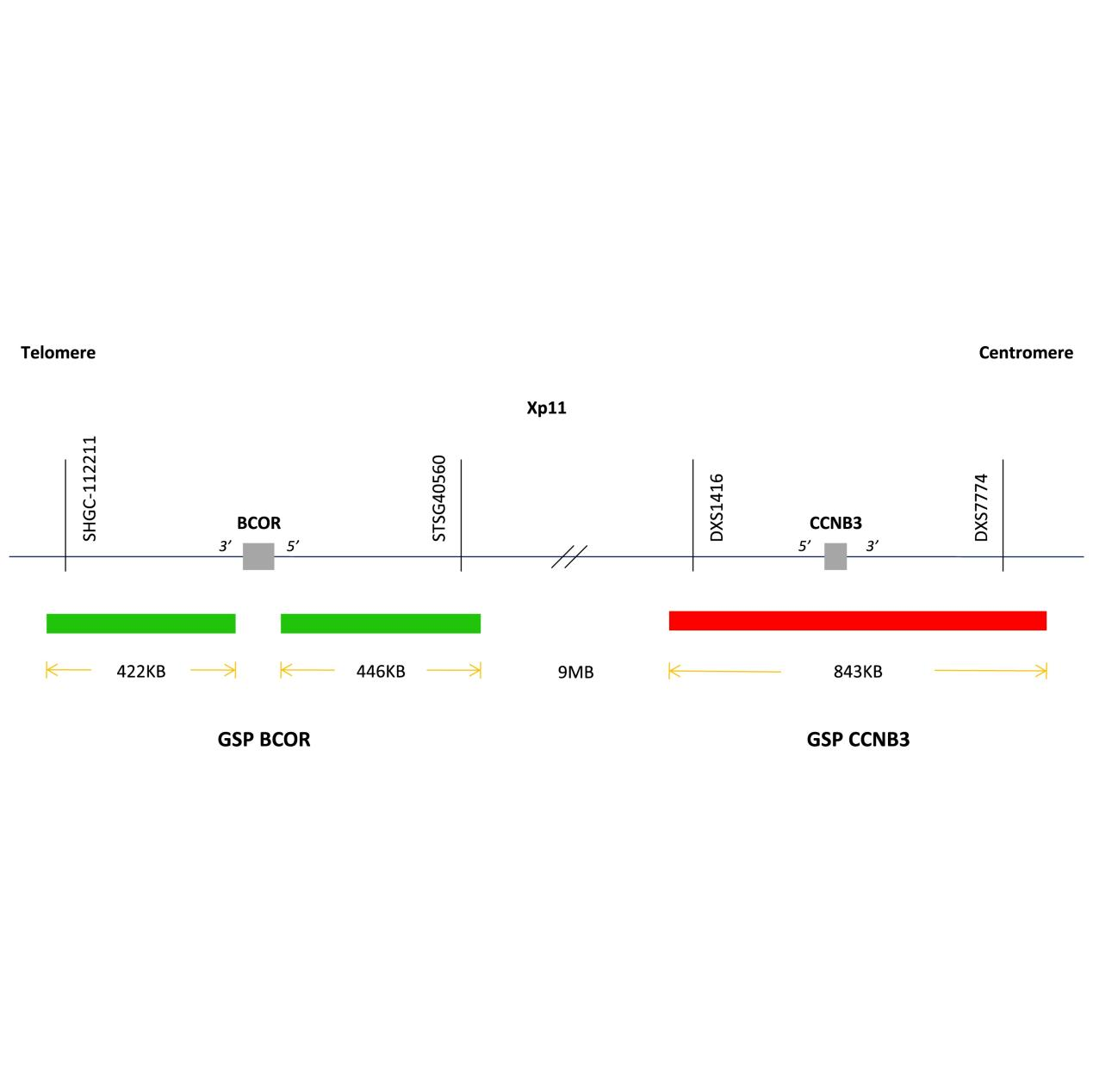
Note: BCOR and CCNB3 are both located on the X chromosome and are only 9M apart, which is too close for the positive signaling points to be easily separated, so fusion probes are not recommended, and BCOR break probes are suggested, but it is also important to note that positive signals may not be separated;
In addition, in addition to CCNB3, it is now found that BCOR can also be fused with genes such as MAML3 and ZC3H7B, and it would be more appropriate to detect them with BCOR breakage probes.
Renal Tumors
Renal clear cell sarcoma may be accompanied by BCOR-CCNB3 fusion or BCOR ITD abnormalities.





 0752-2228195