Application to Mucinous Liposarcoma/Round Cell Liposarcoma (myxoidliposarcoma/roundcellliposarcoma);
Mucinous liposarcoma/round cell liposarcoma accounts for 15-20% of liposarcomas, with a peak age of onset of 40-50 years. It has a younger age of onset than other types of liposarcoma. Although rare, it is the most common type of liposarcoma in children and adolescents. Recurrence rate is 30%, overall metastasis rate is 40%, and mortality rate is 25%-40%;
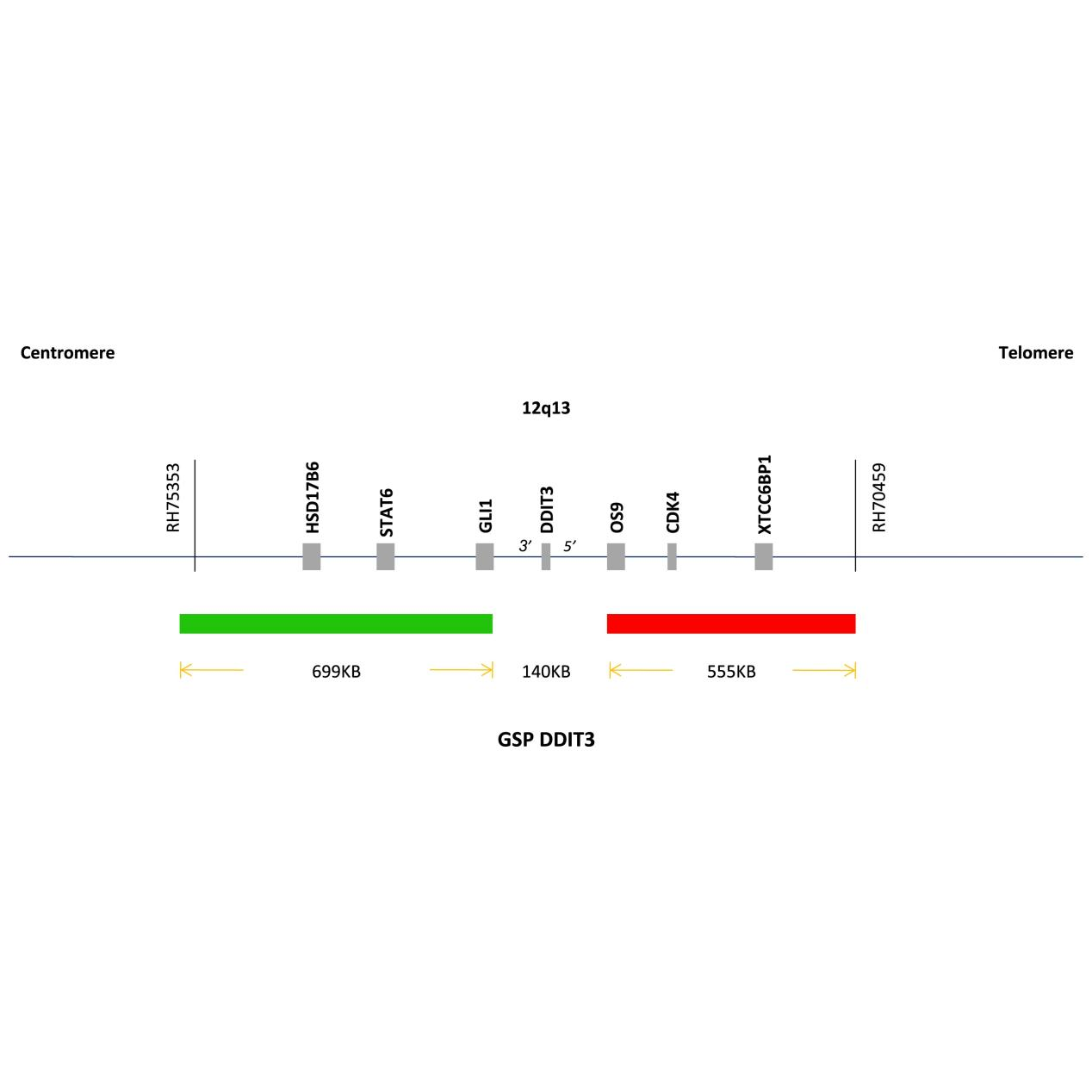
Greater than 95% of mucinous liposarcomas have a characteristic alteration t(12;16)(q13;p11) that results in the production of a CHOP-FUS fusion gene.DDIT3 and MDM2 are very close to each other in the genome, only 12 M apart, and MDM2 amplification should be suspected if the test for DDIT3 breaks is negative but shows a monochromatic/bicolor amplification, which needs to be confirmed with an MDM2 probe;
Mucinous liposarcoma needs to be differentiated from the following tumors with a mucinous morphology: highly differentiated liposarcoma with mucinous transformation; high-grade mucinous fibrosarcoma; extraskeletal mucinous chondrosarcoma; mucinous bulging cutaneous fibrosarcoma; and chordoma;
Mucinous liposarcoma occurring in the retroperitoneum is rare, and when it does occur, it tends to be metastatic; high-grade differentiated liposarcoma with mucinous transformation may be confused with mucinous liposarcoma, which is relatively common, especially in tumors occurring in the retroperitoneum, and needs to be differentiated with a DDIT3 breakthrough probe or an MDM2 amplification probe. If the degree of amplification is high, making it difficult to recognize whether DDIT3 is translocated, it can be verified with a FUS breakthrough probe of a partner gene located on another chromosome.





 0752-2228195